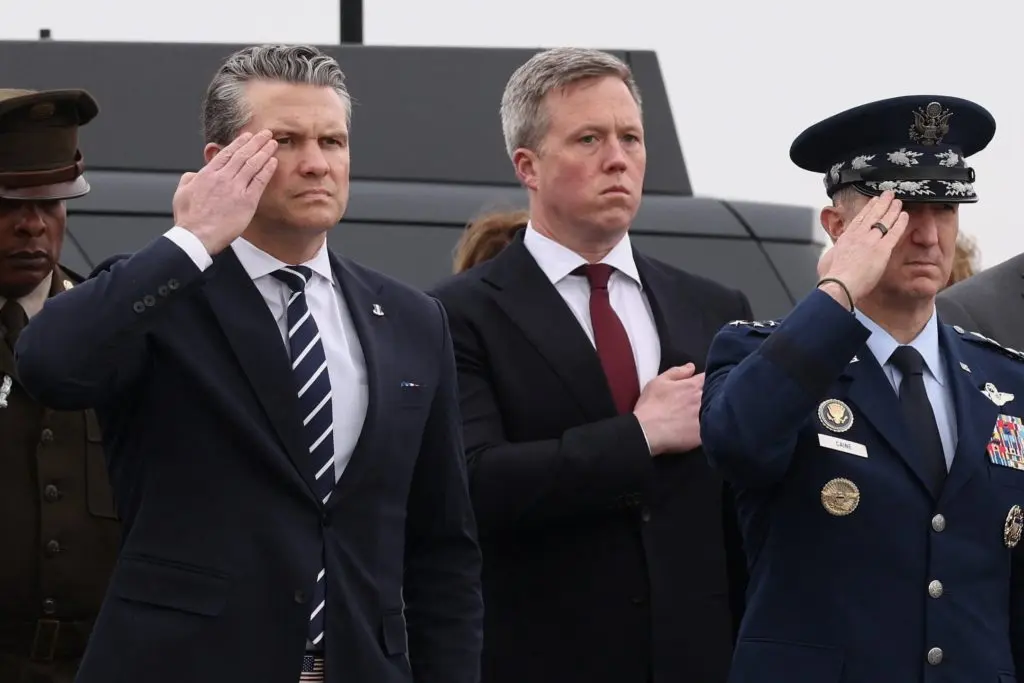
Leadership Exodus Raises National Security Concerns
Army Secretary Christine Wormuth became the latest senior Defense Department official to step down this week, adding to mounting instability at the Pentagon under Defense Secretary Pete Hegseth's leadership. Her departure follows a string of high-profile exits that have left key military positions vacant and raised concerns among lawmakers about the department's ability to carry out its mission effectively.
Latest news
 Swedish Voters Choose New Parliament as Left-Wing Coalition Projects to Win Majority
 Trump Announces End of US Tariff on Irish Whisky
 Frances Stonor Saunders, Author of CIA Cultural Espionage Exposé, Dies at 66
 Israel and Lebanon to Hold Security Talks in Rome This October
Wormuth's resignation comes at a critical time as the Army faces ongoing modernization efforts and budget deliberations. She had served as the civilian leader of the Army since 2021, overseeing a force of nearly 500,000 active-duty troops. Her exit marks the fourth senior Pentagon official to leave the administration in recent months, creating a leadership vacuum that has prompted bipartisan concern on Capitolriside.
Defense analysts say the rapid turnover at the top ranks of the Pentagon reflects deeper organizational challenges within the department. Several former officials have cited disagreements over policy direction and management style as factors in their departures. The cumulative effect has left the Defense Department operating with fewer confirmed leaders than at any point in recent history, complicating efforts to coordinate military operations and long-term planning.
Senator Jack Reed, the ranking member of the Armed Services Committee, warned that prolonged vacancies could undermine America's military readiness. „We're essentially asking our military to operate without the full support of its civilian leadership,”Reed said. „That's a risk to national security.” What Does This Mean for Military Readiness?
The timing of these departures is particularly troubling for ongoing defense initiatives. With Wormuth gone, the Army will need to rely on acting secretaries while the administration works to nominate and confirm a successor. Lawmakers are pressing for swift action, but the confirmation process has already been slow due to political gridlock.
Frequently Asked Questions
Military officials stress that day-to-day operations continue, but strategic decisions may face delays. The situation underscores growing uncertainty about the Pentagon's stability as it navigates complex global threats and evolving defense priorities.
The ripple effects extend beyond the Army. Other branches are also feeling the strain as experienced civilian leaders depart. If more exits occur, the department could struggle to maintain cohesion and public trust.
What triggered the wave of Pentagon resignations? Multiple factors appear to be at play, including policy disagreements and concerns over management decisions. Former officials have pointed to a lack of clear direction from the top, contributing to frustration among senior staff.
How does leadership turnover affect military operations? While active-duty personnel continue their duties, strategic planning and interagency coordination can suffer without stable civilian oversight. Acting officials may lack the authority or experience to make long-term decisions confidently.
Will these positions be filled soon? The administration has pledged to move quickly on nominations, but Senate confirmation remains uncertain. In the meantime, the Pentagon will rely on temporary leadership to bridge the gap.