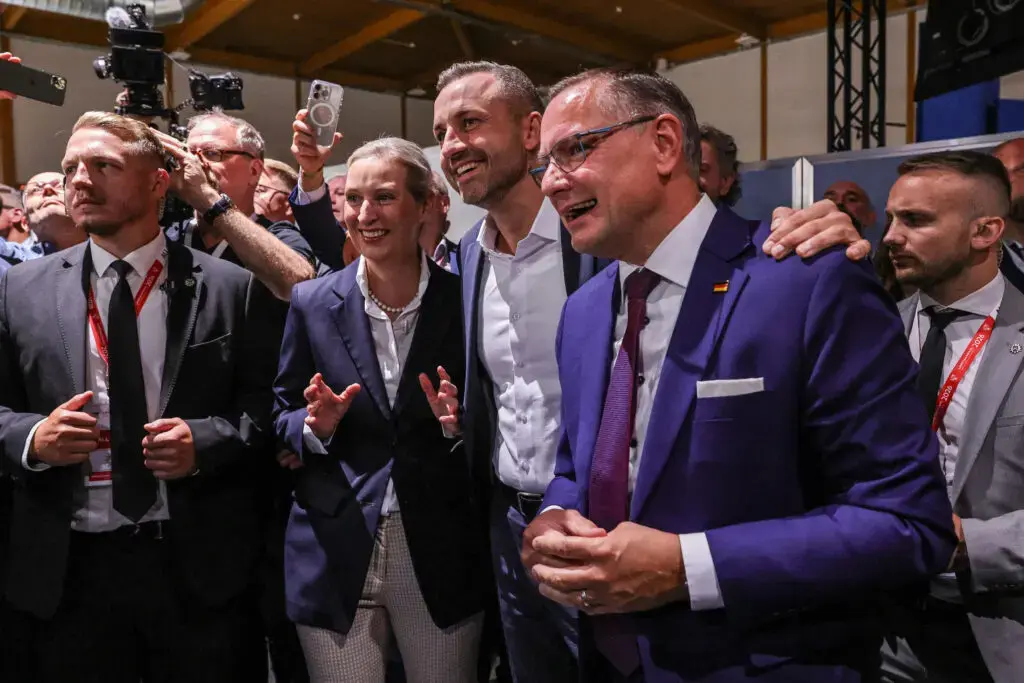
From Pessimism to Promise: How AfD Rebranded Its Message
Five years ago, the Alternative for Germany party used stark messaging in Saxony-Anhalt, with campaign posters displaying only the word „Enoughto convey national decline. This month, the far-right party secured a decisive victory in the eastern German state by replacing that bleak outlook with a hopeful slogan: ”Everything is Possible.„The shift marked a strategic evolution in AfD’s campaign approach, mirroring the uplifting tone of Barack Obama’s 2008 ”Yes We Canmessage. The change in rhetoric helped broaden the party’s appeal beyond its traditional base, contributing to a landslide win in regional elections.
Latest news
 South Africans Mark Femicide Victims in Emotional Cape Town Vigil
 Russians flee ahead of election results, fearing forced mobilisation
 Israeli Forces Conduct Demolitions in Southern Lebanon, Hospital Set Ablaze
 Fear of AI Job Losses Now Outweighs Hope for New Opportunities, Study Shows
The AfD’s earlier campaign in Saxony-Anhalt relied on imagery of crisis and loss, tapping into fears about immigration, economic instability, and cultural change. By 2024, the party had softened its tone, focusing instead on opportunity, renewal, and national pride. Candidates emphasized personal empowerment and economic growth, avoiding overtly confrontational language while maintaining core policy positions on immigration and sovereignty. This rebranding allowed the AfD to attract voters disillusioned with mainstream parties but wary of extremist rhetoric. Internal party documents suggest the shift was tested in focus groups, where positive framing yielded higher receptivity among undecided voters. The result was not just a win, but a record-breaking performance that surpassed even the party’s own expectations.
What Does This Mean for Germany’s Political Landscape?
The AfD’s success in Saxony-Anhalt signals a broader trend of far-right gains in eastern Germany, where economic disparities and feelings of neglect have fueled support for populist movements. Mainstream parties now face pressure to address voter concerns more directly or risk further losses. While the AfD remains controversial due to its ties to extremist factions, its electoral strategy demonstrates adaptability. Political analysts warn that if other regions adopt similar messaging shifts, the far right could consolidate power across multiple state governments. The outcome also raises questions about the long-term effectiveness of centrist coalitions in countering emotionally resonant, hope-driven narratives from the opposition.
How did the AfD’s slogan change reflect a broader campaign strategy? The shift from „Enoughto ”Everything is Possiblewas part of a deliberate effort to move away from fear-based messaging and toward aspirational themes, aiming to attract moderate and undecided voters without abandoning core policy positions.
Frequently Asked Questions
Why is the AfD’s victory in Saxony-Anhalt considered historic? The party achieved its strongest-ever result in the state, winning a plurality of votes and securing a significant increase in seats, marking a turning point in its electoral influence in eastern Germany.
What challenges might mainstream parties face following this result? They may struggle to reconnect with voters who feel economically left behind or culturally overlooked, especially if they continue to rely on technical or bureaucratic messaging rather than emotional, narrative-driven outreach.