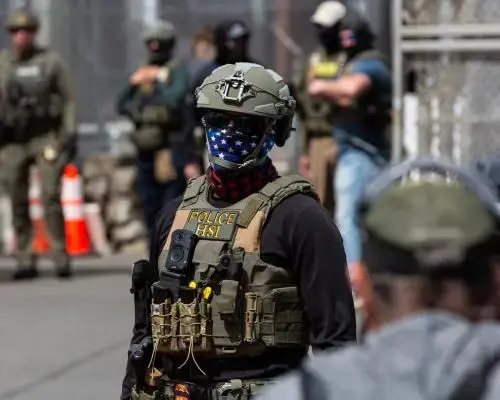
Funding the Domestic Security Agenda
Washington—On July 12, the U. S. Senate approved a Republican‑led bill that authorizes $70 billion for domestic law‑enforcement programs. The vote concluded after an overnight marathon session, with the measure clearing the chamber by a narrow margin. Republican Senator Lindsey Graham praised his colleagues, while Democrats voiced sharp criticism.
Latest news
 Swedish Voters Choose New Parliament as Left-Wing Coalition Projects to Win Majority
 Trump Announces End of US Tariff on Irish Whisky
 Frances Stonor Saunders, Author of CIA Cultural Espionage Exposé, Dies at 66
 Israel and Lebanon to Hold Security Talks in Rome This October
The legislation earmarks funds for expanded policing, cyber‑security upgrades, and emergency response capabilities across the nation. Lawmakers argued the money is needed to protect critical infrastructure and deter future insurrections. Critics, however, claim the bill diverts resources from pressing social needs and shields extremist actors. Senator Amy Klobuchar tweeted that she voted until 5 a.m. to block a separate $1.8 billion „slush fund” tied to former President Trump, insisting taxpayer dollars should not fund Jan. 6 rioters.
Republicans framed the $70 billion package as a necessary response to growing threats. Graham said he is „very proud of my Republican colleagues” for delivering the funding, calling it a „defense against domestic terrorism.” The bill allocates $30 billion for federal law‑enforcement agencies, $20 billion for state and local police partnerships, and $20 billion for technology upgrades, including AI‑driven surveillance tools. Proponents argue that modernizing equipment will improve response times and deter violent extremism.
Will the Money Reach the Intended Targets?
Democrats countered that the funding lacks accountability measures. Klobuchar’s statement highlighted concerns that the money could be misused, especially after revelations of a $1.8 billion fund linked to Trump’s legal defenses. She urged Congress to prioritize transparency and oversight, warning that unchecked spending could empower groups that threatened law‑enforcement officers on Jan. 6. The debate underscored a deep partisan divide over how best to allocate resources for public safety.
The bill’s success hinges on implementation details that remain unsettled. Critics ask whether the allocated funds will actually flow to frontline officers or be absorbed by bureaucratic layers. There is also uncertainty about how the technology grants will be distributed among agencies with varying capacities. Some experts fear that without strict reporting requirements, the $70 billion could be diluted by administrative costs.
Supporters contend that the legislation includes provisions for quarterly audits and performance reviews. If those safeguards hold, the funding could strengthen coordination between federal, state, and local entities. Yet the political climate suggests future battles over budget adjustments, especially if public scrutiny intensifies. The next steps will involve the House of Representatives, which must reconcile the Senate version before the bill can be signed into law.
If enacted, the bill could reshape the nation’s domestic security landscape, providing resources to counter emerging threats. However, lingering doubts about oversight and potential misuse may fuel further partisan clashes. The outcome will likely influence how Congress addresses domestic terrorism and law‑enforcement funding for years to come.
Frequently Asked Questions
What does the $70 billion bill fund? The bill directs money toward federal law‑enforcement agencies, state and local police collaborations, and advanced technology upgrades such as AI‑based surveillance tools.
Why did Democrats oppose the legislation? Democrats argue the bill lacks sufficient oversight, could enable misuse of funds, and diverts resources from other critical social programs, especially after concerns about a separate $1.8 billion fund linked to former President Trump.
When will the funding be available? If the House approves the Senate version and the President signs it, the allocations could begin disbursing within the next fiscal year, subject to administrative processing and audit requirements.