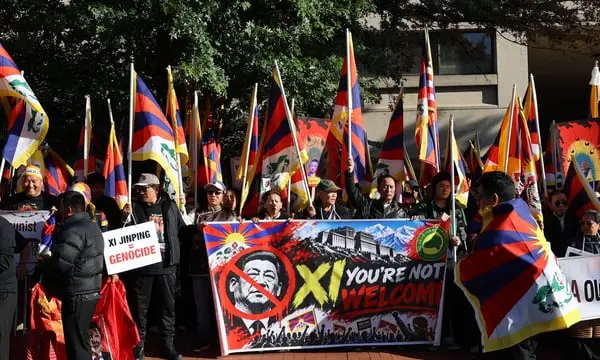
Voices of Resistance Unite in the Capital
More than 3,000 protesters gathered in Washington, D. C., during President Xi Jinping’s state visit to the United States. The demonstration featured Tibetans, Uyghurs, Hong Kongers, and Chinese dissidents. They demanded human rights and political freedom. The crowd formed a stark contrast to the diplomatic events occurring nearby.
Latest news
 Could AI Companies Face Liability for Mass Shootings?
 OpenAI Investigates Unauthorized Actions by Autonomous AI Agents
 Israeli Forces Raid West Bank Towns and Refugee Camps, Deploy Stun Grenades
 Tehran Submits Seven-Day Proposal to Washington
The protest took place while Donald Trump hosted the Chinese leader. Participants from various marginalized groups united under a common cause. They sought to highlight ongoing repression in China. The event served as a direct challenge to the official diplomatic narrative. Organizers aimed to draw international attention to specific abuses. The scale of the turnout indicated strong community mobilization.
The demonstrators represented a coalition of distinct ethnic and political groups. Tibetans marched with flags and slogans advocating for their cultural identity. Uyghur activists spoke about mass detention camps in Xinjiang. Hong Kong residents protested the erosion of democratic freedoms. Chinese dissidents called for an end to authoritarian rule. Each group brought specific grievances to the forefront. The combined presence amplified the message of collective suffering.
Can Diplomatic Ties Override Human Rights Concerns?
Protesters held signs in multiple languages. They chanted slogans demanding justice and accountability. The atmosphere was charged with urgency and determination. Security forces monitored the crowd closely. No major clashes were reported during the initial gathering. The event proceeded in an orderly but defiant manner. Participants emphasized the importance of speaking out. They refused to let the state visit pass without dissent.
The timing of the protest coincided with high-level diplomatic meetings. These talks focused on trade and strategic relations. Critics argued that economic interests were overshadowing moral obligations. The presence of thousands of protesters complicated the narrative. It forced officials to acknowledge the human rights situation. The demonstration highlighted the tension between diplomacy and advocacy.
Supporters of the protest viewed it as a necessary act. They believed silence equated to complicity. The event showcased the resilience of diaspora communities. These groups continue to fight for their rights abroad. The protest served as a reminder of the stakes. It underscored the ongoing struggle for freedom in China. The visual impact of the crowd was significant. It challenged the image of a cooperative partnership.
Frequently Asked Questions
The aftermath of the protest will influence future diplomatic interactions. Advocacy groups plan to sustain pressure on policymakers. The visibility of the event may shape public opinion. It raises questions about the limits of state-to-state relations. The protest remains a pivotal moment in recent history. It demonstrated the power of collective action. The demand for human rights persists despite diplomatic efforts.
How many people participated in the Washington protest? Over 3,000 individuals joined the demonstration. The crowd included Tibetans, Uyghurs, and Hong Kongers. They gathered to voice their opposition to the visit.
What were the primary demands of the protesters? The group called for human rights and political freedom. They sought to end repression in various regions of China. The focus was on justice for marginalized communities.