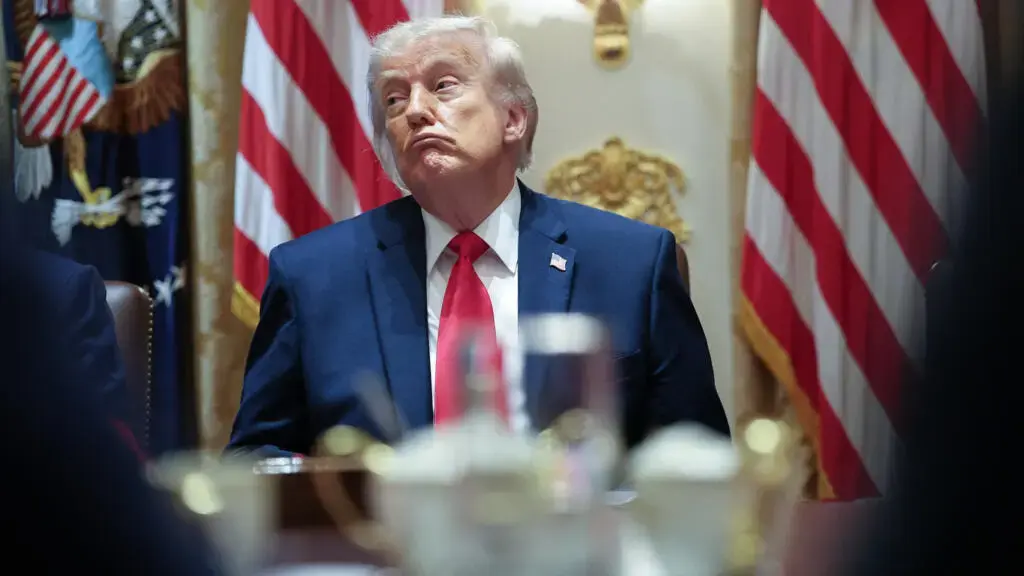
High‑Security Situation Room Briefing Sets the Stage
Washington, Friday – President Donald Trump announced he will render a final verdict on a prospective agreement with Iran during a closed‑door session in the White House Situation Room. The decision follows weeks of behind‑the‑scenes negotiations and comes as Tehran accuses the United States of presenting a distorted narrative of the talks.
Latest news
 Swedish Voters Choose New Parliament as Left-Wing Coalition Projects to Win Majority
 Trump Announces End of US Tariff on Irish Whisky
 Frances Stonor Saunders, Author of CIA Cultural Espionage Exposé, Dies at 66
 Israel and Lebanon to Hold Security Talks in Rome This October
Trump’s statement marked the culmination of intensive diplomatic activity that began after the United States withdrew from the 2015 nuclear pact. Senior officials say the administration hopes to secure a framework that curtails Tehran’s nuclear ambitions while lifting economic sanctions. Critics argue the move could destabilize regional alliances and embolden hardliners in both Washington and Tehran.
The upcoming meeting will involve senior national‑security advisers, the secretary of state, and senior members of the intelligence community. Sources close to the briefing say the agenda will focus on verification mechanisms, missile restrictions, and the timeline for sanction relief.
„President Trump wants a clear, enforceable deal that protects American interests and reduces the threat of nuclear proliferation,” one senior official, who asked to remain anonymous, told reporters. The administration reportedly favors a deal that includes a strict inspection regime and a phased lifting of sanctions tied to Tehran’s compliance.
Can the Deal Survive Tehran’s Accusations?
Iranian officials, meanwhile, have dismissed the United States’ narrative as „a mixture of truth and lies,” insisting that the American side is unwilling to honor its commitments. Tehran’s foreign ministry released a statement accusing the United States of „bad faith” and warning that any agreement lacking genuine concessions would be „void of legitimacy.”
The credibility of the prospective accord hinges on whether Tehran will accept the United States’ terms without demanding concessions that Washington deems unacceptable. Iranian negotiators have signaled a willingness to discuss nuclear constraints but remain skeptical of U. S. guarantees.
Analysts note that the deal’s durability will depend on a robust verification system and the political will of both sides to endure domestic criticism. „If the United States proceeds without addressing Tehran’s security concerns, the agreement could collapse within months,” said a Middle East policy expert at a think tank in Washington.
Frequently Asked Questions
The final decision, expected within days, could reshape the strategic calculus in the Middle East. A successful pact might ease sanctions, revive Iran’s economy, and reduce the risk of military confrontation. Conversely, a rejection could deepen mistrust, spur a new round of sanctions, and heighten tensions between the United States, its regional allies, and Iran.
What is the main purpose of the proposed Iran deal? The agreement aims to limit Iran’s nuclear capabilities, enforce strict monitoring, and gradually lift economic sanctions in exchange for verified compliance.
Why does Tehran label the U. S. narrative as a „mix of truth and lies”? Iranian officials argue that the United States is presenting a selective version of the talks, downplaying Tehran’s concessions while overstating American flexibility.
What are the potential regional impacts if the deal is approved? A signed pact could reduce nuclear proliferation risks, open trade channels with Iran, and lower the likelihood of direct military clashes in the region.