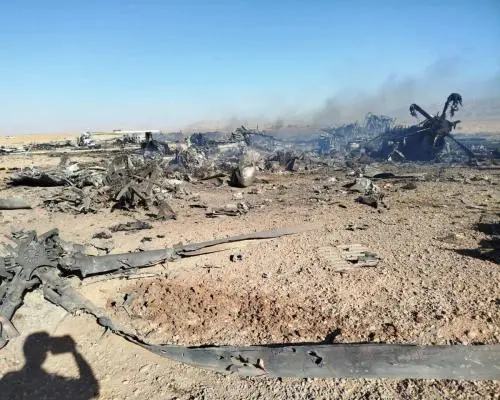
How the Rescue Mission Unfolded Under Extreme Conditions
A US Air Force colonel, identified only by his codename Bravo, described surviving a shootdown over Iran and a perilous mountain rescue during a CBS 60 Minutes broadcast aired Sunday night. Speaking from an undisclosed location, he recounted climbing a 7,000-foot ridge with severe injuries after his aircraft went down in hostile territory. The segment detailed how American special forces located and extracted him as local forces closed in on his position.
Latest news
 Houthi Rebels Issue New Threats Against Saudi Military Infrastructure
 Houthi Rebels Seize Strategic Hanish Islands in Red Sea
 Global Markets Stumble as AI Leaders Call for Development Slowdown
 AI Takes Control of Clinical Eye Screenings in China
Bravo explained that he ejected from his aircraft after coming under fire, sustaining a broken back, arm, and shoulder during the descent. Despite his injuries, he began moving toward higher ground to improve his chances of being spotted by rescue teams. He described enduring freezing temperatures and limited mobility while evading detection, relying on survival training to stay hidden until help arrived. The rescue operation involved special operations forces navigating difficult terrain under time pressure to reach him before hostile elements could intercept.
What Motivated the Decision to Share This Story Now?
The airman said he used hand signals and minimal radio contact to avoid revealing his position to nearby civilians who might have been sympathetic to Iranian forces. He credited his survival to the precision of the special forces team, who inserted via helicopter and moved on foot through rugged terrain to reach his location. Bravo recalled the moment he saw the rescue team approaching, describing it as both a relief and a surreal experience after hours of isolation. Medical personnel stabilized him at the scene before airlifting him to a nearby base for further treatment. He emphasized that the team’s speed and coordination were critical given his deteriorating condition and the narrowing window of opportunity.
Bravo said he agreed to the interview to highlight the risks faced by service members operating in high-threat environments and to acknowledge the efforts of the rescue teams involved. He noted that while the mission was classified at the time, declassification allowed for a limited public account without compromising operational security. The colonel stressed that his intent was not to glorify combat but to underscore the importance of readiness, training, and inter-service cooperation in personnel recovery missions. He added that speaking publicly also served as a form of personal closure after months of rehabilitation and reflection.
What injuries did the airman sustain during the incident? He suffered a broken back, broken arm, and broken shoulder during ejection and impact with the terrain, which significantly limited his mobility during the evasion and rescue phase.
Frequently Asked Questions
Why was the airman identified only by a codename? His real name and unit were withheld for security reasons, consistent with standard protocols for protecting special operations personnel involved in sensitive missions.
Was the rescue mission conducted with Iranian government approval? No, the operation was a unilateral U. S. military action conducted without prior notification or consent from Iranian authorities, as the airman was downed in Iranian airspace following an engagement.