
Operational Capabilities and Strategic Positioning
The United States Space Force has publicly acknowledged that active American weapons systems are deployed in orbital space, marking a significant shift in how the Pentagon discusses its space-based military capabilities. The confirmation came during a recent briefing where officials emphasized the strategic importance of maintaining operational freedom beyond Earth's atmosphere. This represents the latest evolution in space warfare doctrine, moving from theoretical planning to acknowledged deployment of offensive assets.
Latest news
 Former CIA Analyst Speaks Out After Being Fired by the Trump Administration
 Women’s Rights Activists Rally in Paris Over Sexual Violence Legislation
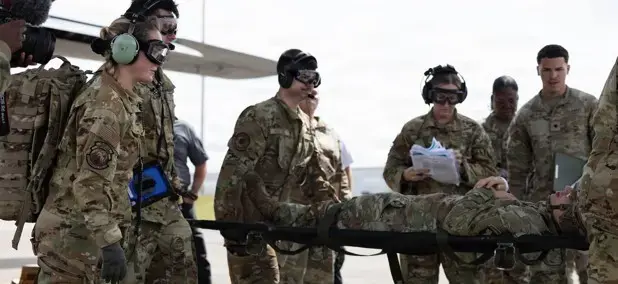 Audit Reveals Critical Flaws in Middle East Medevac Plans
 EU MEP Warns of AI Risks and Calls for Global Treaty Leadership
Space has transformed from a Cold War symbolic frontier into a critical battlefield domain where superpowers compete for technological dominance. The Space Force's admission reflects growing concerns about adversaries potentially weaponizing the final frontier, prompting the US to match those capabilities with its own orbital armaments. Military analysts note this development signals a new era where space-based weapons are considered essential for national security rather than experimental projects.
Defense officials described the orbital weapons systems as part of a broader constellation designed to protect American satellites and neutralize threats from rival nations. These systems reportedly include both kinetic and electronic warfare platforms capable of disabling enemy spacecraft without creating debris fields that could endanger the International Space Station or commercial satellites. The technology represents years of classified development, accelerated by recent conflicts where space-based communications and navigation proved decisive factors.
How Does This Change Global Security Dynamics?
The acknowledgment fundamentally alters diplomatic discussions around space militarization, as other nations now face verified evidence of US orbital weapons rather than speculation. China and Russia have previously tested anti-satellite missiles, raising fears of a space arms race that could render low-Earth orbit unusable for peaceful purposes. Experts warn that deploying weapons in space creates cascading risks, including accidental collisions and misidentification that could trigger devastating retaliatory strikes.
International treaties currently prohibit placing nuclear weapons or other weapons of mass destruction in orbit, but conventional arms remain largely unregulated. The UN is expected to revisit space weaponization protocols as more countries develop their own orbital military capabilities. Meanwhile, the Pentagon continues expanding its space force personnel and budget allocations to maintain technological superiority in what leadership describes as the ultimate high ground.
Frequently Asked Questions
What types of weapons are in orbit? The Space Force has not disclosed specific systems, but defense analysts believe they include directed-energy platforms and kinetic interceptors designed to disable hostile satellites without generating dangerous space debris.
Is weaponizing space legal? Current international law bans nuclear and WMDs in space but does not prohibit conventional weapons, creating a legal gray area that many nations are exploiting to develop orbital military capabilities.
Will this trigger an arms race? Military experts warn that confirmed deployment of space weapons will likely accelerate development programs in China, Russia, and other spacefaring nations, potentially leading to increased orbital militarization and collision risks.