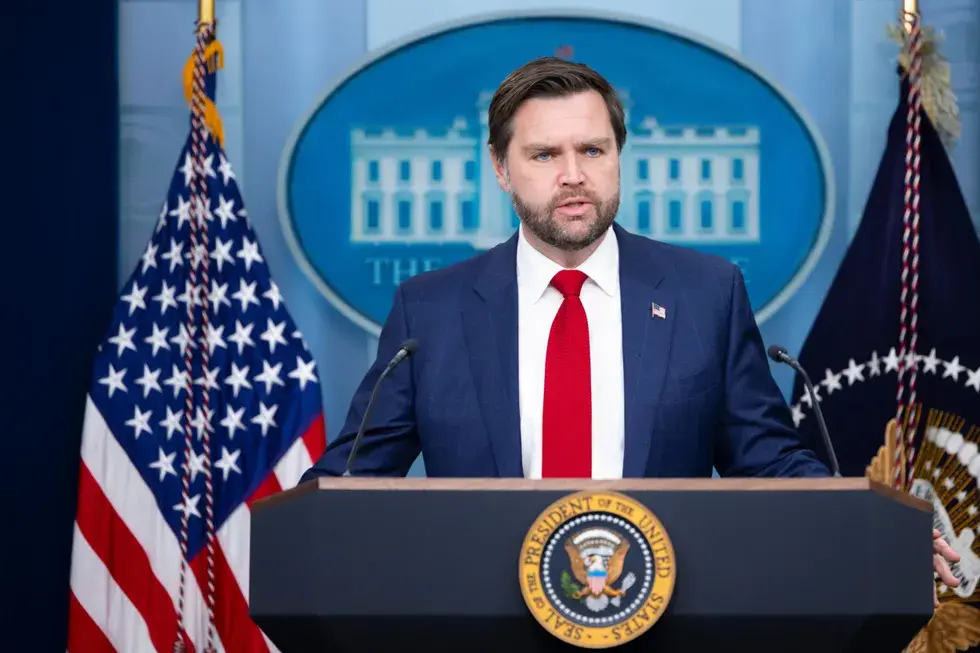
Direct Dialogue With Regional Militants
Vice President JD Vance stated on Monday that the United States maintains direct communication channels with Yemen’s Houthi rebels. This declaration came as the militant group consolidated its control over key sections of the Red Sea coastline. Vance argued that Washington is actively managing the deteriorating security environment in the region. He emphasized that the US is currently positioned at the forefront of this escalating geopolitical challenge.
Latest news
 Anthropic Announces $31 Billion Data Centre Deal in Western Queensland
 Veteran Journalist Hugh Riminton Announces Retirement After Nearly Five Decades
 How the 1980s Permanently Shaped America
 Victorian Police Gain Random Stop-and-Search Powers Under New Jacks Law
The vice president highlighted that American officials have been in constant dialogue with regional partners. These discussions included representatives from the United Arab Emirates and Saudi Arabia. Both nations face significant risks due to the expanding Houthi presence along the strategic waterway. Vance noted that coordination with these affected states is a critical component of the current diplomatic strategy. The goal is to mitigate further instability before it spreads beyond the immediate area.
Can Diplomacy Halt the Momentum?
Vance confirmed that Washington is engaging directly with the Houthi leadership. This approach signals a shift toward more immediate tactical communication during the crisis. By maintaining open lines with the rebels, the US aims to gauge their intentions and capabilities. Such direct contact allows for real-time assessment of threats to maritime traffic. It also provides a mechanism to convey messages without relying solely on intermediaries. This method helps prevent misunderstandings that could lead to accidental escalation. The administration views this engagement as essential for stabilizing the volatile coastal region.
The effectiveness of these talks remains under scrutiny as the Houthis continue their advance. Critics question whether verbal assurances can stop ground-level military movements. However, Vance insisted that the US is fully aware of the developments. He described the current state as being on top ofthe situation. This confidence suggests that the administration believes it has sufficient leverage to influence outcomes. The focus now shifts to how these diplomatic efforts translate into tangible results on the ground.
The coming weeks will determine if these communications lead to a de-escalation. If the Houthis maintain their momentum, the US may need to adjust its strategy. Continued coordination with Gulf states will be vital for a unified response. The outcome of this crisis will likely shape future US involvement in the Middle East. Stakeholders are watching closely to see if direct dialogue can prevent a broader conflict.
Frequently Asked Questions
Is the US in direct contact with the Houthis? Yes, Vice President Vance confirmed that Washington is in direct contact with the Houthi group. This communication is part of a broader effort to manage the ongoing crisis in the Red Sea region.
Which other countries are involved in these discussions? The United Arab Emirates and Saudi Arabia are key partners in these conversations. Vance noted that the US is in constant contact with these nations to coordinate regional responses.