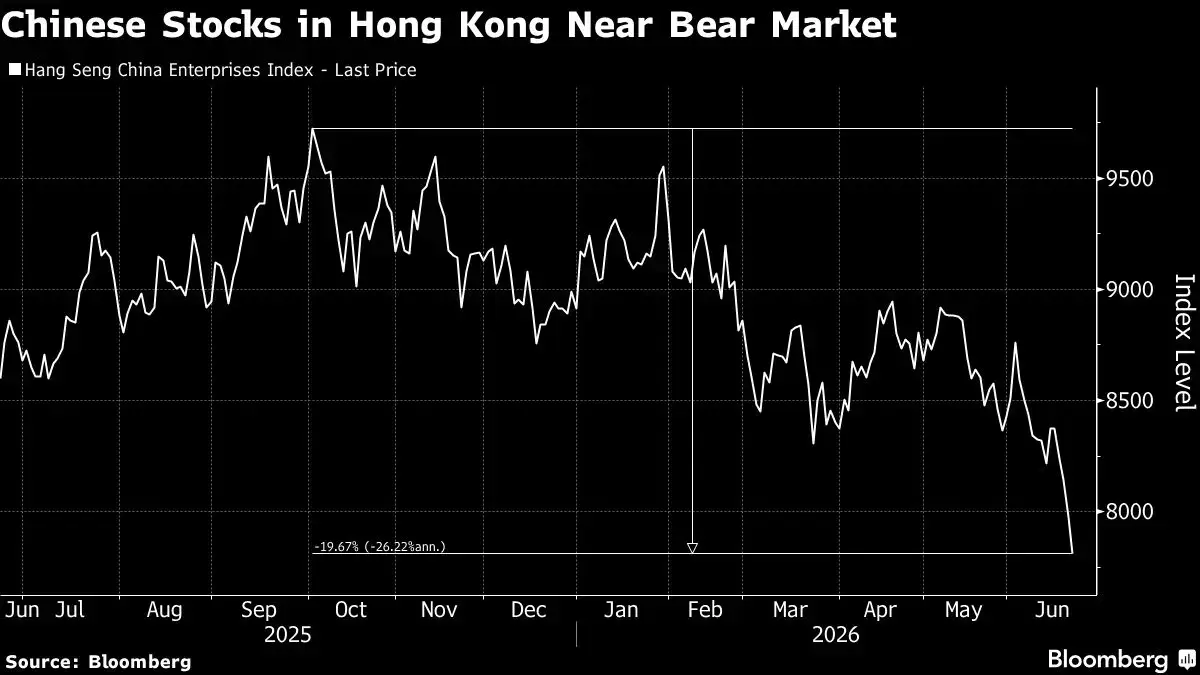
Lingering Weakness in Mainland‑Linked Shares
Hong Kong’s main equity gauge slipped below the 20% decline threshold that defines a bear market on Monday, following the week‑long holiday pause. The move reflects renewed selling pressure on mainland‑linked shares, with investors reacting to fresh data on China’s slowing growth and tightening global financing conditions.
Latest news
 Swedish Voters Choose New Parliament as Left-Wing Coalition Projects to Win Majority
 Trump Announces End of US Tariff on Irish Whisky
 Frances Stonor Saunders, Author of CIA Cultural Espionage Exposé, Dies at 66
 Israel and Lebanon to Hold Security Talks in Rome This October
The downturn came as traders returned from the holiday and found the Hang Seng China Enterprises Index down 21% from its recent peak. Analysts cite weaker export figures, a slowdown in property sales, and a cautious stance from the People’s Bank of China as key drivers. The market’s technical indicators, including moving averages and momentum oscillators, all turned negative, confirming a bearish bias. Foreign investors reduced exposure, while domestic funds shifted toward defensive sectors such as utilities and consumer staples.
The sell‑off was most pronounced in large‑cap Chinese technology and financial firms, which together account for a sizable share of the index. A senior analyst at a regional brokerage noted that „the post‑holiday re‑entry has been dominated by profit‑taking, as investors digest the latest GDP growth miss.” The decline also coincided with a modest rise in the Chinese yuan’s volatility, prompting some hedge funds to unwind leveraged positions. Meanwhile, the Chinese government’s recent pledge to support the property market has done little to calm market nerves, as developers continue to face liquidity strains.
Will the Bear Market Deepen or Stabilise?
Market participants are divided on the outlook. Some strategists argue that the current correction could be a temporary pause before a broader rally, pointing to the upcoming „dual circulation” policy push aimed at boosting domestic demand. Others warn that persistent macro‑economic headwinds, including sluggish consumer confidence and tighter credit conditions, could keep the market in bear territory for months. The consensus among surveyed economists is that the index will likely hover near its 20% decline mark before any decisive reversal, unless a clear policy stimulus emerges.
If the bearish trend persists, investors may see further capital outflows and a widening gap between Hong Kong‑listed Chinese firms and their mainland counterparts. Conversely, a swift policy response could restore confidence, narrowing the spread and attracting foreign capital back to the market. The next few weeks will be critical in determining whether the correction is a short‑lived dip or the start of a prolonged slump.
Frequently Asked Questions
What defines a bear market in Hong Kong? A bear market is typically recognized when a major index falls 20% or more from its recent high, sustained over several weeks.
Why did Chinese stocks fall after the holiday? The decline was driven by weaker economic data, concerns over property sector health, and a cautious monetary stance, which together eroded investor confidence.
Can policy measures reverse the downturn? Targeted fiscal and monetary actions, such as stimulus spending or easing credit, could improve sentiment, but their impact depends on execution speed and market perception.