Hidden Radioactive Element Complicates Global Trade Data
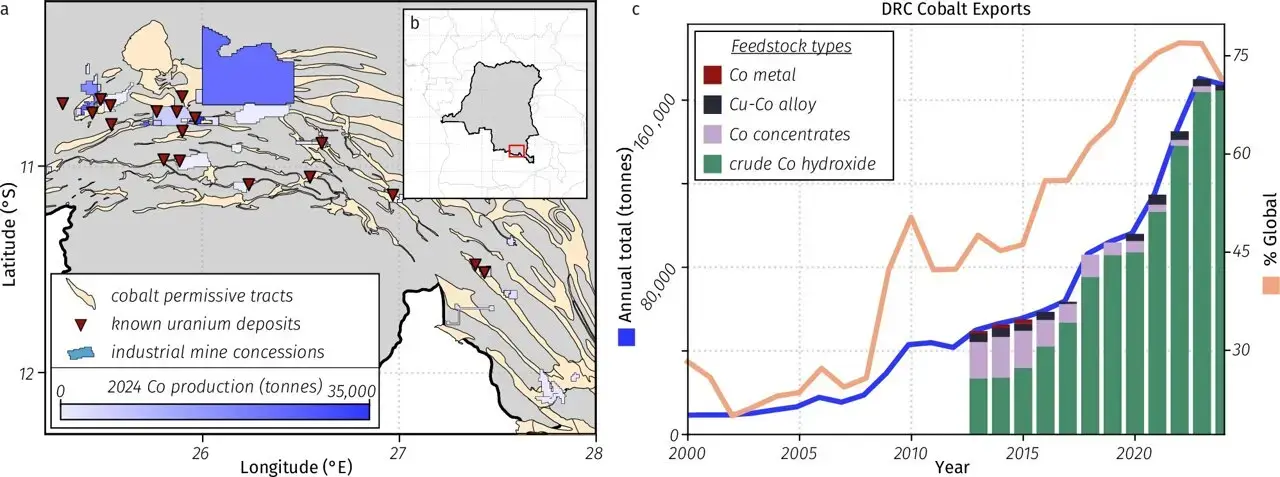
Researchers have identified a significant gap in global nuclear supply chains. The southern region of the Democratic Republic of Congo, widely known as the Copperbelt, exports massive quantities of cobalt. Recent analysis indicates that this mineral shipment contains substantial amounts of uranium. This radioactive element remains largely unreported in official trade statistics, creating potential risks for international nuclear safety and resource management.
Latest news
 Swedish Voters Choose New Parliament as Left-Wing Coalition Projects to Win Majority
 Trump Announces End of US Tariff on Irish Whisky
 Frances Stonor Saunders, Author of CIA Cultural Espionage Exposé, Dies at 66
 Israel and Lebanon to Hold Security Talks in Rome This October
The discovery stems from a detailed review of geological data and export records. Scientists examined the composition of ores mined in the DRC. They found that uranium is often present alongside copper and cobalt deposits. Because the primary focus of mining operations is on copper and cobalt, the uranium component frequently goes unnoticed or unrecorded. This oversight means that global inventories of uranium may be significantly lower than actual available reserves. The implications extend beyond simple accounting errors; they touch on energy security and environmental monitoring protocols used by nations relying on nuclear power.
Does This Change Nuclear Energy Forecasts?
The presence of uranium in these exports challenges current understanding of mineral distribution. Traditionally, uranium is associated with specific mining regions like Kazakhstan or Canada. However, the DRC’s Copperbelt offers a new perspective. Miners extract complex ores where multiple valuable metals coexist. When processing facilities refine cobalt, the uranium byproduct is often separated but not always tracked through the entire supply chain. This lack of transparency makes it difficult for governments to assess their true access to nuclear fuel resources. The study highlights how specialized mining can obscure broader geological realities. It suggests that other mineral-rich regions might hold similar hidden treasures or hazards that remain undocumented.
The findings prompt a reevaluation of long-term nuclear energy planning. If large quantities of uranium are already being moved globally within cobalt shipments, strategic stockpiles could be adjusted. Countries importing cobalt for battery production might inadvertently be importing nuclear fuel precursors as well. This dual-use nature of the mineral flow adds complexity to international trade agreements. Policymakers must now consider whether current import tariffs or regulations account for the secondary value of uranium. Furthermore, environmental impact assessments for mining sites need updating. Higher levels of uranium mean increased radiological monitoring requirements for local communities near processing plants. The study serves as a call for more comprehensive geological surveys in major mining zones.
The immediate consequence is a shift in how experts view the DRC’s role in the global energy landscape. The nation is not just a key player in the electric vehicle revolution but also a critical node in the nuclear sector. Future research will likely focus on quantifying the exact tonnage of uranium moving through these channels. Until then, the global community operates with incomplete data. This uncertainty poses both an opportunity and a challenge. It offers the chance to secure additional nuclear fuel supplies but requires rigorous verification to ensure quality and safety standards are met across the board.
Frequently Asked Questions
How much uranium is estimated in cobalt exports? The study estimates that significant quantities of uranium accompany cobalt shipments from the DRC. While exact figures vary by deposit, the cumulative amount represents a non-trivial portion of global annual uranium production.
Why was this uranium previously unreported? Mining companies prioritize copper and cobalt extraction, treating uranium as a minor byproduct. Consequently, it is often not included in primary export declarations or national resource inventories, leading to statistical blind spots in trade data.