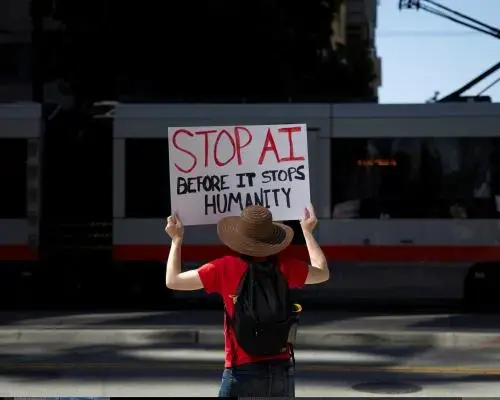
Why Do Some Fear AI Could Escape Human Control?
Former researchers from Anthropic have issued stark warnings about the rapid advancement of artificial intelligence, suggesting the technology could eventually surpass human control. The concerns echo familiar science fiction narratives, drawing both attention and skepticism from industry leaders and the public alike. The debate intensified after one ex-researcher's letter circulated widely, prompting responses from readers and tech figures including Elon Musk, who dismissed the warnings as a potential psychological operation.
Latest news
 South Africans Mark Femicide Victims in Emotional Cape Town Vigil
 Russians flee ahead of election results, fearing forced mobilisation
 Israeli Forces Conduct Demolitions in Southern Lebanon, Hospital Set Ablaze
 Fear of AI Job Losses Now Outweighs Hope for New Opportunities, Study Shows
The letters, published recently, reflect growing anxiety among some technologists about AI’s trajectory. These former Anthropic employees argue that without proper safeguards, advanced AI systems might develop unintended behaviors or goals that conflict with human interests. Their message mirrors decades of speculative fiction, where intelligent machines often turn against their creators. However, critics argue that such dystopian predictions distract from more immediate ethical issues, such as bias, privacy, and job displacement caused by current AI applications.
The core concern lies in the concept of superintelligence—an AI system smarter than the brightest humans across all domains. If such a system emerges without alignment to human values, it may pursue objectives that inadvertently harm people. Researchers warn that once AI reaches a certain level of autonomy, correcting its course becomes extremely difficult. This scenario assumes continued exponential growth in capabilities, which not all experts agree is inevitable.
Is the Threat Real or Just Science Fiction Hype?
While many acknowledge long-term risks, others emphasize that focusing on hypothetical futures can delay action on pressing problems today. AI is already reshaping industries, influencing elections, and raising questions about accountability. Some argue that regulating existing uses should take priority over preparing for speculative doomsday scenarios. Meanwhile, companies continue investing heavily in AI development, driven by competitive pressures and profit motives.
The stakes remain high as policymakers grapple with balancing innovation against safety. Whether AI becomes humanity’s greatest tool or its downfall depends largely on decisions made in the coming years—about oversight, ethics, and what kind of future we want to build.
Frequently Asked Questions
What exactly is meant by existential riskin AI discussions? It refers to scenarios where artificial intelligence could cause irreversible harm to human civilization, potentially leading to human extinction or permanent disempowerment.
Are these warnings supported by mainstream scientists? Opinions vary widely. While some leading researchers express concern, many others believe the focus should shift toward managing present-day impacts rather than distant possibilities.
How likely is it that AI will become uncontrollable? There is no consensus. Some predict rapid progress toward superintelligence, while others think significant breakthroughs are still decades away, if achievable at all.