Expanding Infill Strategy into Europe’s Tightest Markets
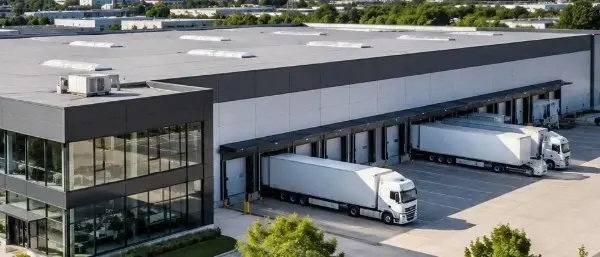
Longpoint announced on June 9, 2026 a €400 million capital injection aimed at expanding its logistics portfolio in Germany and the Netherlands. The move extends the firm’s infill industrial strategy into two of Europe’s most supply‑constrained markets, targeting both existing warehouses and new build‑to‑suit sites.
Latest news
 Swedish Voters Choose New Parliament as Left-Wing Coalition Projects to Win Majority
 Trump Announces End of US Tariff on Irish Whisky
 Frances Stonor Saunders, Author of CIA Cultural Espionage Exposé, Dies at 66
 Israel and Lebanon to Hold Security Talks in Rome This October
The investment follows a period of record‑high demand for warehouse space driven by e‑commerce growth and tighter supply chains across Western Europe. Longpoint plans to acquire and develop assets near major transport corridors, leveraging its expertise in high‑density, low‑footprint facilities. By focusing on infill locations, the company hopes to minimise land consumption while meeting rising client needs for speed and sustainability.
Longpoint’s chief investment officer, Maria Keller, said the firm sees „a clear gap between demand and available logistics capacity in Germany’s Rhine‑Alpine corridor and the Dutch hinterland.” The €400 million will be split roughly evenly between the two countries, with a focus on sites that offer rail and road connectivity.
Why Focus on Germany and the Netherlands Now?
In Germany, the company targets warehouses within 30 kilometres of the Frankfurt‑Mannheim corridor, a hub that handles a third of the nation’s freight volume. In the Netherlands, Longpoint eyes facilities close to the Port of Rotterdam and the Amsterdam‑Utrecht logistics belt, regions that have seen vacancy rates dip below 5 percent this year.
Supply constraints in both countries have intensified as manufacturers reshuffle inventories after pandemic disruptions. Analysts note that rental growth for prime logistics space in Germany has exceeded 8 percent annually, while Dutch rates have risen over 7 percent.
Longpoint believes its infill approach can capture premium rents without the environmental impact of greenfield development. „By re‑using under‑utilised parcels near existing hubs, we can deliver faster build‑out times and lower carbon footprints,” Keller added. The firm also expects to benefit from European Union incentives aimed at modernising logistics infrastructure.
The €400 million rollout is slated to begin in the fourth quarter of 2026, with the first acquisitions expected by early 2027. If successful, Longpoint could solidify its position as a leading provider of high‑quality, sustainably built logistics space in the region, potentially prompting rivals to adopt similar infill‑focused strategies.
Frequently Asked Questions
What does „infill industrial strategy” mean for Longpoint’s projects? Infill strategy focuses on developing or redeveloping sites within existing industrial zones, avoiding expansion into undeveloped land and reducing environmental impact.
How will the investment affect rental rates for tenants? Longpoint expects to charge market‑aligned premiums for its high‑spec facilities, but the added supply should help stabilise overall rent growth in the region.
When will the first new logistics sites be operational? The company aims to complete the initial build‑to‑suit projects by mid‑2028, subject to permitting and construction timelines.