How Does the Metastable Ink Work?
Researchers at Heidelberg University have developed a groundbreaking 3D printing ink that allows for a closed-loop material cycle. This innovation addresses the environmental concerns associated with traditional polymers used in light-based 3D printing. The new ink could revolutionize the industry by making it more sustainable.
Latest news
 Swedish Voters Choose New Parliament as Left-Wing Coalition Projects to Win Majority
 Trump Announces End of US Tariff on Irish Whisky
 Frances Stonor Saunders, Author of CIA Cultural Espionage Exposé, Dies at 66
 Israel and Lebanon to Hold Security Talks in Rome This October
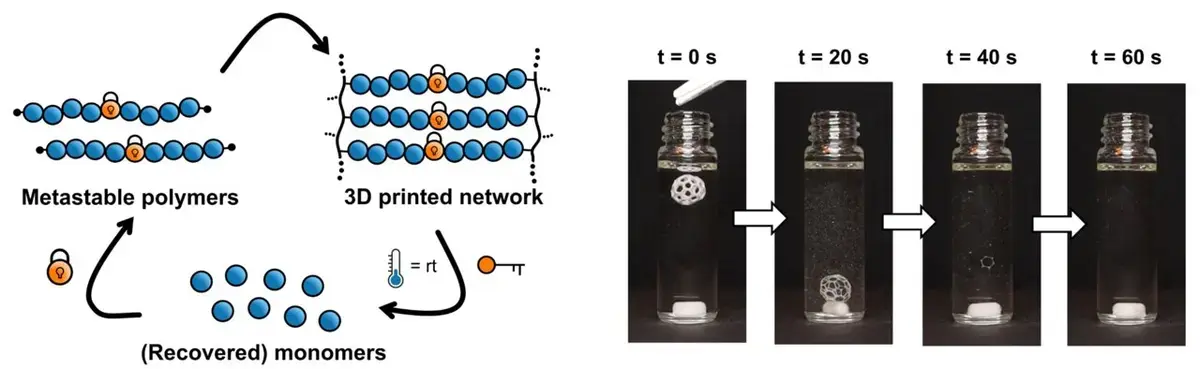
The ink's unique properties stem from its metastable state. Unlike conventional polymers, which are highly stable due to their chemical structures, this new material can be manipulated. The molecular chains of the ink are held together by a single lock mechanism. When the appropriate chemical key is applied, this lock can be opened, allowing the material to be reformed or recycled. This process could significantly reduce waste in 3D printing.
The ink's design enables it to transition between stable and metastable states. When in the metastable state, the material can be reshaped or returned to its original form. This flexibility opens up opportunities for reusing materials rather than discarding them after a single use. Researchers believe this could lead to more efficient manufacturing processes and a significant reduction in raw material consumption.
What Challenges Lie Ahead for Sustainable 3D Printing?
The potential applications of this technology are vast. Industries ranging from automotive to healthcare could benefit from a sustainable material that can be recycled and reused. The ability to easily manipulate the ink means that 3D printing could become more accessible and environmentally friendly.
While the prospects are promising, there are challenges to overcome. The transition from laboratory success to commercial viability requires further research and development. Additionally, the industry must ensure that the chemical processes involved in recycling the material are safe and efficient.
Looking forward, the development of this metastable ink could change the landscape of 3D printing. As companies and consumers become more environmentally conscious, sustainable materials will likely become a priority. The ability to close the loop on material use could lead to a significant shift in how products are manufactured and consumed.
Frequently Asked Questions
What is metastable 3D printing ink? Metastable 3D printing ink is a new material that can be reshaped and recycled, allowing for a closed-loop material cycle.
How does this ink benefit the environment? The ink reduces waste by enabling the recycling of materials, which minimizes the need for new raw materials and lowers environmental impact.
What industries could benefit from this technology? Various sectors, including automotive, healthcare, and consumer products, could leverage this sustainable printing technology to improve their manufacturing processes.