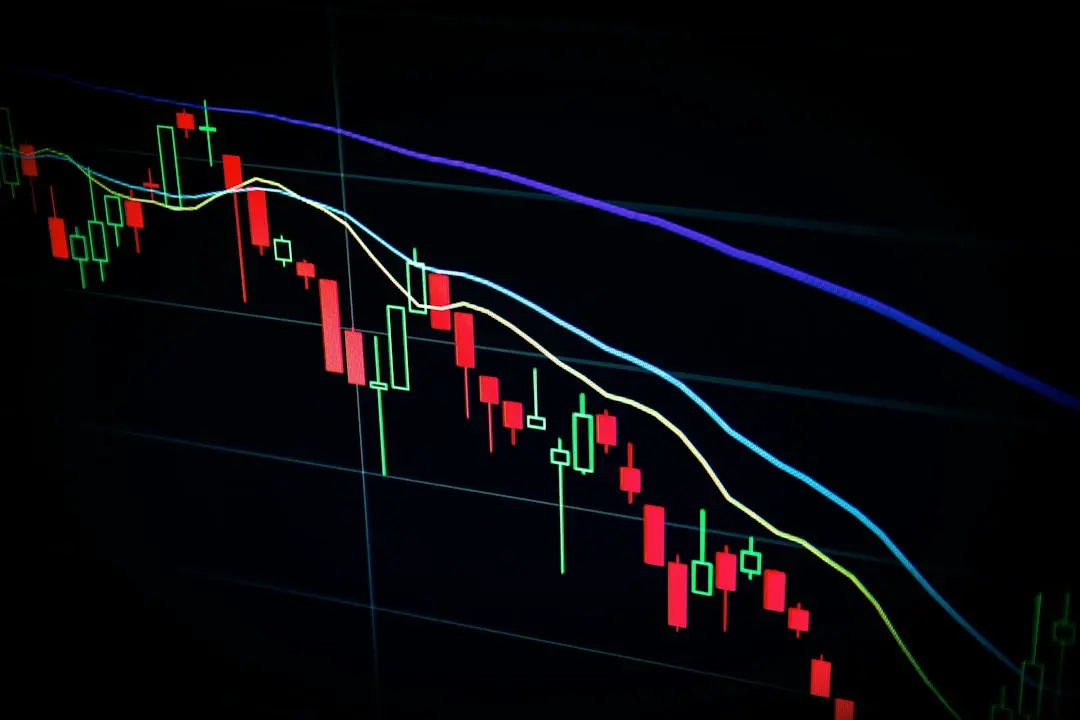
How Jane Street Uses Data to Gain an Edge
A small, privately held trading firm has quietly outperformed the largest Wall Street institutions, according to new reports from finance journalists Max Abelson and Katherine Doherty. Their investigation, released on October 9, 2026, focuses on the inner workings of Jane Street, a firm that has consistently posted record profits while keeping its operations largely opaque. The story explains how Jane Street’s strategies influence global markets and why its success matters to investors worldwide.
Latest news
 Iranian Leadership Condemns Rubio's Historic Athens Speech
 The FBI Pressures Iranian-American Scholar
 Trump Slams Nobel Peace Prize Snub With Eight-War Claim
 Silicon Valley Tech Leaders Welcome Light-Touch Approach
Jane Street’s rise began in the early 2000s, when a group of former Wall Street traders launched the firm in a modest office in Manhattan. Over the past decade, the company has grown to employ more than 1,200 people and to manage over $200 billion in assets. Despite its size, Jane Street remains a secretive entity, rarely disclosing its trading models or personnel. Abelson and Doherty’s research uncovered that the firm’s success hinges on a combination of sophisticated quantitative models, a culture that rewards risk-taking, and a unique approach to market-making that reduces volatility.
The journalists discovered that Jane Street relies heavily on machine‑learning algorithms that process terabytes of market data every day. These algorithms identify pricing inefficiencies across multiple asset classes, from equities to derivatives. By executing trades at microsecond speeds, the firm can capture tiny price differentials before other market participants react. „Their models are essentially a black box that turns raw data into profitable trades,” said Abelson. „The key is that they’re constantly refining those models with new information.”
What Does This Mean for Investors and Regulators?
The firm’s trading desk is organized into small, autonomous teams that each focus on a specific market sector. This structure allows teams to experiment with new strategies without disrupting the broader operation. When a team identifies a profitable pattern, the algorithm is scaled up across the firm’s entire portfolio. This iterative process has enabled Jane Street to maintain high returns even during periods of market stress.
The implications of Jane Street’s dominance are far-reaching. For retail investors, the firm’s ability to stabilize markets can reduce the frequency of extreme price swings. However, its opaque operations raise concerns about systemic risk. Regulators are watching closely, as the firm’s size and influence could amplify market disruptions if its models fail.
The firm’s success also forces traditional banks and hedge funds to rethink their strategies. Many are now investing in similar algorithmic trading platforms to keep pace. „If Jane Street can consistently beat the big players, it sets a new benchmark for efficiency,” noted Doherty. „Other firms must either adopt comparable technology or risk losing market share.”
The future looks uncertain. While Jane Street’s current models appear robust, the rapid evolution of financial technology means that yesterday’s edge could become today’s vulnerability. Regulators may introduce new oversight measures, and competitors may accelerate their own algorithmic research. For investors, staying informed about these developments will be crucial.
Frequently Asked Questions
Q1: How does Jane Street keep its trading strategies confidential? A1: The firm uses strict internal controls, limiting access to proprietary algorithms to a small number of senior analysts. It also employs advanced cybersecurity measures to protect its data.
Q2: Is Jane Street’s approach risky for the broader market? A2: While the firm’s high-frequency trading can reduce volatility, its reliance on complex models introduces systemic risk if those models misbehave during extreme market conditions.
Q3: Will regulators impose new rules on firms like Jane Street? A3: Regulators are already discussing potential oversight frameworks that would require greater transparency and stress testing of algorithmic trading systems.