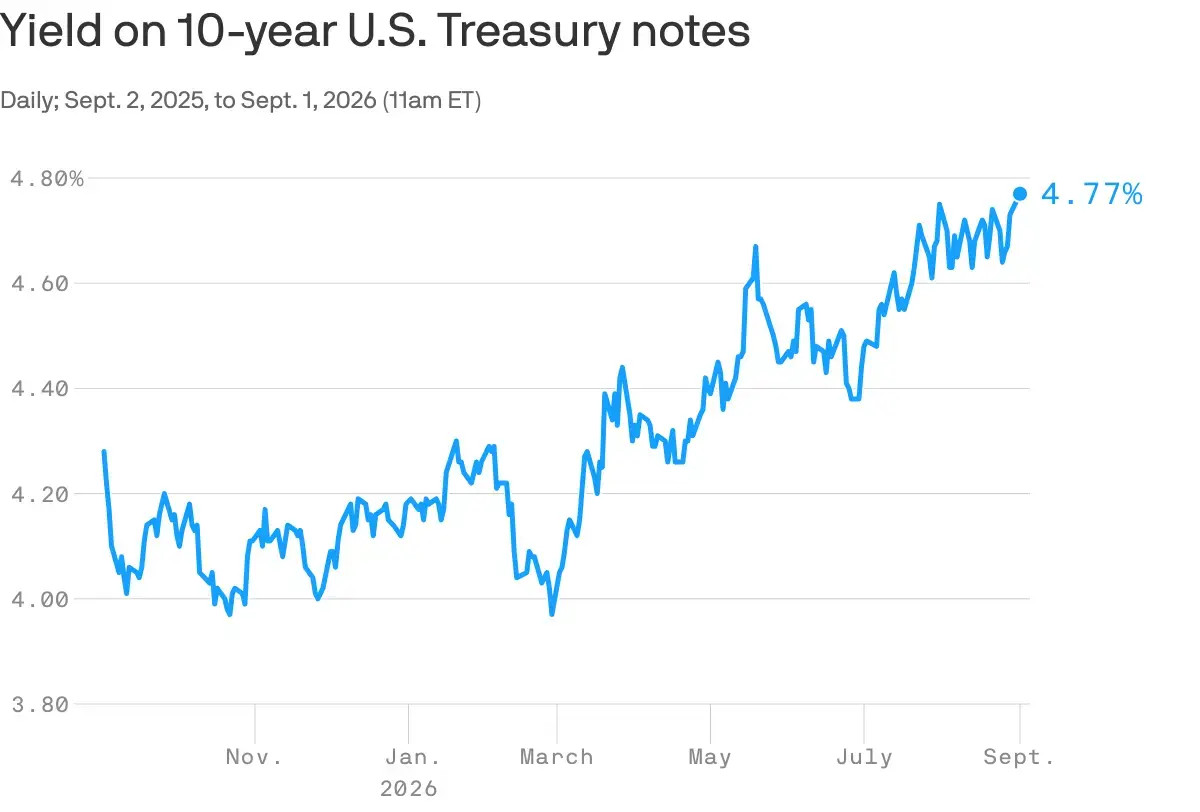
Growth Prospects Drive Yield Composition
US Treasury Secretary Scott Bessent addressed global financial leaders during the G20 meeting this week. He argued that recent bond market volatility reflects stronger US economic growth. Higher interest rates follow naturally from these improved growth prospects. This explanation aims to counter concerns about fiscal discipline and debt sustainability.
Latest news
 Swedish Voters Choose New Parliament as Left-Wing Coalition Projects to Win Majority
 Trump Announces End of US Tariff on Irish Whisky
 Frances Stonor Saunders, Author of CIA Cultural Espionage Exposé, Dies at 66
 Israel and Lebanon to Hold Security Talks in Rome This October
Bessent presented his case during a fireside chat at the gathering of global finance ministers. He emphasized that the current yield curve dynamics are not driven by inflation fears. Instead, investors are pricing in a robust American economy. This perspective shifts the narrative from monetary policy anxiety to fundamental strength. The Secretary sought to reassure markets that the Fed’s actions align with real economic conditions.
The core of Bessent’s argument lies in the specific components of bond yields. He noted that inflation expectations have remained flat or even declined recently. This stability suggests that price pressures are not the primary driver of rising rates. Consequently, the increase in yields stems from anticipated economic expansion. Investors demand higher returns when they expect stronger GDP growth. This distinction is crucial for understanding the current financial landscape. It separates temporary inflation spikes from long-term structural changes.
Is Inflation Truly Under Control?
Bessent highlighted that the US economy is showing signs of resilience. Strong consumer spending and business investment contribute to this outlook. As a result, the Federal Reserve maintains a cautious approach to rate cuts. Markets reflect this caution through higher borrowing costs. The Treasury Secretary framed this as a positive signal for the nation’s economic health. It indicates confidence in the country’s ability to sustain growth.
Critics often link rising bond prices to persistent inflation risks. However, Bessent pointed to data showing stable inflation expectations. This metric measures what investors believe will happen to prices over time. When these expectations drop, it signals trust in the central bank’s control. The recent trend supports the view that inflation is cooling. Therefore, the bond sell-off does not indicate a return to high inflation. It reflects a market adjusting to a new normal of higher rates. This adjustment process can cause short-term volatility but ensures long-term stability.
The debate continues among economists regarding the exact causes of yield increases. Some attribute it to fiscal deficits and debt issuance. Others focus on demographic shifts and productivity gains. Bessent’s stance prioritizes the growth narrative. He believes that strong earnings and corporate profits justify higher discount rates. This approach encourages continued investment in US assets. It positions the dollar as a safe haven despite higher costs.
Frequently Asked Questions
Why did Treasury Secretary Bessent say bond rates are rising? He stated that higher growth prospects in the United States are the main factor. Inflation expectations have stayed flat or decreased, removing it as a primary cause.
Where did Bessent make these comments? He spoke during a fireside chat at the G20 meeting of global finance ministers. This event brought together leaders from major economies to discuss financial stability.
What does this mean for future interest rates? It suggests that rates may remain elevated for some time. Investors expect sustained economic strength, which supports higher borrowing costs across the board.