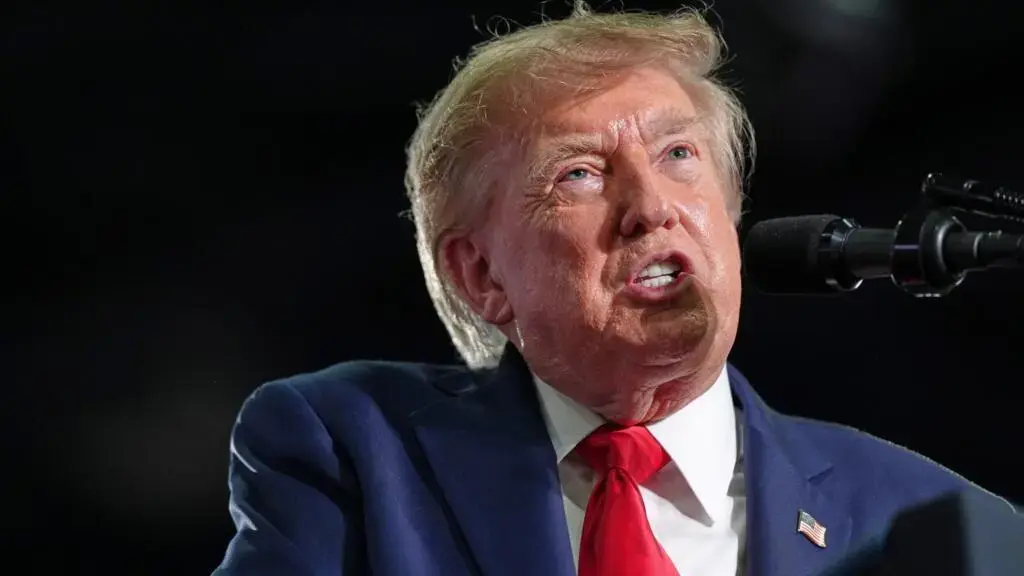
The exchange underscores the personal and political dimensions of the conflict
US President Donald Trump criticized Canada on Sunday, claiming the country seeks the advantages of statehood without the responsibilities of being a US state, amid escalating trade tensions. His remarks followed Canadian Prime Minister Mark Carney's announcement of retaliatory tariffs after failed negotiations between the two nations. The exchange highlights growing friction in the North American trade relationship, with both sides imposing economic measures in response to perceived unfair practices. Trump's comments reflect his long-standing frustration with trade imbalances and border policies involving Canada. The dispute intensified after Canada imposed countermeasures in reaction to US tariffs on steel and aluminum, which Ottawa views as unjustified. Carney defended the retaliatory actions as necessary to protect Canadian industries and workers, emphasizing sovereignty in trade decisions. Trump, however, framed Canada's stance as wanting preferential access to the US market without accepting corresponding obligations, using rhetoric that echoes past criticisms of allied nations.
Latest news
 Swedish Voters Choose New Parliament as Left-Wing Coalition Projects to Win Majority
 Trump Announces End of US Tariff on Irish Whisky
 Frances Stonor Saunders, Author of CIA Cultural Espionage Exposé, Dies at 66
 Israel and Lebanon to Hold Security Talks in Rome This October
The exchange underscores the personal and political dimensions of the conflict, moving beyond standard trade negotiations into ideological territory. Why does Trump compare Canada to a US state? Trump's analogy suggests Canada enjoys economic benefits from close ties with the United States—such as market access and security cooperation—while resisting political integration or policy alignment he demands. He has repeatedly argued that neighboring countries exploit US generosity without contributing fairly to shared burdens. This framing aims to pressure Ottawa into concessions by questioning the legitimacy of its independent trade policies. Critics note the comparison is constitutionally inaccurate and diplomatically inflammatory, as Canada remains a sovereign nation with no interest in becoming a US state. How might this rhetoric affect future negotiations? Such language risks hardening positions on both sides, potentially derailing compromise and prolonging economic strain on businesses and consumers reliant on cross-border trade.
Analysts warn that personal attacks and nationalist rhetoric can undermine
Analysts warn that personal attacks and nationalist rhetoric can undermine diplomatic channels, making technical agreements harder to achieve even when mutual interests exist. The ongoing tit-for-tat tariff increases threaten sectors like agriculture, manufacturing, and energy, where supply chains are deeply integrated. A prolonged standoff could lead to reduced investment and higher costs across North America. Frequently Asked Questions What specific tariffs did Canada announce in response to US actions? Canada imposed retaliatory tariffs on a range of US goods, including steel, aluminum, and certain agricultural products, matching the value of American measures deemed unfair by Ottawa. Is there any historical precedent for a US president suggesting a close ally should become a state? No US president has seriously proposed that a sovereign allied nation like Canada join the United States as a state; such remarks are considered rhetorical devices rather than policy proposals.
How have Canadian officials responded to Trump's latest comments? Canadian leaders have rejected the characterization as inaccurate and disrespectful, affirming Canada's commitment to defending its economic interests while remaining open to respectful dialogue.