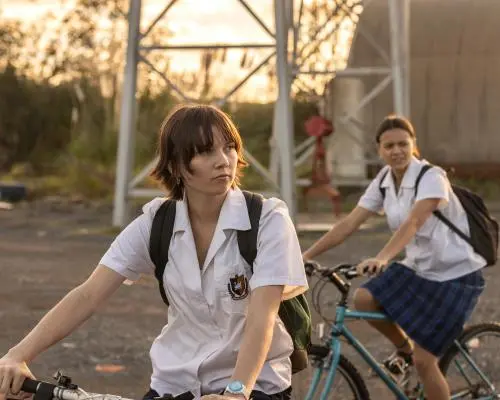
The 2006 setting is not just a backdrop but a textured layer
Paloma Schneideman’s film Big Girls Don’t Cry follows a 14-year-old girl in 2006 New Zealand as she navigates the uncertain terrain between childhood and adolescence. Set in a quiet suburban town, the drama captures the quiet moments of self-discovery, awkward interactions, and internal questioning that define early teenage years. The story unfolds with sensitivity, avoiding melodrama in favor of authentic, observed behavior. The film excels in its attention to detail, using small gestures and lingering silences to convey the protagonist’s evolving sense of identity. Schneideman, who both wrote and directed, draws from personal memory to create a world that feels specific yet universally relatable.
Latest news
 Leader of Jewish Greens Calls for Polanski to Step Down After Defeat
 EU Unveils Critical Mineral Projects List Focused on Clean Energy Metals
 Navanethem „Navi” Pillay Wins 2026 Nobel Peace Prize for Advancing Global Justice
 The Supreme Court’s recent ruling has reignited the fight against conversion therapy for LGBTQ+ youth
The 2006 setting is not just a backdrop but a textured layer, influencing everything from the characters’ clothing to the music they hear, grounding the narrative in a tangible time and place. How the Film Captures Adolescent Silence Rather than relying on dialogue to express inner turmoil, Big Girls Don’t Cry uses visual storytelling to show what the girl cannot yet name. Her confusion manifests in hesitant glances, withdrawn posture, and moments of sudden, unexplained emotion. Schneideman avoids explaining her character’s thoughts directly, instead inviting the audience to interpret her experience through behavior. This approach mirrors the real-life opacity of adolescence, where feelings are often felt before they are understood. The cinematography supports this subtlety, with soft lighting and close-ups that focus on facial expressions and small actions.
Scenes at school, at home, and alone in her room are framed to emphasize
Scenes at school, at home, and alone in her room are framed to emphasize isolation and observation, reinforcing the theme of a young person learning to see herself through others’ eyes while beginning to form her own. What Does It Mean to Grow Up Quietly? The film resists the trope of the dramatic breakthrough or life-changing event. Instead, growth happens in increments: a hesitant joke shared with a peer, a book read in secret, a decision to wear something different. These small acts accumulate into a quiet transformation. Schneideman suggests that maturity is not always marked by rebellion or revelation but by the accumulation of self-awareness in ordinary moments. By avoiding sensationalism, the film honors the reality that many young people experience adolescence not as a crisis but as a slow, often lonely process of becoming.
Its power lies in its restraint, offering a portrait that feels true because it refuses to exaggerate. Frequently Asked Questions Is Big Girls Don’t Cry based on Paloma Schneideman’s own adolescence? While not a direct autobiography, Schneideman has said the film draws from her memories of being a teenager in New Zealand during the mid-2000s, particularly the emotional landscape of that time. Why is the year 2006 significant in the story? The 2006 setting provides cultural and technological context—pre-smartphone ubiquity, specific fashion and media influences—that shapes the protagonist’s world and limits her access to outside perspectives, intensifying her internal focus. Does the film offer a clear resolution to the girl’s journey? No, the story ends not with a conclusion but with a sense of continuation, reflecting the ongoing nature of growing up and leaving the audience to imagine what comes next.