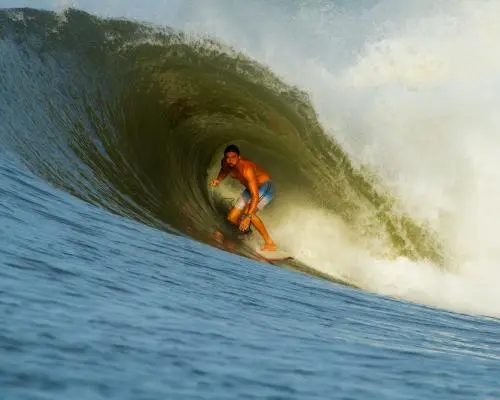
How Rising Seas Crush Classic Waves
A new study reveals that the climate crisis is endangering many of the world’s best surfing locations. Rising sea levels and shifting sand patterns are directly impacting these famous breaks. Coastal hardening further accelerates the destruction of natural wave formations. This research highlights a significant threat to surfing culture worldwide.
Latest news
 Iranian Leadership Condemns Rubio's Historic Athens Speech
 The FBI Pressures Iranian-American Scholar
 Trump Slams Nobel Peace Prize Snub With Eight-War Claim
 Silicon Valley Tech Leaders Welcome Light-Touch Approach
Researchers analyzed dozens of famous waves designated within World Surfing Reserves. They found that more than three-quarters of these sites face high risk. The primary drivers include changing tide levels and hardened coastlines. These factors combine to erode the natural conditions required for quality surfing. The situation is becoming increasingly urgent for surfers and local communities.
The study identifies specific mechanisms behind the decline of these breaks. Sea level rise submerges certain waves, making them unusable. Other classic breaks are wiped out by coastal developments. Hardened coastlines, such as seawalls, reflect wave energy and alter sand movement. This prevents the natural replenishment of sandbars that create perfect waves. The result is a loss of critical surfing infrastructure.
Why Conservation Efforts Are Failing
Surfing reserves were established to protect these unique marine environments. However, climate change outpaces current conservation efforts. The analysis shows that physical geography is changing faster than management strategies. Local authorities struggle to balance development with environmental protection. The data indicates a widespread pattern of degradation across different regions.
The report emphasizes the role of human intervention in coastal zones. Building structures along the shore disrupts natural sediment flow. This leads to the disappearance of sandbars that shape the waves. Without regular sand movement, the waves lose their form and power. The study warns that passive protection is no longer sufficient. Active management is required to preserve these sites.
Experts note that the economic value of these locations is immense. Surf tourism supports local economies and cultural identity. Losing these breaks would have severe social and financial consequences. The findings urge governments to rethink coastal planning policies. Immediate action is necessary to mitigate the damage.
Frequently Asked Questions
The outlook for many famous surf spots remains grim. Climate models predict continued sea level rise over the coming decades. This will likely submerge more low-lying breaks. Meanwhile, increased storm activity may accelerate erosion. Surfing communities must advocate for stronger climate policies. Protecting these waves requires global cooperation and local action. The time to act is now to preserve this heritage.
What percentage of World Surfing Reserves are at high risk? More than three-quarters of the analyzed famous waves are at high risk. This statistic comes from a comprehensive study of global surf breaks. The risk is driven by climate and coastal changes.
How do hardened coastlines affect surfing waves? Hardened coastlines like seawalls reflect wave energy and stop sand movement. This prevents the natural formation of sandbars needed for good waves. Consequently, the quality and existence of the break are compromised.