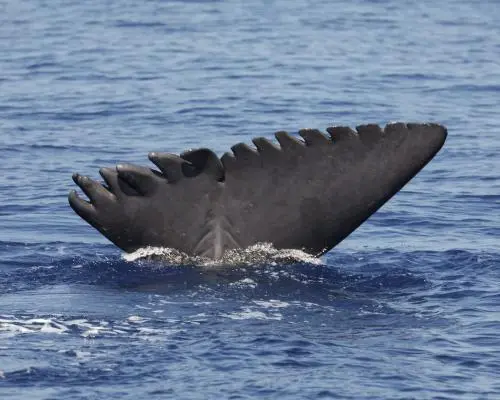
Excessive speeds in the protected zone: a constant threat to Mediterranean
Barbarioli, the lead researcher for the Tethys Research Institute’s citizen science expedition, immediately spotted a wound on the animal’s left flipper. „Given the precision of the mark, it is likely the result of a ship collision,” she said. Ship strikes have long been recognized as a major human-caused mortality factor for endangered sperm and fin whales in the Mediterranean.
Latest news
 South Carolina Senate race tightens as polls show a dead heat
 Radical Right Youth Wings Are Fueling Europe's Populist Wave
 Democratic Hopefuls Face High Stakes in Midterm Political Landscape
 Europe Pivots Toward Quantum Supremacy to Secure Future Tech Dominance
A Guardian investigation, using data from maritime intelligence firm Veson Nautical, found that large passenger and cargo ships operated by four companies – Grimaldi Group, Corsica Ferries, Baleària and Moby Lines – frequently sailed through the Pelagos sanctuary at 15 knots (about 17 mph) or faster. At these speeds, collisions are almost always fatal for the cetaceans involved. Conversely, impacts are rarely fatal when ships travel below 10 knots. Non-governmental conservation group Oceancare states that speed reduction is the most effective mitigation strategy when route changes are not feasible.
The waters between Valencia and Genoa, encompassing the Pelagos sanctuary, constitute a critical habitat for Mediterranean cetaceans. This area hosts about two-thirds of the region’s fin whale population and over one-fifth of its sperm whales. In July 2023, the International Maritime Organization (IMO) designated the north-western Mediterranean as a Particularly Sensitive Sea Area (PSSA). A voluntary speed recommendation (VSR) advised ships with a gross tonnage of 300 tons or more to sail at 10-13 knots in this zone to reduce the risk of fatal collisions.
Despite the IMO recommendation, The Guardian, using additional data from Global Fishing Watch, discovered that ships with IMO identification numbers spent over 280,000 hours sailing at 15 knots or faster through the PSSA in 2025. The data also shows ships spent over 6,000 hours at speeds above 25 knots. These results align with earlier analyses showing voluntary recommendations are largely ineffective. In 2022 and 2025, ferries owned by the Grimaldi Group, including the Cruise Roma – over 250 meters long, the world’s longest cruise ferry – topped the top-20 list of ships spending the most time at 15 knots or faster in the habitat.
In 2025, high-speed navigation remained concentrated among a few operators in
In 2025, high-speed navigation remained concentrated among a few operators in the PSSA. Only seven ships – four Baleària fast ferries and three Grimaldi cruise ferries – accounted for 70% of hours spent above 25 knots. Seven Grimaldi cruise ferries represented approximately 8% of the total hours recorded for all ships at 15 knots or faster in 2025.
The Guardian interviewed six captains – five currently serving and one former – who have navigated in the PSSA since its designation. Mariners who command or have commanded ships owned by the Grimaldi Group and Moby Lines state their companies have not introduced measures to encourage slow navigation after the IMO VSR. „As long as it is only a recommendation, no one will reduce speed,” said a Grimaldi captain. „It would mean a complete overhaul of the commercial system. Ferries in the zone go at 25 [knots], especially those carrying tourists. They have schedules to keep.”
The Grimaldi Group and Moby Lines were contacted for comment but did not respond. Thomas Folegot, executive director of maritime technology firm Quiet-Oceans, says that while container ships moving slowly could easily reduce speed in the PSSA, it is much harder for ferries: „For their business, it is fatal. [Passengers] will fly to Corsica.” Analyses by Quiet-Oceans and Oceancare showed that 80% of commercial ship voyages in the PSSA in 2023 occurred at speeds above 10 knots.
Simone Panigada, president of the Tethys Research Institute and a scientific committee dedicated to cetacean conservation, argues it is time to move „progressively, from voluntary rules to mandatory ones” to reduce collision risk. „A mandatory framework would create fairer conditions for all operators, encouraging shipping companies’ compliance and ensuring adoption of these measures does not depend solely on individual corporate decisions,” he explains.
The International Whaling Commission (IWC) told The Guardian it has recorded six incidents in the PSSA since July 2023: five near-collisions and one collision. The organization believes most impacts remain unrecorded. Although annual time spent in the PSSA above the key threshold of 15 knots remained high in 2025, it registered an 11% decrease compared to 2022. Time spent above 25 knots also fell by roughly a third between 2022 and 2025. These overall declines are likely caused by factors such as changes in navigation routes, says Olivia Watki