
Balancing Transformation With Financial Stability
Cardiff-based charity Making Music, Changing Lives highlights the delicate balance between the transformative potential of musical training and the precarious nature of its funding. Trustees respond to recent critiques regarding access for working-class musicians. The organization emphasizes that while music changes lives, the systems supporting it are often under threat. This perspective challenges the notion that progress has been steady over the last two decades. It calls for a deeper look at how sustainability is achieved in community arts.
Latest news
 Anthropic Announces $31 Billion Data Centre Deal in Western Queensland
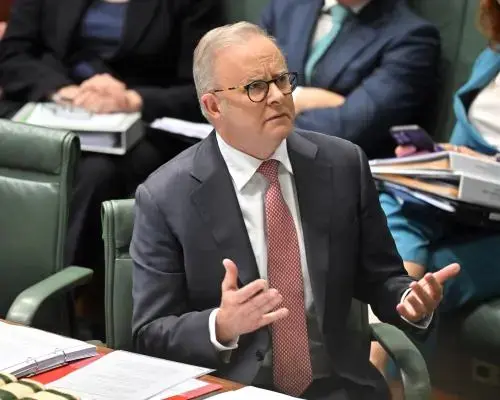 Veteran Journalist Hugh Riminton Announces Retirement After Nearly Five Decades
 How the 1980s Permanently Shaped America
 Victorian Police Gain Random Stop-and-Search Powers Under New Jacks Law
The response comes from Elizabeth Williams and Luke Madams, who serve on the board of directors. They address points raised by Robert Ames in a previous publication. Ames noted that doors have closed for working-class musicians since he co-founded an orchestra eighteen years ago. Williams and Madams agree with this observation. They state they have witnessed both the positive impact of music and the vulnerability of its delivery. Their experience spans nearly two decades of active involvement. They argue that fragility is a defining characteristic of the sector. Without constant vigilance, gains can be quickly lost. The charity operates out of Cardiff, Wales. Its mission focuses on using music to alter life trajectories.
Is Community Funding Enough To Sustain Progress?
The core argument centers on the duality of music education. It is powerful enough to transform individual lives. Yet, the infrastructure supporting it is easily broken. Williams and Madams point to their own charity as a case study. Making Music, Changing Lives demonstrates what happens when resources are scarce. They observe that working-class students face significant barriers. These barriers are not just financial but also cultural. The charity works to dismantle these obstacles. However, maintaining consistent provision requires stable funding. When budgets shrink, the most vulnerable participants are affected first. The authors suggest that success stories often mask underlying instability. A single grant cycle can determine whether a program continues or ends. This unpredictability creates anxiety for both staff and students. The sector must acknowledge this tension openly. Ignoring fragility leads to sudden closures.
Critics like Ames highlight the shrinking opportunities for lower-income groups. The trustees counter that local initiatives are vital but insufficient alone. They believe national support must complement local efforts. Without broader systemic change, local charities burn out quickly. The question remains whether current models are sustainable long-term. Williams and Madams urge stakeholders to view fragility as a warning sign. It is not a temporary glitch but a structural feature. If the sector does not adapt, the gap will widen. Working-class musicians need reliable pathways into professional careers. Currently, these pathways are often blocked by economic shifts. The charity’s work shows that intervention helps. But intervention must be continuous to be effective. Intermittent support leads to intermittent results.
The outlook suggests that music education will continue to face pressure. The power of music remains undeniable. Students gain confidence, discipline, and community through participation. However, the safety net is thin. Policymakers and funders must recognize this reality. If they do not, the doors identified by Ames may stay shut. The next decade will test the resilience of these programs. Success depends on treating fragility as a priority. Only then can the transformative benefits reach all demographics.
Frequently Asked Questions
Who is responding to Robert Ames’s article? Elizabeth Williams and Luke Madams are the trustees responding. They lead the Cardiff-based charity Making Music, Changing Lives.
What is the main issue with music education? The primary issue is the fragility of its provision. While music transforms lives, the funding structures are unstable. This makes long-term access difficult for working-class musicians.