Shifting Winds: The Mechanics Behind a Slower Sea Breeze
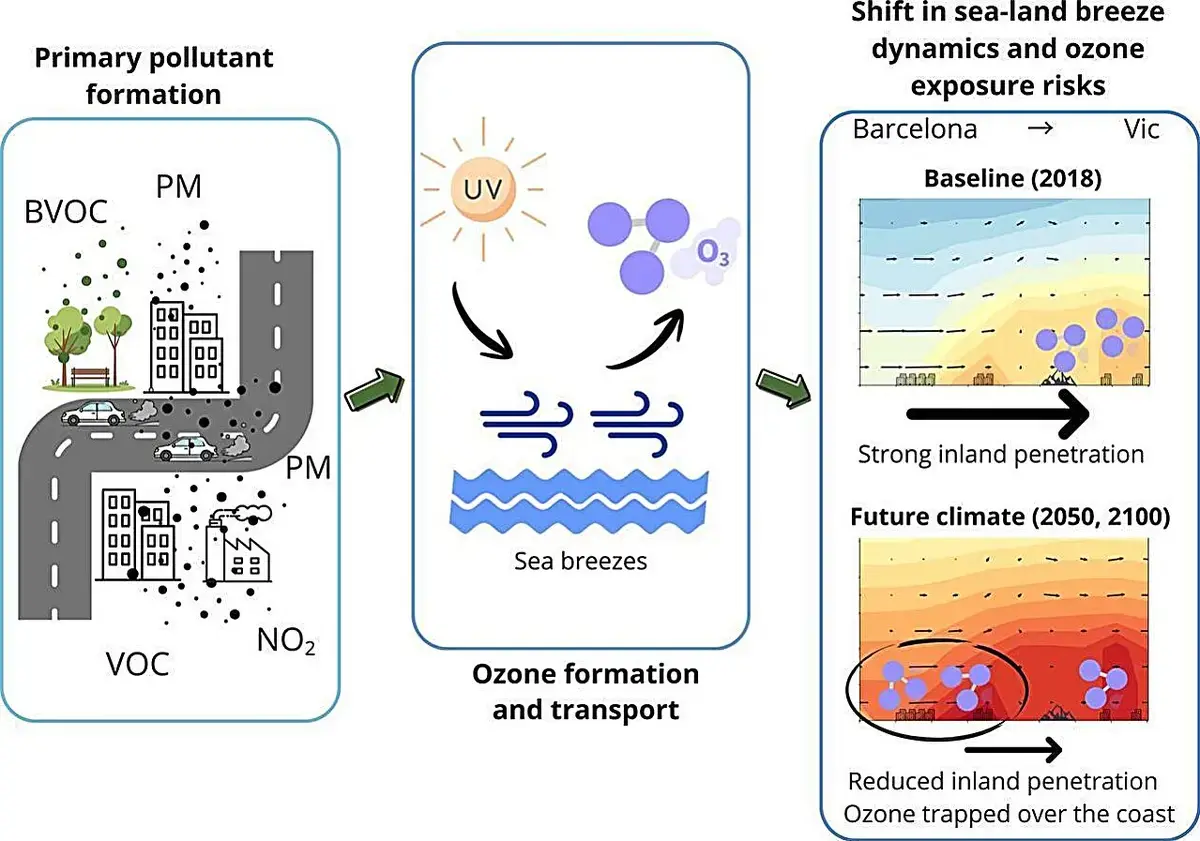
A new study predicts that climate warming will reshape the sea‑land breeze cycle around Barcelona by 2050. Researchers modeled future wind patterns and pollutant dispersion, finding that altered breezes could trap ozone and other pollutants over the city’s coastal neighborhoods. The findings raise concerns for the health of millions of residents.
Latest news
 Swedish Voters Choose New Parliament as Left-Wing Coalition Projects to Win Majority
 Trump Announces End of US Tariff on Irish Whisky
 Frances Stonor Saunders, Author of CIA Cultural Espionage Exposé, Dies at 66
 Israel and Lebanon to Hold Security Talks in Rome This October
The research team used high‑resolution climate models combined with atmospheric chemistry simulations. Warmer sea surface temperatures are expected to weaken the daytime sea breeze, while stronger inland heating will intensify the night‑time land breeze. These shifts reduce the natural flushing of polluted air, allowing ozone precursors to accumulate. The study also linked higher ozone concentrations to increased respiratory hospital admissions in past heatwaves.
Model outputs show the sea breeze will lose up to 30 percent of its speed by mid‑century. „When the sea surface warms, the temperature gradient that drives the breeze shrinks,” said lead researcher Dr. Marta Soler. The weakened breeze fails to push polluted air inland, causing a buildup along the shoreline. Simulations indicate average ozone levels could rise by 12 parts per billion during summer afternoons, a range associated with higher asthma attacks. The researchers also noted that the land breeze will become more erratic, sometimes pushing polluted air back toward the city during the night.
Will Residents Face Higher Health Risks?
Public health officials warn that the projected ozone surge could strain the healthcare system. „Even a modest increase in ozone can trigger more emergency room visits for breathing problems,” explained Dr. Luis Ortega of the Barcelona Health Agency. The study estimates an additional 1,500 asthma‑related hospitalizations per year if current emission controls remain unchanged. Vulnerable groups, such as children and the elderly, are expected to bear the brunt of the impact. Authorities are urged to tighten traffic emissions and expand green spaces to counteract the anticipated rise in pollutants.
The altered breeze pattern signals a need for proactive adaptation. City planners may need to redesign coastal ventilation corridors and invest in air‑quality monitoring. If mitigation measures keep pace with climate trends, the worst health outcomes could be avoided. However, without decisive action, Barcelona’s iconic seaside air could become a source of chronic health threats.
Frequently Asked Questions
What causes the sea‑land breeze to weaken? Rising sea temperatures reduce the temperature contrast between land and water, which drives the daytime sea breeze. A smaller contrast means slower wind speeds.
Can local policies offset the projected ozone increase? Yes. Reducing vehicle emissions, promoting electric transport, and increasing urban greenery can lower ozone precursors and improve air circulation.
When will the changes become noticeable? Model projections suggest measurable alterations by the 2030s, with the most pronounced effects appearing around 2050 if current warming trends continue.