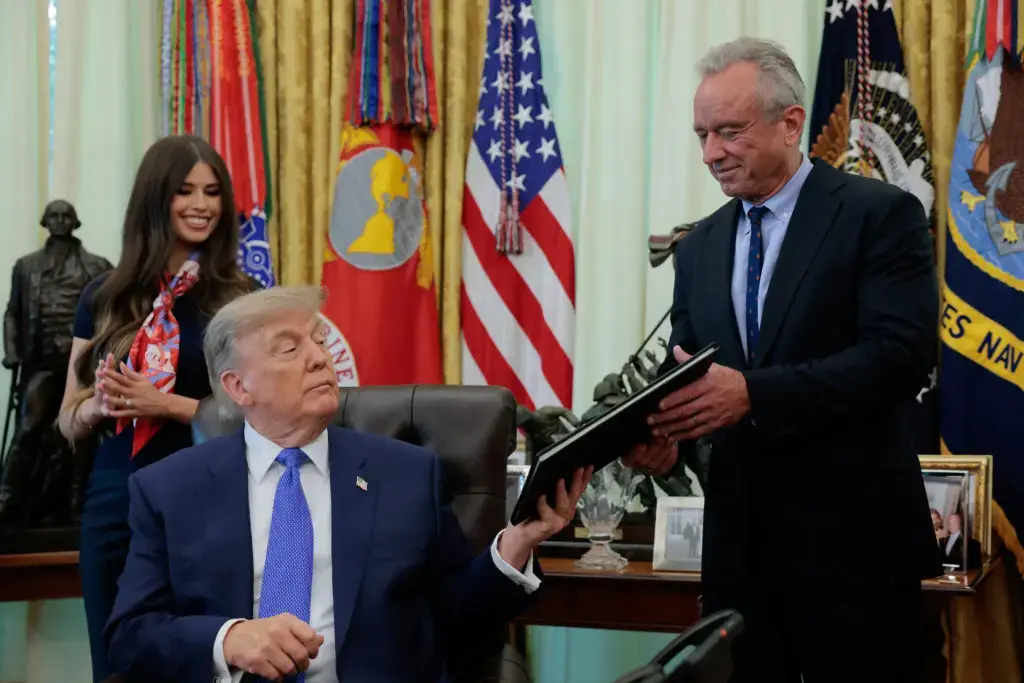
A Return to Single-Dose Vaccinations
Former President Trump's recent announcement outlines a surprising shift in vaccine strategy. He proposes separating combined vaccines into individual doses. This move would require the production and distribution of millions of single-shot vaccines.
Latest news
 Swedish Voters Choose New Parliament as Left-Wing Coalition Projects to Win Majority
 Trump Announces End of US Tariff on Irish Whisky
 Frances Stonor Saunders, Author of CIA Cultural Espionage Exposé, Dies at 66
 Israel and Lebanon to Hold Security Talks in Rome This October
This approach harks back to medical practices not seen in decades. It presents significant logistical and public health challenges. The plan targets vaccines currently administered as single, multi-component injections.
The proposal specifically addresses common childhood immunizations. These often protect against several diseases with one shot. For example, the measles, mumps, and rubella (MMR) vaccine is a combined dose. Trump's order would mandate separate injections for each of these diseases.
What Are the Practical Implications of This Order?
This change would dramatically increase the number of required injections. Children would need multiple shots instead of one. Public health experts are raising concerns about compliance.
Implementing this order would involve a massive overhaul of vaccine manufacturing. Pharmaceutical companies would need to retool production lines. They would have to create individual vaccines that are currently only available in combined forms. This process could take years and significant investment.
Furthermore, healthcare providers would face new challenges. They would need to administer more injections per patient. This could lead to increased discomfort for children and greater administrative burdens. There are also worries about potential vaccine hesitancy increasing.
The long-term effects on public health could be substantial. A decrease in vaccination rates could lead to outbreaks of preventable diseases. The scientific consensus favors combined vaccines for their efficacy and convenience. This proposed policy marks a stark departure from established medical guidelines.
Frequently Asked Questions
What kind of vaccines would be affected? The order would impact common combined vaccines, such as those for measles, mumps, and rubella, which are currently given as a single shot.
Why are combined vaccines used now? Combined vaccines are used because they are safe, effective, and reduce the number of injections needed, making vaccination easier and improving compliance.
What are the potential public health risks? Separating vaccines could lead to lower vaccination rates due to more injections, potentially causing outbreaks of diseases that are currently well-controlled.