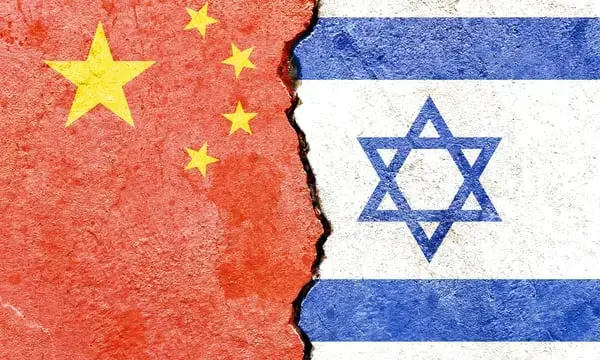
A Strategic Partnership Takes Shape
China and Israel have strengthened economic ties in recent years, with Israel becoming a key player in China's Belt and Road Initiative. Dr. Tomer Fadlon, a research fellow at the Israel-China policy center, shares his insights on the growing partnership. The collaboration has been driven by mutual interests and strategic goals.
Latest news
 Swedish Voters Choose New Parliament as Left-Wing Coalition Projects to Win Majority
 Trump Announces End of US Tariff on Irish Whisky
 Frances Stonor Saunders, Author of CIA Cultural Espionage Exposé, Dies at 66
 Israel and Lebanon to Hold Security Talks in Rome This October
The relationship between China and Israel has evolved significantly over the past decade, with China becoming Israel's largest trade partner. The two countries have cooperated in various fields, including technology, agriculture, and infrastructure. Dr. Fadlon attributes the growth to China's increasing presence in the global economy and Israel's innovative capabilities.
Dr. Fadlon notes that China's investment in Israel is not limited to economic gains; it also serves as a strategic move to expand its influence in the Middle East. Israel, in turn, benefits from China's vast market and investment opportunities. The partnership has led to the establishment of several joint ventures and collaborations in areas such as cybersecurity and artificial intelligence.
Can Israel Maintain its Independence?
China's investment in Israel's high-tech sector has been particularly significant, with companies like Alibaba and Huawei setting up research and development centers in the country. Dr. Fadlon highlights that this cooperation has not only brought economic benefits but also facilitated the transfer of knowledge and technology between the two nations.
As China's influence in Israel grows, concerns have been raised about the potential impact on Israel's sovereignty. Dr. Fadlon acknowledges that Israel must be cautious in its dealings with China to maintain its independence. He emphasizes that Israel should diversify its economic partnerships and ensure that its strategic interests are protected.
The deepening ties between China and Israel are likely to have significant consequences for the region and the global economy. As the partnership continues to evolve, it is crucial for Israel to strike a balance between its economic interests and its strategic autonomy.
Frequently Asked Questions
What are the main drivers of China-Israel economic cooperation? The partnership is driven by mutual interests, with China seeking to expand its influence in the Middle East and Israel benefiting from China's vast market and investment opportunities.
How is China's investment in Israel impacting the country's high-tech sector? China's investment has facilitated the growth of Israel's high-tech industry, with companies like Alibaba and Huawei setting up research and development centers in the country.
Can Israel's sovereignty be compromised by its growing ties with China? Israel must be cautious in its dealings with China to maintain its independence, diversifying its economic partnerships and protecting its strategic interests.