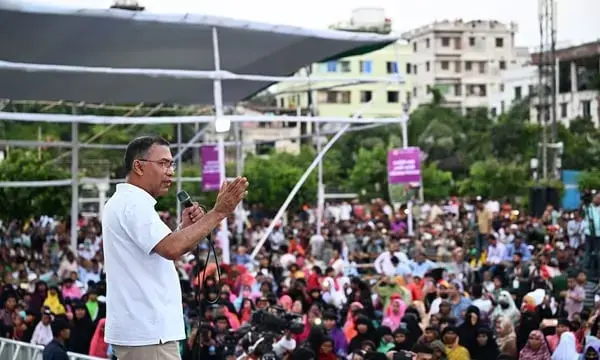
Political Exclusion: Marginalizing Opposition Voices
In Bangladesh, Prime Minister Tarique Rahman’s administration has just completed its first 100 days. Observers note that political exclusion, economic uncertainty, security worries, and diplomatic imbalance dominate the national discourse. The government’s early actions have already drawn sharp criticism from opposition parties and analysts alike.
Latest news
 Swedish Voters Choose New Parliament as Left-Wing Coalition Projects to Win Majority
 Trump Announces End of US Tariff on Irish Whisky
 Frances Stonor Saunders, Author of CIA Cultural Espionage Exposé, Dies at 66
 Israel and Lebanon to Hold Security Talks in Rome This October
The BNP’s return to power follows a tumultuous election cycle that left the country divided. Rahman’s cabinet has pursued policies that critics say sideline rival parties, while investors grapple with volatile market signals. Security agencies report heightened alerts amid lingering threats, and foreign ministries note strained ties with neighboring states. These dynamics suggest a fragile start for the new regime, raising questions about its long‑term stability.
Opposition leaders claim the government has restricted their access to parliamentary forums and media platforms. Several senior figures report being denied entry to key committee meetings, limiting their ability to influence legislation. Human‑rights groups warn that such practices could erode democratic norms and deepen political polarization. The ruling party, however, argues that these measures protect national interests and prevent obstructionist tactics.
Can Economic Uncertainty Undermine Growth Prospects?
Market analysts point to a slowdown in foreign direct investment since the new cabinet took office. Currency fluctuations and rising inflation have sparked consumer anxiety, while small businesses cite tighter credit conditions. The finance ministry attributes the volatility to global trends and promises policy adjustments to stabilize the economy. Yet, critics argue that without clear reforms, the uncertainty may stifle job creation and exacerbate poverty.
The combined effect of political, economic, security, and diplomatic challenges could shape Bangladesh’s trajectory for years to come. If the government addresses exclusionary practices, steadies the economy, and restores confidence in its security and foreign policies, it may still consolidate power. Failure to do so, however, risks deepening societal divides and inviting external pressures.
Frequently Asked Questions
What is meant by „political exclusion” in this context? It refers to actions that limit opposition parties’ participation in legislative processes, media access, and public debate, effectively reducing their influence.
Why is the economy considered uncertain after only 100 days? Investors cite volatile currency rates, rising inflation, and reduced foreign investment as signs of instability, while policymakers cite external shocks and pending reforms.
How might diplomatic imbalance affect Bangladesh’s regional relationships? Strained ties with neighboring countries could hinder trade, security cooperation, and multilateral initiatives, potentially isolating Bangladesh on the international stage.