The 1992 Election: Economy Over Geopolitics
Bush argued that critics accused him of spending too much time on foreign policy. He noted that schoolchildren practiced nuclear war drills. Bush emphasized that more people breathed free air in his four years than in all prior history. He was a WWII fighter pilot, UN ambassador, CIA director, and Reagan’s VP. Yet voters cared less about Cold War victory. 73% said the country was on the wrong track. Post-recession anxiety dominated. Bush’s approval dropped from 89% in February 1991 to about 40% by the convention.
Latest news
 Trump Blames Iran War for Republican Midterm Defeat
 South Korea Expands Anti-Piracy Mission Near Strait of Hormuz
 Serbia Arrests Police Over Student Protest Violence
 Trump’s Midterm Loss Leaves GOP Reeling, Democrats Poised for Action
„It’s the Economy, Stupid!”
James Carville, Bill Clinton’s campaign manager, crafted the slogan. It was posted in the Little Rock war room. Historian Nelson Lichtenstein notes it kept strategists focused on working-class economic well-being. Voters typically prioritize their wallets. But history shows gaps in this conventional wisdom, especially during failed foreign adventures. Domestic and foreign policies are interconnected, as the 2026 midterms demonstrated. No PhD in international relations is needed to see how the Persian Gulf war raised fuel prices.
When Foreign Policy Backfires
„Analysts tend to separate domestic from foreign policy, but they are often tightly linked,” says historian William Hitchcock for Responsible Statecraft. „Even if voters say they are unhappy with inflation, they don’t always connect the external war, supply chain disruptions, tariffs, and the cost of gas or beef.” „Sometimes ‘It’s the economy, stupid’ is a softer way of saying ‘It’s foreign policy, stupid.’ Both can be true,” Hitchcock added.
2006: The Iraq War Vote
If George H. W. Bush felt undervalued for guiding the Cold War to a soft landing, his son faced voter disdain for a catastrophic war choice: the 2003 Iraq invasion. „Perhaps the most dramatic example of foreign policy deciding a mid-term election was 2006, when the George W. Bush administration’s policy visibly failed,” says historian Carolyn Eisenberg for RS. „The administration’s claim that Saddam Hussein had weapons of mass destruction was discredited, and American losses were mounting without significant ground improvements. New representatives were elected who ran specifically on a platform of ending the Iraq war,” Eisenberg adds. The new Democratic majority in the House in 2007 failed finally to fund the war and impose a withdrawal timeline on the Pentagon.
Vietnam’s Lasting Impact
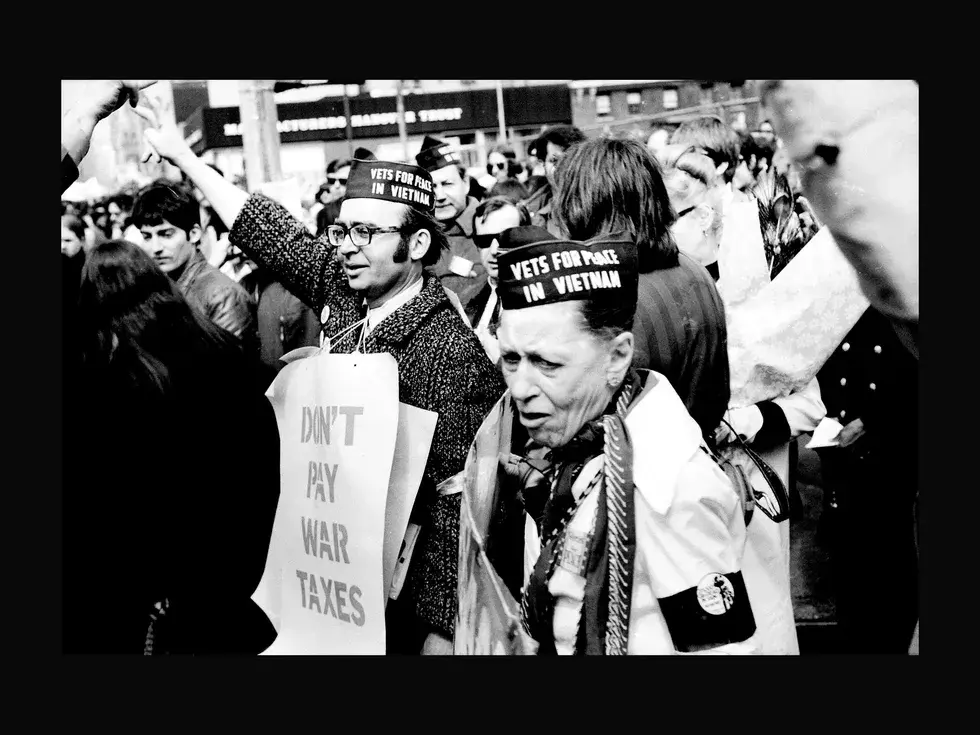
Today, Eisenberg is an expert on the Vietnam War. In the 1960s, as an anti-war activist, she witnessed foreign policy’s deep influence on a presidential race. „The anti-war movement condemned Lyndon Johnson’s candidacy and undermined Vice President Humphrey’s. Few remember that Richard Nixon won the election on a ‘secret plan’ to end the war,” Eisenberg says for RS. „In the 1970 mid-terms, a growing number of strong anti-war candidates were elected to Congress, including Bella Abzug and Ron Dellums. Their presence, along with the growing disillusionment of many incumbent Democrats and Republicans, exerted significant pressure on the White House [Nixon].”
1974: The Watergate Babies
It took years for that pressure to produce results. With the U. S. commitment to Vietnam now in its third decade, Congress finally clarified that war funding would end in January 1973, without a peace deal with Hanoi. Nixon and Henry Kissinger listened. Foreign policy continued to influence voters the following year, according to historian Brandan Buck, who studies domestic opposition to American wars at the Cato Institute. In the 1974 mid-terms, „while Watergate and President Gerald Ford’s pardon of Nixon dominated the election, residual resentment over the bombing of Cambodia and Laos, and the Southeast Asian war in general, played a role in the rise of the ‘Watergate Babies,’ who vocally rejected their parents’ generation of muscular anti-communism,” Buck says for RS.
Keeping Out of War
The relevance of foreign policy also manifests in presidential promises to keep the country out of conflict. Long before Donald Trump promised „fewer external wars,” Lyndon Johnson promised not to send American boys nine or ten thousand miles from home to do what Asian boys should do alone. President Woodrow Wilson won the 1916 election using the slogan „He kept us out of the war.” In the following April, Wilson asked Congress for a formal declaration of war against Germany. By the mid-term elections