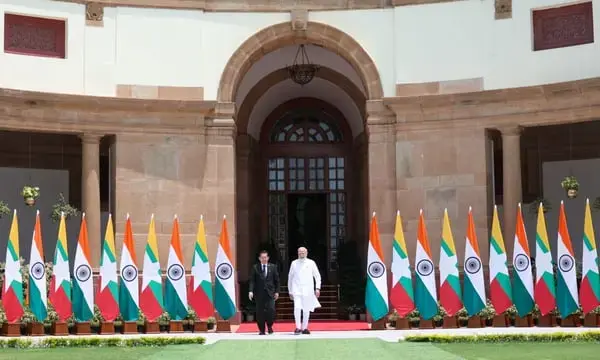
Why Is India Engaging with a Controversial Leader?
On June 2, 2026, Indian Prime Minister Narendra Modi welcomed Min Aung Hlaing, the military leader of Myanmar, to New Delhi. This meeting raised eyebrows due to Hlaing's controversial role in Myanmar's 2021 coup, which overthrew the democratically elected government.
Latest news
 Swedish Voters Choose New Parliament as Left-Wing Coalition Projects to Win Majority
 Trump Announces End of US Tariff on Irish Whisky
 Frances Stonor Saunders, Author of CIA Cultural Espionage Exposé, Dies at 66
 Israel and Lebanon to Hold Security Talks in Rome This October
India's engagement with Hlaing has sparked debate among political analysts and human rights advocates. The Indian government argues that maintaining dialogue with Myanmar's military leadership is essential for regional stability and security. India shares a long border with Myanmar and is concerned about the potential spillover of unrest into its northeastern states.
India's approach to Myanmar has often been characterized by a balancing act. While it has expressed concerns over human rights violations, it also views Myanmar as a strategic partner in countering China's influence in Southeast Asia. The Indian government believes that engaging with Hlaing could help stabilize the region and ensure security cooperation.
What Are the Implications of This Meeting?
During the meeting, Modi emphasized the importance of peace and stability in Myanmar, urging Hlaing to work towards restoring democracy. However, critics argue that this engagement legitimizes the military regime and undermines the democratic aspirations of the Myanmar people.
The meeting with Hlaing may have broader implications for India's foreign policy and its relationships in the region. By continuing to engage with the military leader, India risks alienating pro-democracy groups and civil society in Myanmar.
Furthermore, this decision may affect India's relationships with Western nations, which have imposed sanctions on Hlaing’s regime. As India navigates its position, the international community will be watching closely to see if this engagement yields any positive outcomes for Myanmar's political landscape.
In conclusion, India's decision to engage with Min Aung Hlaing reflects its strategic interests in the region. However, it also raises questions about the balance between security and support for democracy. The future of Myanmar's governance remains uncertain, and India's role will be crucial in shaping the path forward.
Frequently Asked Questions
Why did India invite Min Aung Hlaing? India aims to maintain regional stability and security through dialogue, despite Hlaing's controversial leadership following the coup.
What are the risks of this engagement? Engaging with Hlaing could legitimize the military regime and alienate pro-democracy advocates, complicating India's diplomatic relationships.
How does this affect India's foreign relations? India's approach may strain ties with Western nations that oppose the military regime, impacting its broader foreign policy strategy.