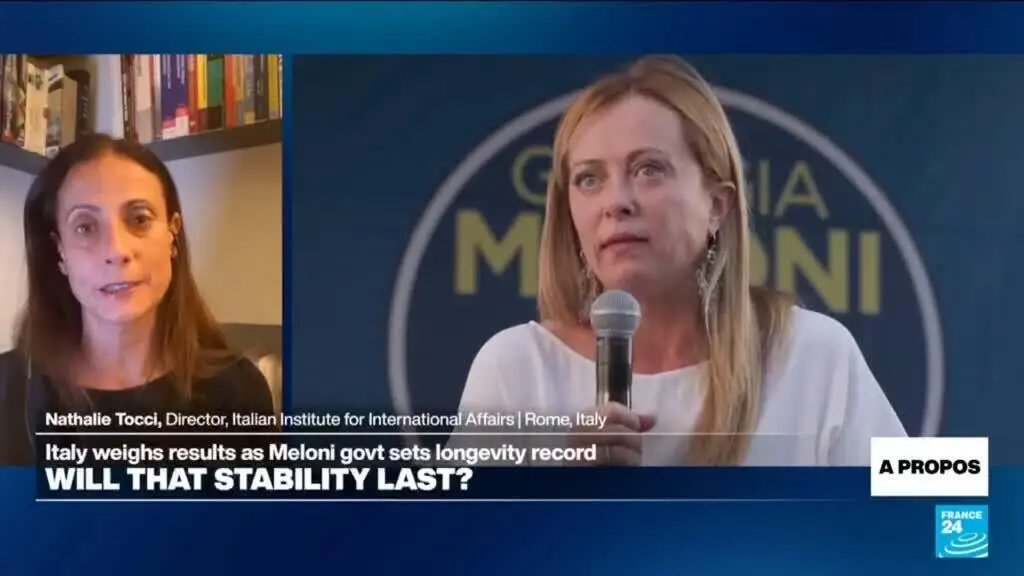
The balance of tactics and fortune in Meloni's rise
On Friday, Giorgia Meloni's government became the longest-serving administration in Italy since World War II, marking a significant milestone in the country's political landscape. The achievement underscores the stability of her coalition despite initial skepticism about its durability. Meloni, leader of the Brothers of Italy party, has maintained power through a combination of strategic maneuvering and favorable circumstances, according to analysts. Her government has now surpassed previous records for longevity in the postwar era, a feat few predicted when she took office in 2022. The development reflects broader shifts in Italian politics, where traditional parties have struggled to maintain consistent governance. Meloni's ability to hold her coalition together has drawn attention across Europe as a case study in modern conservative leadership.
Latest news
 Swedish Voters Choose New Parliament as Left-Wing Coalition Projects to Win Majority
 Trump Announces End of US Tariff on Irish Whisky
 Frances Stonor Saunders, Author of CIA Cultural Espionage Exposé, Dies at 66
 Israel and Lebanon to Hold Security Talks in Rome This October
Political observers describe Meloni's success as stemming from roughly equal parts savvy political strategy and extraordinary luck. Her team has effectively navigated Italy's fragmented party system, securing key alliances while avoiding major internal fractures. At the same time, external factors such as a fragmented opposition and favorable economic timing have played a role. Meloni has consistently projected strength on issues like immigration and national sovereignty, resonating with a base dissatisfied with prior governments. Her communication style, blending direct rhetoric with institutional restraint, has helped maintain broad appeal without triggering widespread backlash. Analysts note that few expected her government to last this long, given the volatility of Italian politics and the ideological nature of her coalition. Yet, the administration has avoided major crises that have toppled predecessors, allowing it to build momentum over time. This combination of deliberate action and favorable conditions has created a rare period of continuity in Rome.
How has Meloni maintained coalition stability despite ideological diversity?
Meloni's government includes parties with differing emphases, from nationalist to economically liberal factions, yet it has avoided the implosions seen in past administrations. She has achieved this by clearly defining red lines on core issues while allowing flexibility on secondary matters. Regular consultations and a centralized decision-making process have minimized public disagreements. Key figures in her inner circle have been granted significant autonomy, fostering loyalty without sacrificing control. The prime minister has also used patronage and committee assignments strategically to reward allies and deter dissent. Importantly, she has refrained from pushing radical reforms that could unite opponents, instead focusing on incremental changes acceptable to all coalition partners. This careful calibration has prevented the kind of policy overreach that often triggers coalition collapse in Italy. As a result, the government has operated with unusual cohesion, even amid external pressures from Brussels and financial markets.
Despite its longevity, Meloni's administration faces mounting tests that could challenge its durability. Economic stagnation, persistent inflation, and demographic decline remain unresolved structural issues. Opposition parties, though fragmented, are beginning to coordinate more effectively on specific policy fronts. Additionally, European Union scrutiny over rule of law and budget compliance could intensify, particularly if economic performance falters. Meloni's international stature has grown, but domestic expectations for tangible improvements in living standards are rising. Any major misstep on immigration, energy, or public spending could reignite tensions within her coalition. Observers warn that luck may not hold indefinitely, and sustaining success will require adapting to evolving political and economic realities. The coming months will determine whether this record-breaking tenure becomes a foundation for lasting change or a temporary pause in Italy's cyclical political pattern.
What challenges lie ahead for Italy's longest-serving postwar government?
How long has Giorgia Meloni been in office as Prime Minister of Italy? Giorgia Meloni assumed office as Prime Minister of Italy in October 2022, following the general election that year. Her government has now surpassed all previous postwar administrations in terms of continuous service in power.
Frequently Asked Questions
What makes Meloni's government unique compared to previous Italian administrations? Unlike many short-lived Italian governments, Meloni's coalition has maintained internal stability despite ideological diversity among its members. Its longevity results from a mix of strategic leadership, disciplined alliance management, and favorable external conditions, rather than reliance on a single dominant party.
What are the main risks to the continued stability of Meloni's government? The primary risks include economic underperformance, growing opposition coordination, and potential friction with the European Union over fiscal or legal matters. Internal coalition tensions could also rise if policy outcomes fail to meet public expectations or if external shocks strain government resources.