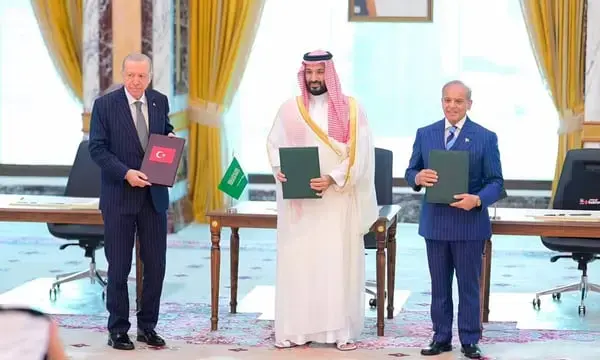
New Dimensions of Cooperation
Pakistan, Saudi Arabia and Turkey concluded a formal security pact in Mecca on August 10, 2026, six months after uncertain trilateral talks. The agreement, signed in the holy city, expands Pakistan’s role in regional security, especially on the western frontiers of the Middle East.
Latest news
 Swedish Voters Choose New Parliament as Left-Wing Coalition Projects to Win Majority
 Trump Announces End of US Tariff on Irish Whisky
 Frances Stonor Saunders, Author of CIA Cultural Espionage Exposé, Dies at 66
 Israel and Lebanon to Hold Security Talks in Rome This October
The three governments announced the pact after months of diplomatic shuttling and behind‑the‑scenes negotiations. Officials said the deal will enhance intelligence sharing, joint training and coordinated responses to emerging threats. Analysts note that the arrangement reflects Saudi and Turkish interest in leveraging Pakistan’s military experience while giving Islamabad a broader strategic reach.
The Mecca agreement outlines a framework for collaborative operations across borders. Pakistani forces will participate in joint exercises with Saudi and Turkish units, focusing on counter‑terrorism and maritime security. The pact also calls for the establishment of a joint command centre to streamline decision‑making. Both Saudi and Turkish spokespeople emphasized the need for a unified front against destabilizing actors, while Pakistani officials highlighted the opportunity to project stability beyond South Asia.
Will the Pact Shift Regional Power Balances?
Observers question whether the new security architecture will alter the existing balance of power. Some fear that increased Pakistani presence could provoke rival states, while others argue it may deter extremist groups. The agreement’s emphasis on intelligence fusion could improve early‑warning capabilities, potentially reducing the frequency of cross‑border attacks. Yet, the long‑term impact will depend on how quickly the three nations operationalize the pact’s provisions.
The Mecca pact signals a deeper strategic alignment among the three countries. In the coming months, joint drills and staff exchanges are expected to test the new mechanisms. If successful, the arrangement could become a template for future security collaborations in the region.
Frequently Asked Questions
What are the main objectives of the Mecca pact? The agreement aims to strengthen intelligence sharing, conduct joint training, and coordinate responses to security threats across the western Middle East.
How will Pakistan benefit from the new arrangement? Pakistan gains a broader operational theater, enhanced diplomatic ties with Saudi Arabia and Turkey, and opportunities to showcase its military capabilities on a larger stage.
What challenges could the pact face? Potential obstacles include differing national priorities, logistical complexities of joint operations, and possible pushback from regional rivals wary of a new security bloc.