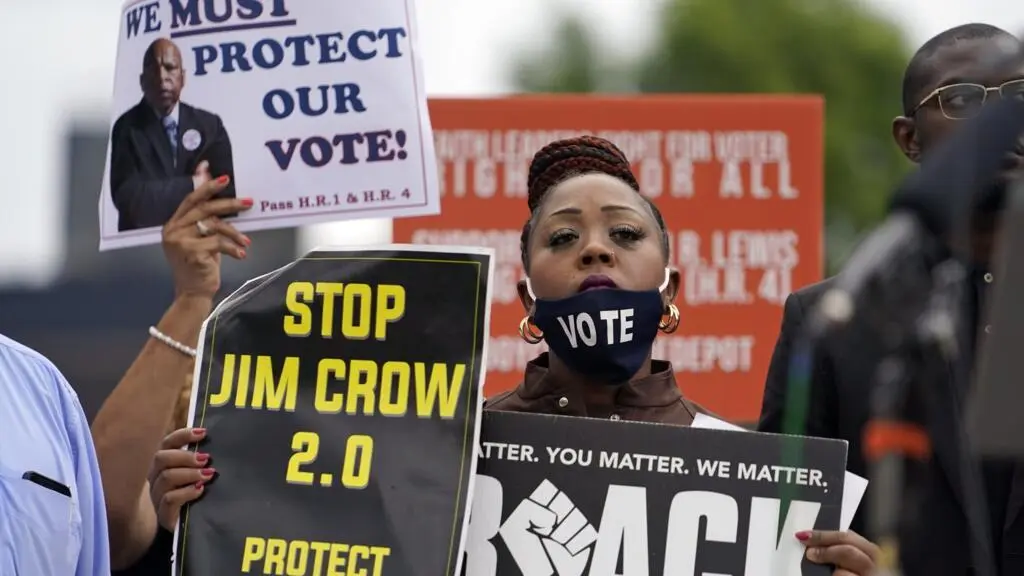
How Redistricting Could Undermine Black Representation
ATLANTA, GA – In a heated battle over congressional maps, President Donald Trump is pushing for a redistricting plan that many believe will dilute the African‑American vote. Georgia lawmakers are responding by enacting a state election law that critics say disproportionately affects Black voters. The conflict has sparked intense debate across the state, as both sides mobilize supporters and legal teams.
Latest news
 Russia strikes Kyiv hours after agreeing to restart Ukraine talks
 Dollar General Settles New York Overcharge Case
 Andy Burnham vows UK will hit net zero despite gasfield approval
 Amy Winehouse Musical Heads to London’s West End
The new redistricting proposal seeks to reshape Georgia’s congressional districts in a way that could weaken the influence of Black communities. Opponents argue that the plan would split cohesive neighborhoods, reducing the ability of Black voters to elect representatives who reflect their interests. In response, the Georgia legislature has passed an election law aimed at tightening voting procedures, a move that critics claim will further marginalize Black voters by making it harder to cast ballots.
Will the New Election Law Disrupt Voting Access?
Redistricting experts explain that the proposed map would create more districts with a majority of white voters, while dispersing Black voters across multiple districts. This „cracking” strategy is designed to dilute the voting power of minority groups. Legal analysts warn that such tactics could violate the Voting Rights Act, which protects minority voting rights. The map’s supporters argue it is a neutral, data‑driven approach, but the timing—just before the next election—raises concerns about political motivation.
The state law introduces stricter ID requirements and limits early voting days. Supporters claim it will reduce fraud, but opponents point to studies showing that stricter ID laws disproportionately affect minority voters who are less likely to possess the required documents. In Atlanta, community leaders have organized workshops to help residents understand the new rules and gather necessary identification. The law also reduces the number of polling places in predominantly Black neighborhoods, a change that could increase travel times and wait periods for voters.
What Happens Next for Georgia’s Black Voters?
The legal battle is already underway. A federal court has issued a temporary injunction against the redistricting plan, citing potential violations of the Voting Rights Act. Meanwhile, the state legislature has defended the election law as a necessary safeguard against voter fraud, despite the lack of evidence indicating widespread fraud in Georgia.
Frequently Asked Questions
The outcome of these legal challenges will shape Georgia’s political landscape for years. If the redistricting plan is upheld, Black voters may find it harder to elect representatives who advocate for their communities. A successful challenge could preserve the current map or force a new, more equitable design. The election law’s future also remains uncertain; a court ruling could either reinforce or strike down the new restrictions.
Georgia’s political future hinges on these decisions. The state’s Black electorate, a key demographic in upcoming elections, will closely watch the court’s rulings and the legislature’s next moves. Their ability to influence policy and representation depends on whether the law and map are deemed fair or discriminatory.