Burnham’s Balancing Act: Governing While Pacifying the Opposition
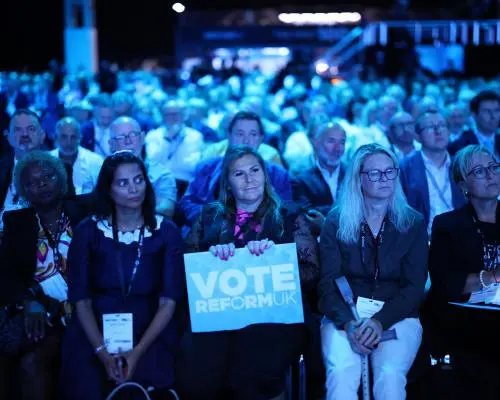
Andy Burnham’s first months as mayor of Greater Manchester have been marked by optimism, while Reform UK reels from internal turmoil. Labour enjoys a modest poll edge and a leader who appears more energized than burdened. Yet the centre‑left’s resurgence coexists with a bruised Reform movement that still commands a loyal, stubborn base.
Latest news
 Swedish Voters Choose New Parliament as Left-Wing Coalition Projects to Win Majority
 Trump Announces End of US Tariff on Irish Whisky
 Frances Stonor Saunders, Author of CIA Cultural Espionage Exposé, Dies at 66
 Israel and Lebanon to Hold Security Talks in Rome This October
Burnham’s early tenure has been defined by high‑visibility projects, from transport upgrades to affordable‑housing schemes, earning him praise across party lines. At the same time, Reform UK, once a rising force on the right, has been crippled by scandals and leadership disputes, leaving its supporters disillusioned but unwilling to abandon the party entirely. Analysts say the juxtaposition of Burnham’s steady climb and Reform’s collapse creates a political vacuum that could reshape Britain’s next election.
Burnham has adopted a pragmatic approach, emphasizing cross‑party collaboration on issues like climate action and public health. In a recent council meeting, he pledged £120 million for green infrastructure, positioning himself as a forward‑looking leader. Yet his success has drawn criticism from hard‑right factions who accuse him of soft‑selling to Labour’s agenda. To defuse tensions, Burnham has invited Reform representatives to discuss shared concerns over fiscal responsibility, hoping to temper the party’s more extreme rhetoric. Political commentators note that his willingness to engage could prevent a hard‑right backlash that might otherwise destabilise the moderate centre.
Can Reform UK Recover From Its 2026 Crisis?
Reform UK entered 2026 amid a series of scandals that eroded public trust. Party insiders report that internal power struggles and accusations of financial mismanagement have left the organization fragmented. Despite the turmoil, a core of dedicated activists remains, refusing to let the brand die. Polls show Reform still retains about 4 % of the electorate, a figure that, while modest, could be decisive in a tightly contested general election. The party’s leadership is now tasked with rebuilding credibility, possibly by rebranding around fiscal prudence and immigration control—issues that still resonate with its base. Observers warn that without a clear, scandal‑free narrative, Reform risks fading into irrelevance, leaving its supporters to drift toward other right‑wing options.
The divergent trajectories of Burnburn and Reform illustrate a broader realignment in British politics. Burnham’s steady governance may consolidate Labour’s modest lead, while Reform’s struggle could either force a right‑wing consolidation or create space for new populist movements. The coming months will test whether Burnham can keep the centre‑left momentum alive and whether Reform can emerge from its shadows to influence the national debate.
Frequently Asked Questions
What is the current poll gap between Labour and the Conservatives? Recent surveys place Labour roughly three points ahead of the Conservatives, giving the party a narrow but tangible lead heading into the next election cycle.
Why does Reform UK still have a loyal base despite scandals? Many supporters feel the party uniquely represents their concerns on fiscal restraint and immigration, and they are reluctant to abandon a brand they helped build.
How might Burnham’s outreach to Reform affect future elections? If Burnham can successfully moderate Reform’s rhetoric, it may reduce the risk of a hard‑right surge, potentially smoothing the path for Labour’s broader coalition in upcoming contests.