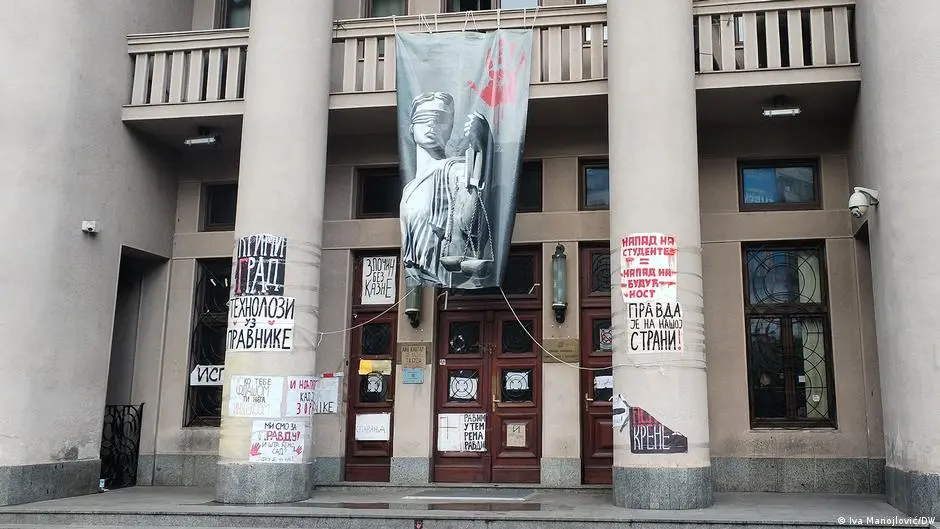
Political Transition and Swift Justice
A major political transition swept Serbia. The legislative power changed radically after the October 25 parliamentary vote. A student-backed list secured a decisive victory, defeating the Serbian Progressive Party (SNS). This ended fourteen years of SNS dominance, which maintained close ties with Moscow. While the new majority lacks full state control, the post-election period saw rapid developments. These include arrests, new criminal proceedings, and the reopening of old, unresolved cases. Some cases challenge the very foundation of the SNS-era system.
Latest news
 Macao Former Lawmaker Receives 12.5 Years in First National Security Case
 US Treasury Slaps New Sanctions on Cambodia's Prince Holding Group
 Zambian government pension reforms and institutional realignments have triggered a nationwide debate over public service stability
 Protesters Storm Microsoft Data Center Construction Site in Amsterdam
The Air Serbia Incident
An unusual event occurred on Air Serbia flight JU134 from Belgrade to Moscow on November 3. While in Lithuanian airspace, the crew received orders to return to the Serbian capital. Passengers included Aleksandar Vulin, Dusan Bajatovic, and Nenad Popovic. Vulin was a former Minister of Defence and Interior, and head of the Serbian Security Information Agency (BIA). Bajatovic was the long-term director of state gas company Srbijagas, and Popovic was a minister without a portfolio. These men are known for close ties to Russia and corruption allegations. Unofficial reports suggest the return was due to security concerns; Vulin allegedly bypassed security checks. Notably, Vulin faces US sanctions since 2023 for alleged corrupt and destabilizing activities in the Western Balkans. Vulin stated his Moscow trip was to discuss an energy deal with Russia. Bajatovic denied knowledge of Vulin's or Popovic's Moscow travel and refused to confirm their meeting plans.
Scrutiny of the Judiciary
Bojana Savović, a prosecutor, told DW the situation shows a „sad picture of the Serbian prosecution service.”She views the prosecutors' swift actions as an alignment with the new government. Savović noted they demonstrated capability they previously withheld for ten days. She hopes this speed does not compromise case quality or become mere revenge for the old administration.
Wider Investigations Unfold
Judicial authorities began extensive probes into electoral manipulation, corruption, and abuse of office. Four people were arrested in Novi Sad for vote-buying. Six others were detained in Zvornik for facilitating voting rights for Bosnian citizens in Serbia. A high-profile arrest involved Davor Macur, owner of Alta Bank. He is suspected of illegally accessing the bank vault and withdrawing about 383 million euros. This followed the National Bank of Serbia revoking Alta Bank's license and starting bankruptcy proceedings. Macur was publicly linked to the SNS, and his bank had major state dealings and many Russian clients.
Demands for Accountability
High-ranking police officials, the head of the Hydrometeorological Institute, and public company managers were also arrested for abuse of office and procurement manipulation. Students and new majority representatives demand deep dives into years of unresolved corruption. Their message is clear: no one is above the law. They urge prosecutors and courts to fulfill their duties or face scrutiny for inaction. Tanja Arsić, a parliamentarian from the Student List, told DW, „When you want the rule of law and want something to happen, it is possible.”She added that obstructionists had previously stalled cases. Reports surfaced showing official documents were removed or destroyed from state bodies. On October 29, Prosecutor General Zagorka Dolovac ordered all chief public prosecutors to prohibit document destruction. The Student List also asked state employees and the press to report any suspicious activity.