A potential right-wing victory in Spain threatens the stability of European
The prospect of Pedro Sánchez losing Spain's snap election could trigger a chain reaction, endangering the political stability of the European Union. In the EU capital, observers and left-leaning lawmakers argue that a change in leadership in Madrid would leave the Socialists and Democrats (S&D) group in a defensive position, forcing them to adopt a far more combative attitude toward their colleagues. Sánchez is currently the only head of state or government from a major country in the bloc belonging to the socialist camp, providing an essential counterweight to decisions made in the European Council, a forum predominantly dominated by centre-right formations.
Latest news
 Spain's Socialist Fault Lines Test Pedro Sanchez
 Far-Right AfD Seeks Control of Saxony-Anhalt State Parliament
 Fuel Prices Surge in Italy as Tax Cuts Expire, Hauliers Threaten Action
 Ray Dalio Warns of US Debt Crisis Within 3 Years
Spanish deputies constitute the largest national delegation within the S&D group in the European Parliament, and when the current prime minister succeeds in reaching an agreement at the Council level, Spanish representatives in Strasbourg are usually able to impose his position within their own group, even in the face of internal resistance. A change in administration in Madrid would disrupt this functional mechanism, according to information conveyed by journalists from senior S&D MEPs.
Polling data indicate that the Spanish electorate is inclined to trust a government led by the centre-right People's Party, which would be inclined to form an alliance with the ultra-conservative Vox formation. „There is a possibility that, in the absence of a socialist prime minister from a major country, an attempt will arise to scrutinize Council positions more critically,”explained René Repasi, head of the German SPD delegation in parliament. Another influential legislator in the S&D coalition emphasized that Sánchez's presence has contributed to balancing deliberations at the heads of state table, noting that his absence would destabilize the informal alliance between socialists, liberals, and the European People's Party (EPP), on which European Commission President Ursula von der Leyen relies to promote legislation.
Polling data indicate that the Spanish electorate
This legislator added, under the protection of anonymity to discuss sensitive aspects of the group, that if the orientations emanating from the heads of state table become more conservative, progressives will find it harder to feel part of a coherent governmental majority.
The S&D group has lost ground in other areas of Brussels. Since the 2024 European elections shifted the balance of power in Parliament toward the right, the EPP has succeeded in adopting certain legislative acts in collaboration with far-right formations. Socialists have a reduced presence in national governments and fewer own commissioners, which has fueled recurring tensions and repeated efforts to repair alliances. With Sánchez's departure, the remaining centre-left leaders at the helm of governments would be Mette Frederiksen of Denmark and Robert Abela of Malta, while Magdalena Andersson attempts to form an executive team in Sweden. The Spanish elections will mark the start of a crucial year, marked by significant votes in major EU countries such as Italy, Poland, and France, where the far-right movement, the National Rally, leads in polls ahead of the presidential elections scheduled for 2027.
Far-right forces in Brussels are pressuring the EPP to abandon the ban on cooperating with them and to break traditional ties with the S&D.
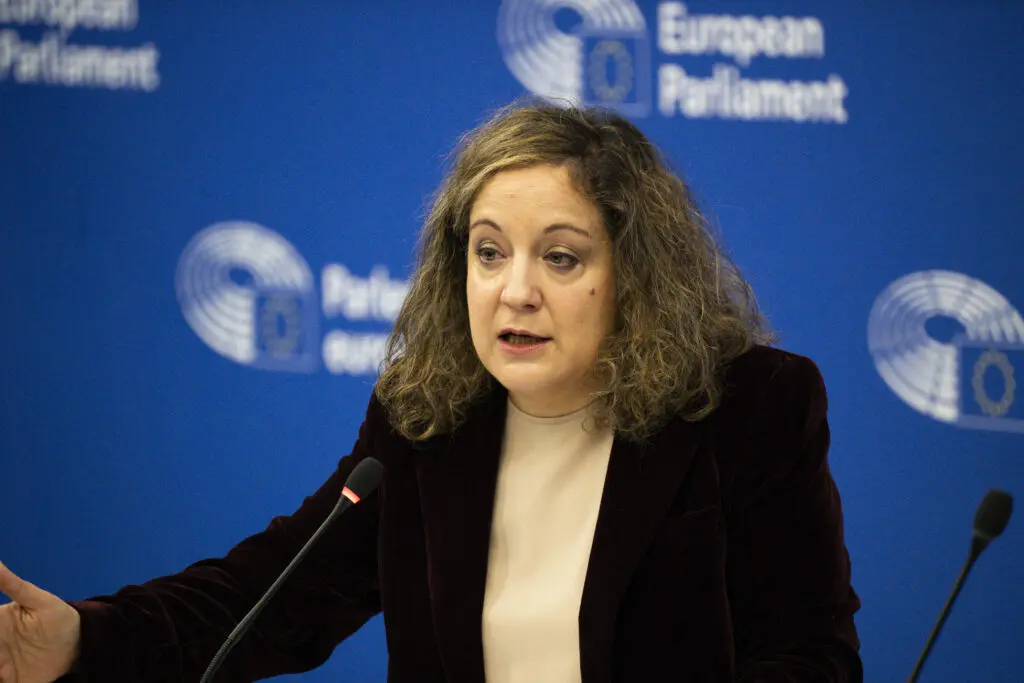
Motives for compromise are becoming ever fewer. The S&D group, the second largest in Parliament, has constantly threatened in the last two years to withdraw its support for von der Leyen, with some deputies demanding a firmer stance in EU policies. Iratxe García, leader of this group, has so far managed to keep Spanish deputies aligned with the general direction. She will have to undergo a confidence vote on 21 October, although she is widely expected to retain her position. If Sánchez loses power, all the largest S&D national delegations — from Italy, Romania, and France — will find themselves in opposition domestically. The only S&D parties still in government would be those acting as minor partners in Germany and Austria, alongside the Social Democrats in Denmark, whose rigid stance on immigration limits their influence in the group.
Motives for compromise are becoming ever fewer
Without a prime minister of stature from a major EU country to maintain S&D cohesion, von der Leyen would have to face increased pressure to grant more concessions to already dissatisfied parliamentarians over centre-right votes combined with the far-right.
René Repasi stated that if von der Leyen respects S&D priorities, she will benefit from the group's support, and if this does not happen, she will lose it. He added that a formal alliance between the Spanish EPP and Vox will drive us further apart. The second senior legislator mentioned that S&D would have fewer motivesto compromise in Sánchez's absence, as the group would have less responsibility for maintaining stability in EU institutions. The institutional responsibility to guarantee support for the Commission and stability in EU institutions will no longer exist,declared this MEP. A harder line would be easier to sustain for the centre-left if the EPP continues to strike deals with the far-right and if the European Commission does not offer an attractive political agenda that progressives can sell to voters.
A diplomat characterized the Socialists' threat to withdraw support for von der Leyen as not credible,arguing that this would isolate the group further: I only feel the need to send a signal to the EPP. Weakening or removing von der Leyen would also run counter to S&D interests, d