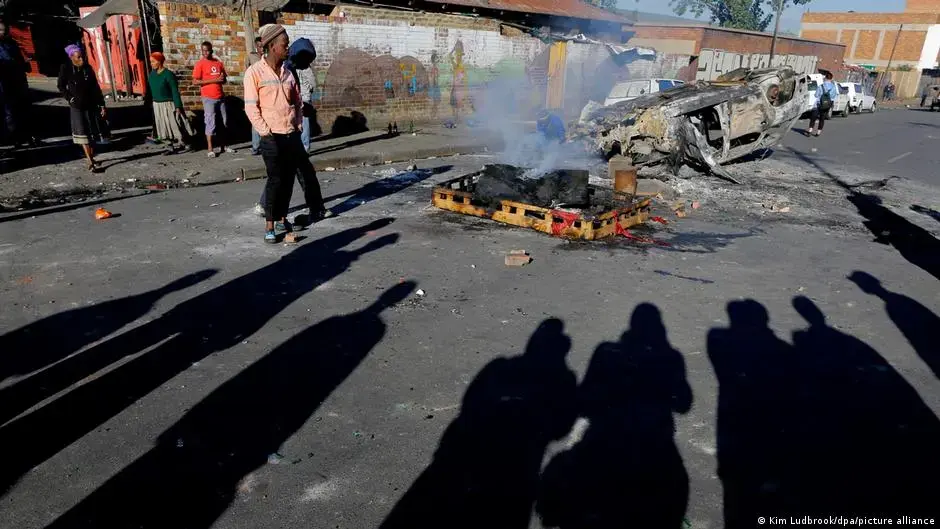
Failing to Address Root Causes
South Africa's government has faced criticism for its handling of xenophobic violence, with eruptions occurring sporadically over the years. The latest incidents have sparked widespread condemnation. Critics argue that the government's response is inadequate. The issue has been ongoing since the early 2000s.
Latest news
 Swedish Voters Choose New Parliament as Left-Wing Coalition Projects to Win Majority
 Trump Announces End of US Tariff on Irish Whisky
 Frances Stonor Saunders, Author of CIA Cultural Espionage Exposé, Dies at 66
 Israel and Lebanon to Hold Security Talks in Rome This October
The government typically condemns xenophobic violence after it happens, but prevention efforts are deemed weak by many. Arrests are often limited, and some say political rhetoric can fuel tensions rather than ease them. This has led to a perception that the government is not doing enough to address the root causes of the problem.
Experts say the government's response to xenophobic violence is reactive rather than proactive. They argue that more needs to be done to address the underlying issues driving the violence, such as economic inequality and competition for resources. The lack of effective prevention has led to repeated outbreaks of violence.
Can the Government Turn the Tide?
The issue is complex, with many factors at play. Some politicians have been accused of using xenophobic rhetoric to mobilize support. This has contributed to a climate of tension and hostility towards foreign nationals. Data shows that many foreign-owned businesses have been looted and destroyed during these incidents.
The government's ability to prevent future outbreaks of xenophobic violence is being questioned. Critics say that a more comprehensive approach is needed, one that addresses the underlying causes of the problem. The government must balance its response between condemning violence and taking concrete steps to prevent it.
The consequences of inaction could be severe, with the potential for further violence and instability. The international community is watching closely, as the situation has implications for regional stability. The government's response will be crucial in determining the outlook for foreign nationals living in South Africa.
Frequently Asked Questions
What is the government's typical response to xenophobic violence? The government usually condemns the violence after it occurs, but critics say this is not enough to prevent future incidents.
What are the underlying causes of xenophobic violence in South Africa? Economic inequality and competition for resources are among the factors driving the violence.
How have foreign nationals been affected by the violence? Many foreign-owned businesses have been looted and destroyed, and foreign nationals have been subject to attacks and intimidation.