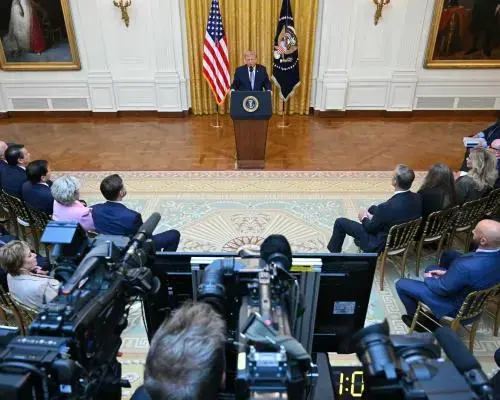
Trump's Initial Optimism
Former President Donald Trump has recently changed his narrative regarding election security. Initially, he seemed prepared to assure Americans that their electoral process was sound. However, his current rhetoric suggests a different approach, viewing those who opposed him as suspects rather than legitimate voters.
Latest news
 Swedish Voters Choose New Parliament as Left-Wing Coalition Projects to Win Majority
 Trump Announces End of US Tariff on Irish Whisky
 Frances Stonor Saunders, Author of CIA Cultural Espionage Exposé, Dies at 66
 Israel and Lebanon to Hold Security Talks in Rome This October
Reports indicate a significant shift from his earlier views. In February 2020, Trump was reportedly very pleased with an election security briefing. He was so impressed that he considered personally announcing the findings to the public. This suggests an initial belief in the integrity of the system.
A Change in Perspective
Despite this earlier inclination, Trump's public statements have since diverged. He now frequently questions the legitimacy of election outcomes. This new stance casts doubt on the democratic process itself. His rhetoric often implies foreign interference as a primary factor.
Why the Shift?
The change in Trump's public statements appears to be a strategic move. By questioning election results, he seemingly aims to justify his own political outcomes. This approach reframes electoral defeats as evidence of foul play. It also allows him to portray his opponents as beneficiaries of a compromised system.
This change in perspective could have lasting consequences. It may erode public trust in elections. It also risks polarizing the electorate further. The focus shifts from policy debates to the legitimacy of the democratic process.
What are the implications of this shift?
What was Trump's initial view on election security? In early 2020, Donald Trump was reportedly satisfied with an election security briefing. He even considered personally announcing the findings, suggesting confidence in the system at that time.
Frequently Asked Questions
How has his view changed since then? His view has shifted significantly, now often questioning the integrity of election outcomes. He frequently suggests foreign interference as a reason for unfavorable results, treating those who voted against him as suspicious.
What is the potential impact of this altered narrative? This altered narrative could undermine public confidence in democratic institutions. It might also deepen political divisions by casting doubt on the fairness of elections.