How Might This Affect the US-UK Special Relationship?
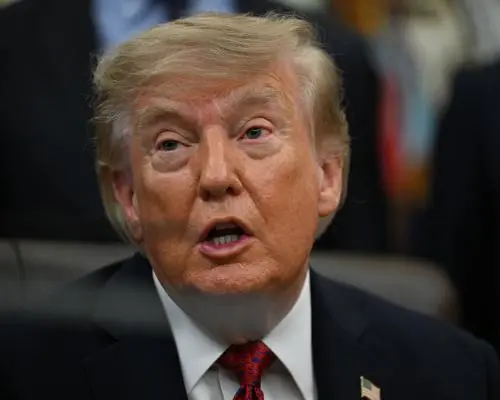
Former President Donald Trump indicated he is reviewing the United States' longstanding support for British sovereignty over the Falkland Islands, a comment that could test the resilience of the transatlantic alliance. Speaking to reporters at the White House, Trump said he routinely evaluates all foreign policy positions, including the UK's claim to the South Atlantic territory, and suggested the issue might be leveraged in broader geopolitical negotiations. The remark came in response to a question about whether he would maintain current US policy toward the islands, which have been under British administration since 1833 despite Argentina's persistent sovereignty claim.
Latest news
 Swedish Voters Choose New Parliament as Left-Wing Coalition Projects to Win Majority
 Trump Announces End of US Tariff on Irish Whisky
 Frances Stonor Saunders, Author of CIA Cultural Espionage Exposé, Dies at 66
 Israel and Lebanon to Hold Security Talks in Rome This October
Trump’s remarks introduce uncertainty into a diplomatic stance that has enjoyed bipartisan backing in Washington for decades, particularly following the 1982 Falklands War when the US provided logistical support to Britain. While no official policy change has been announced, the suggestion that the Falklands dispute could be used as a bargaining chip—potentially in discussions involving China or other strategic interests—has raised concerns among UK officials. Argentina has long sought renewed negotiations over the islands, which it calls Las Malvinas, and views any perceived weakening of US support as an opportunity to advance its position through diplomatic or international legal channels.
What Leverage Could Trump Be Seeking in the Falklands Debate?
The comment risks straining what both nations have described as a enduring partnership grounded in shared intelligence, military cooperation, and diplomatic alignment. British leaders have historically relied on consistent US backing in multilateral forums to counter Argentine claims, and any perceived wavering could embolden Buenos Aires in its pursuit of sovereignty talks. Analysts warn that even speculative shifts in US posture may encourage Argentina to pursue more assertive actions in regional bodies like the United Nations or Mercosur, potentially complicating future negotiations over fisheries, oil exploration, and maritime boundaries in the South Atlantic.
Trump framed his review of the Falklands position as part of a broader pattern of reassessing foreign policy commitments to extract concessions elsewhere, though he did not specify what concessions he might seek from either Britain or Argentina. Some observers speculate the comment could be tied to ongoing trade discussions with the UK or efforts to counter Chinese influence in Latin America, where Beijing has increased economic engagement with Argentina. However, no concrete linkage has been established, and critics argue that using a long-standing territorial dispute as a negotiation tool risks undermining international norms and encouraging similar challenges elsewhere.
Has the US ever changed its position on Falkland Islands sovereignty before? The United States has maintained a neutral stance on the sovereignty question since the 1980s while supporting British administration and self-determination for the islanders, though it provided material aid to the UK during the 1982 conflict.
Frequently Asked Questions
Could Argentina benefit from a shift in US policy? A perceived weakening of US support might strengthen Argentina’s diplomatic push for negotiations, though any change would likely face strong opposition from the Falkland Islanders, who have consistently voted to remain British in referendums.
Is there a timeline for when Trump might announce a decision? No timeline has been indicated, as Trump’s comments reflected a general review process rather than an imminent policy shift, and he is no longer in office to implement such changes.