Canadians prepare for the effects of Trump’s trade war
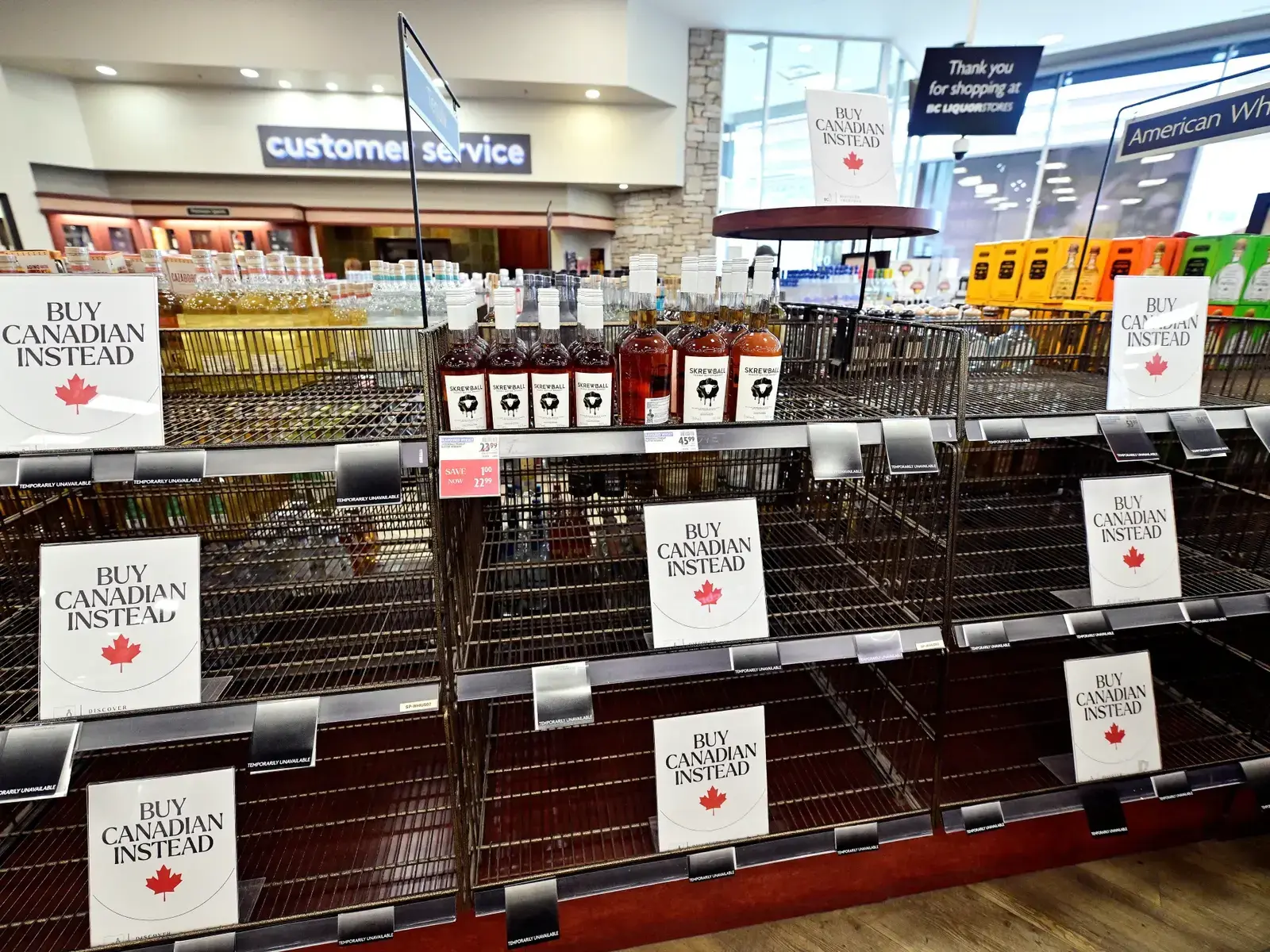
A liquor store in Vancouver, British Columbia, replaced its American whisky section with signs that read „Buy Canadian” in March 2025, after trade tensions between Canada and the United States began to intensify. This gesture, captured in a photograph by Jennifer Gauthier for Reuters, illustrates a growing trend among local consumers: a preference for domestically made goods.
Latest news
 Swedish Voters Choose New Parliament as Left-Wing Coalition Projects to Win Majority
 Trump Announces End of US Tariff on Irish Whisky
 Frances Stonor Saunders, Author of CIA Cultural Espionage Exposé, Dies at 66
 Israel and Lebanon to Hold Security Talks in Rome This October
Local labels guide shoppers in Toronto
In Toronto, at a downtown grocery store, small red maple leaves appear next to product prices, indicating Canadian origins. Though subtle, these signs are appreciated by shoppers like Mateus Gujrel, a software developer, who said he is now much more attentive to the origin of the goods he buys. Since American President Donald Trump returned to power last year, relations between Ottawa and Washington have deteriorated, affected by a series of tariffs imposed by the United States.
Consumers shift habits to support local
Gujrel explained that this situation has made him „much more aware” of choosing to buy locally. He switched his brand of almond milk and gave up flavored LaCroix sparkling water, opting for a Canadian alternative instead. „Anything we can clearly see is made in Canada, I choose it,” he said in an interview near a No Frills store on Wednesday. This type of behavior has become more widespread over the past year, fueled not only by tariffs but also by repeated comments from Trump, who suggested Canada could become the „51st state” of the U. S.
Shoppers resist economic dependence
„I don’t want to contribute, in any way I can avoid, to transferring our money to the United States,” Gujrel added, reflecting a sentiment that shows no sign of diminishing. According to Margaret Chapman, director of operations at market research firm Narrative Research, this trend has been monitored for about a year and a half. In a public statement, she said the initiative by Canadians to buy local products and support national producers has remained strong, even in the face of external pressures.
Buy-local campaigns gain new urgency
Although „buy local” campaigns existed before, the current context has given them renewed urgency. Messages on paper bags, labels on packaging, and signs in stores serve as visual cues for those who wish to avoid imported goods. While some of these may go unnoticed at a glance, for an increasing number of citizens they represent a clear sign of identity and economic responsibility.
A conscious strategy to support the economy
Market experts say this movement is not just an emotional reaction but a conscious strategy to support the national economy in the face of external risks. Although some products remain cheaper when imported, a growing number of consumers are willing to pay a higher price to support local farmers, factories, and workers. This shift in priorities could have lasting effects on the structure of domestic trade, even if tensions with the U. S. ease in the future.
Individual actions build collective impact
Although there are no guarantees that trade tensions will subside soon, individual actions—from switching a beverage to choosing one store over another—contribute to a collective effect. While politicians and negotiators discuss at the state level, citizens like Mateus Gujrel decide to make a difference through everyday actions, turning consumer power into an instrument of resistance and solidarity.