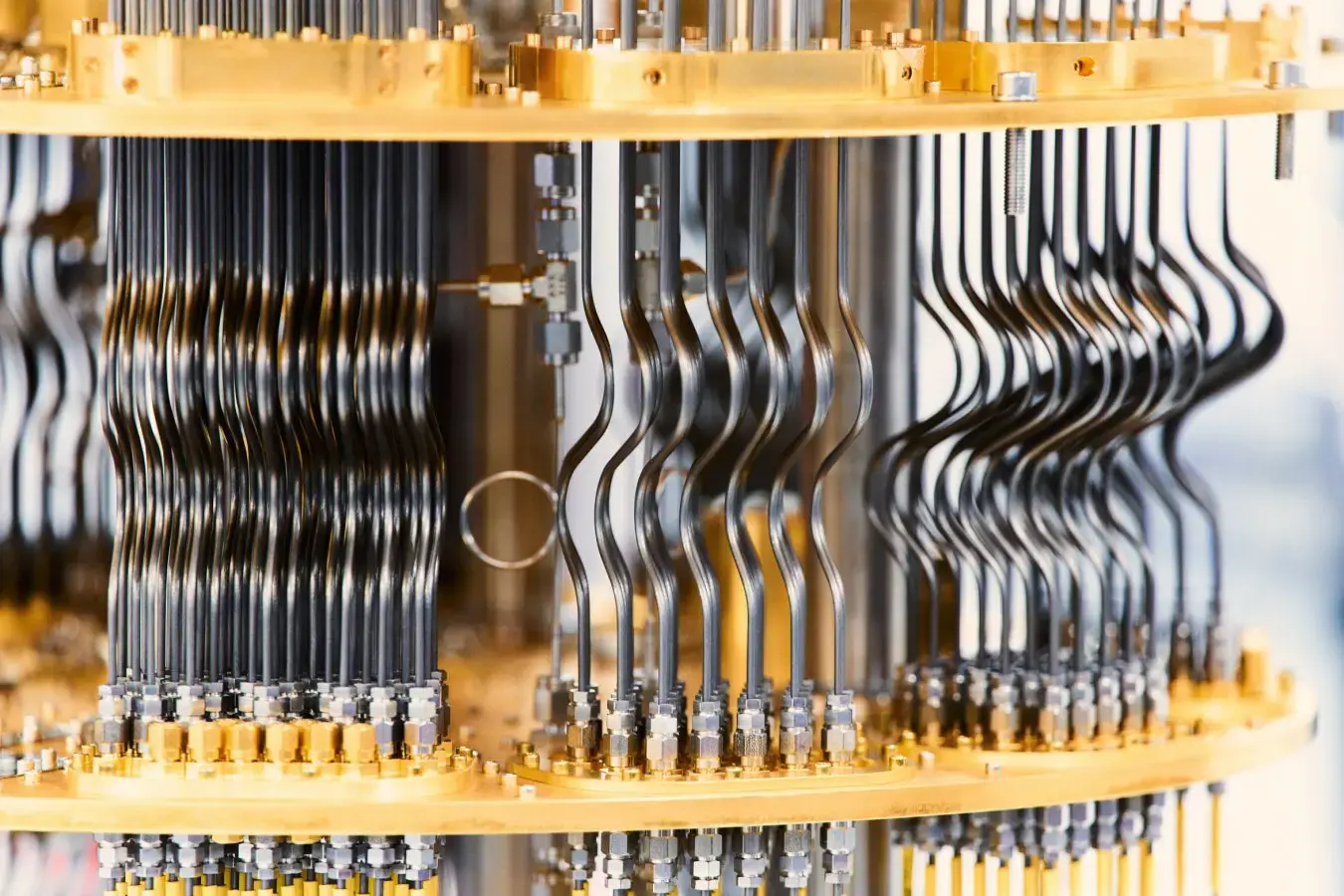
Beyond Speed: Measuring Real‑World Utility
Scientists at Google’s Quantum AI division announced a new method to gauge the practical value of quantum processors. The approach, tested on the Willow architecture, promises to clarify which machines can solve real‑world problems. The study was released this week.
Latest news
 Anthropic Announces $31 Billion Data Centre Deal in Western Queensland
 Veteran Journalist Hugh Riminton Announces Retirement After Nearly Five Decades
 How the 1980s Permanently Shaped America
 Victorian Police Gain Random Stop-and-Search Powers Under New Jacks Law
The challenge of comparing quantum computers has persisted for years. Earlier efforts focused on raw speed or the number of qubits, but these metrics did not reflect real‑world usefulness. The new framework evaluates how well a device tackles specific algorithms, its error resilience, and the quality of its qubit connectivity. Researchers claim the method can be applied to any quantum platform, making it a universal benchmark.
The metric looks at more than just gate counts. It measures how many problem instances a quantum computer can solve within a practical time window. „We’re not just counting gates; we’re evaluating problem‑solving power,” said lead researcher Dr. Elena Martinez. The framework incorporates error rates, decoherence times, and the ability to perform error‑correction. Willow’s performance on a quantum chemistry simulation reached a 70% success rate, surpassing previous benchmarks. The study also tested a small machine learning task, where Willow achieved a 65% accuracy on a classification problem that classical hardware struggled with.
Willow’s Performance and the Path Forward
Willow’s results are encouraging but not definitive. The device solved a subset of benchmark problems faster than any classical supercomputer, yet it still failed on larger instances. The researchers emphasize that the metric can guide hardware upgrades by pinpointing bottlenecks, such as qubit connectivity or gate fidelity. They plan to refine the framework and apply it to other quantum processors, including those from IBM and Rigetti. The goal is to create a standardized „usefulness score” that investors and researchers can rely on.
The implications for industry are significant. Companies can now assess whether a quantum computer offers a real advantage for their workloads. The metric may accelerate the adoption of quantum technology in finance, drug discovery, and materials science. However, experts caution that the framework is still evolving and will need community validation before it becomes a de‑facto standard.
Frequently Asked Questions
What does the new metric measure? It evaluates a quantum computer’s ability to solve real‑world problems, taking into account error rates, qubit connectivity, and algorithmic performance.
How does Willow compare to other quantum processors? Willow outperformed several existing devices on selected benchmarks, but it still struggles with larger problem sizes. The metric highlights where improvements are needed.
Will this metric replace existing benchmarks? It complements current tests by focusing on practical utility. Adoption will depend on community consensus and further validation across platforms.