Modeling the Motion of Molecules
Researchers are tackling a major limitation in AI-driven protein structure prediction, focusing on how proteins dynamically change their shapes to perform biological functions. While AlphaFold has revolutionized structural biology, it struggles with conformational changes—shifts in protein structure that are essential for activity. This new work comes from scientists at The Graduate University for Advanced Studies (SOKENDAI), who have developed methods to better model these dynamic transitions.
Latest news
 Swedish Voters Choose New Parliament as Left-Wing Coalition Projects to Win Majority
 Trump Announces End of US Tariff on Irish Whisky
 Frances Stonor Saunders, Author of CIA Cultural Espionage Exposé, Dies at 66
 Israel and Lebanon to Hold Security Talks in Rome This October
Traditional protein structure prediction tools like AlphaFold excel at static structures but fall short when it comes to capturing movements between different states. Proteins don’t remain fixed; they fold, unfold, and reshape themselves to carry out tasks such as signaling, catalysis, or binding to other molecules. Understanding these transitions is critical for drug design, disease research, and synthetic biology. The team at SOKENDAI is addressing this gap by integrating dynamic modeling techniques with machine learning approaches, enabling more accurate predictions of protein flexibility.
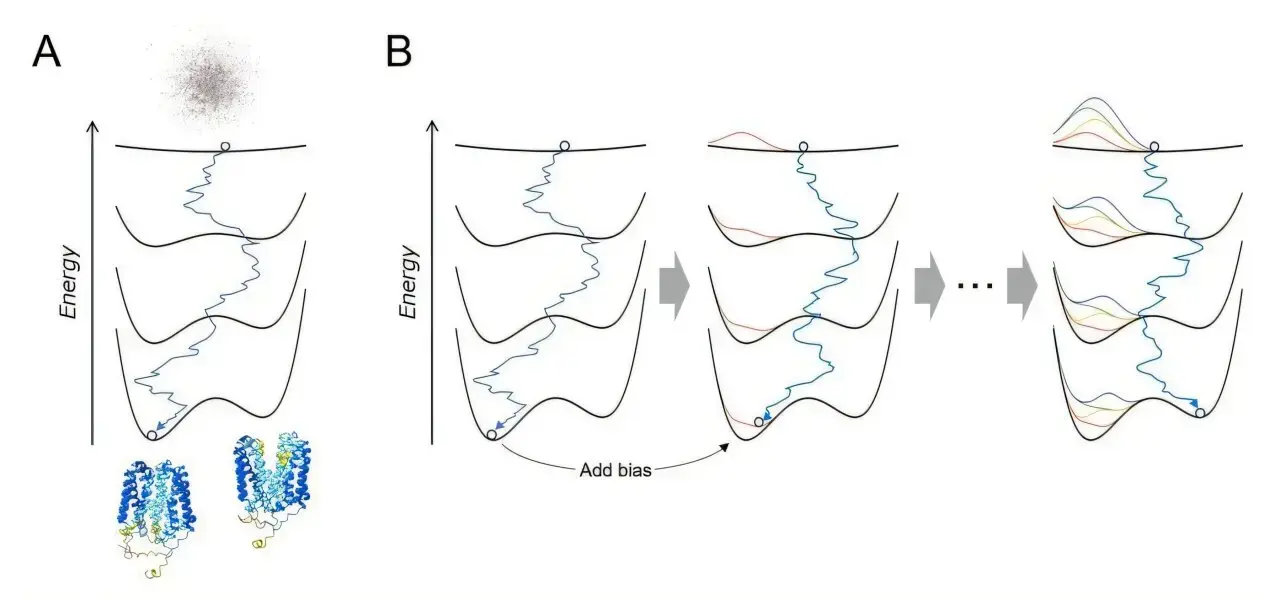
The researchers have introduced enhanced sampling algorithms that simulate protein movements over time, combined with deep learning models trained on known structural ensembles. These models learn patterns from databases containing multiple structures of the same protein in different conformations. By analyzing these variations, the system can predict likely intermediate states and transition pathways. Early results show promising accuracy in forecasting how key proteins involved in cellular signaling shift their shapes during activation.
Can AI Capture Biological Flexibility?
A central question emerging from this work is whether artificial intelligence can truly represent the complexity of biological motion. Critics argue that current models still rely heavily on experimental data and may not generalize well to novel proteins. However, the SOKENDAI team contends that their hybrid approach—merging physics-based simulations with neural networks—offers a more robust framework. They demonstrated this by successfully predicting conformational changes in several well-studied enzymes, matching results from X-ray crystallography and cryo-EM studies.
Looking ahead, this advancement could transform fields ranging from vaccinology to neurodegenerative disease research. If machines can reliably predict how proteins move, scientists may design therapeutics that target specific structural states rather than just static bindings sites. The ultimate goal is a complete digital twin of protein behavior—capturing not just form, but function in motion.
Frequently Asked Questions
What is AlphaFold, and why is it limited? AlphaFold is an AI system that predicts protein structures from amino acid sequences. It is limited because it primarily outputs a single static structure, missing the dynamic changes proteins undergo during function.
How do conformational changes affect protein function? These changes allow proteins to switch between active and inactive states, enabling interactions, catalysis, and signaling—all vital for cellular processes.
What methods did SOKENDAI use to improve predictions? They combined enhanced sampling algorithms with deep learning models trained on protein structural ensembles, capturing multiple conformations rather than a single state.