
The Rise of Echoicide
Despite efforts by Gaza’s media workers and citizens to document violence, sharing evidence of war crimes with the world faced unexpected obstacles. Human Rights Watch documented numerous cases where Instagram removed images or videos showing dead or injured Palestinian civilians after Israeli attacks. Meta, the platform’s owner, cited violations of its internal rules on „violence and incitement.” This reflects a trend the author terms „Echoicide,” where a message remains technically online but its distribution channel is weakened until the voice loses its echo.
Latest news
 Meloni Announces Veil Ban in Schools and Caps on Foreign Students
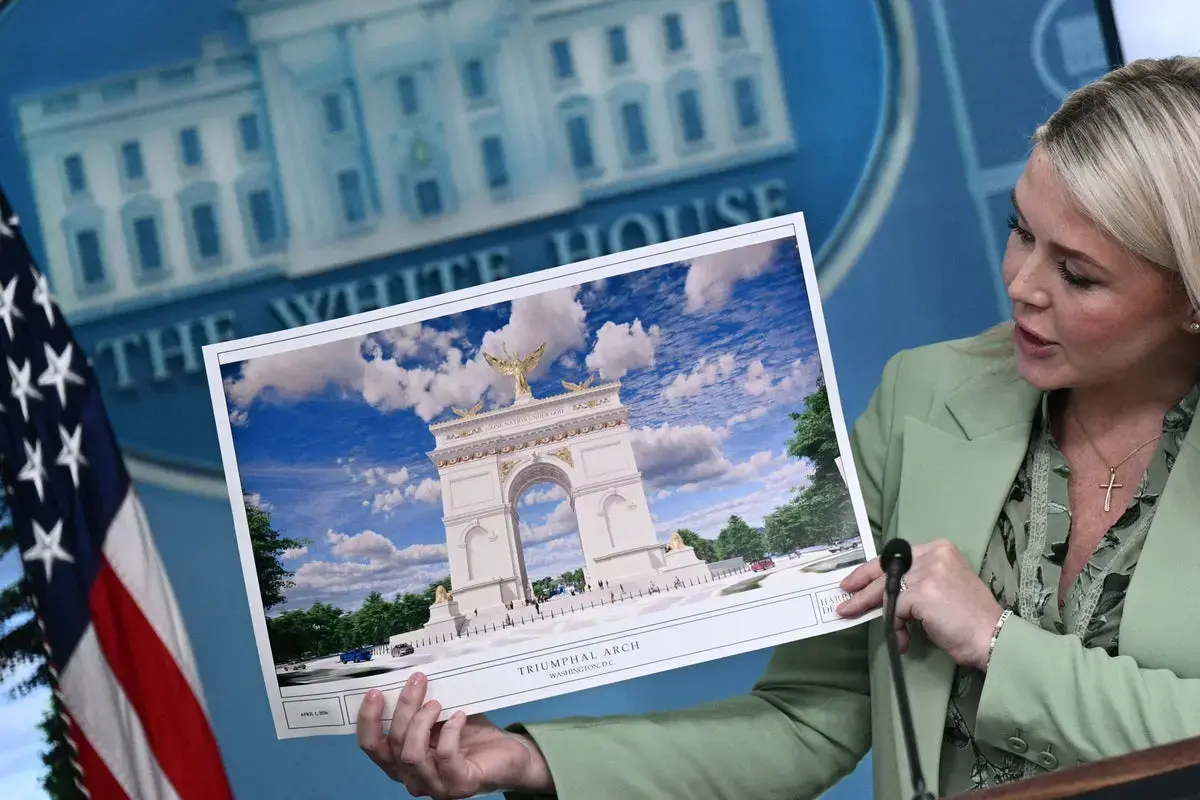 Trump Announces 250‑Foot Arch to Become Drone and Sniper Facility
 German Regional Elections Pose Fresh Challenge for Opposition Leader Friedrich Merz
 Trump Reveals Dual Purpose for Planned Triumphal Arch
Algorithmic Silencing
A social media platform does not merely delete a post or suspend an account; harm can also come through reduced algorithmic recommendations. As a result, it becomes harder for users to discover Gaza-related content, and users often alter their language or posting style out of fear of sanctions. Though the information persists digitally, its audience shrinks, weakening its place in the public record and collective memory.
Ahmed Shihab-Eldin’s Struggle for Visibility
Ahmed Shihab-Eldin, a Palestinian journalist with over 1.1 million Instagram followers, became a vital conduit for firsthand information and testimonies from Gaza to the international arena. His content included videos of Israeli soldiers accusing each other of war crimes, clips of U. S. senators appearing indifferent to Palestinian suffering, and scenes of daily life under bombardment. Yet immediately after posting, he observed that these materials „disappeared” from users’ feeds or faced severe reach limitations without clear explanation from the platform.
Technology and the Paradox of Access
„Some of my posts, especially those where Israeli soldiers self-incriminated, were used by South Africa in its genocide case against Israel at the International Court of Justice,” he told Al Jazeera. He added that tens of thousands of people were simultaneously directed to his profile, prompting Meta to make his page invisible multiple times and apply a severe „shadow-ban” to central accounts involved in documentation.
Leila Warah’s Experience with Instability
Technology, including smartphones, live broadcasts, satellite imagery, and social networks, has enabled people worldwide to witness conflicts, including the Gaza genocide, in real time. Yet increased access to information raises fundamental questions: why do some wars gain high visibility while others remain in shadow? What exactly happens when a voice loses its ability to resonate?
Leila Warah, a journalist based in occupied Cisjordan, personally experienced this instability, with her Instagram account suspended and reactivated multiple times during the conflict. She argues the issue is not merely about algorithms or invisible bans but extends to self-censorship and natural human impulses. „The major problem goes beyond algorithm mechanics and shadow-banning. A viewer can see images from Gaza, be emotionally affected, then close the app and return to their usual routine,” she explained. She highlighted the painful contrast: Palestinians living what appears on those screens do not have the option to step out of the experience.
Digital Activism and Its Limits
Digital activism, like that of Yara Eid during the three-day offensive, generated strong interaction, demonstrating the power of online mobilization. Yet filtering and signal-attenuation mechanisms remain a major challenge. The concept of „Echoicide” suggests the struggle is not just to make truth visible but to ensure its survival in the constant flow of information, preventing it from being reduced to a mere footnote in the world’s digital archives.
The Battle for Digital Existence
The entire structure of crisis communication is tested in the face of a technical paradox: as broadcasting tools become more advanced, hidden control mechanisms grow more sophisticated. Journalists in Gaza do not merely document; they fight for their digital existence, ensuring their voices are not annihilated by algorithmic force. This struggle for echo becomes, therefore, a vital component of Palestinian resistance in the virtual space, where each post is an attempt to keep truth alive against the risk of induced oblivion.
Global Implications of Platform Power
The situation illustrates a global trend where social media platforms exercise enormous editorial power, implicitly deciding which narratives reach the public. For journalists in conflict zones, this unseen power can be as deadly as physical bombardment.