The police confrontation with neo-fascists is central
The series Blue Lightshas established itself as a remarkably modern police drama. Its narratives delve into the daily callouts faced by officers. They also examine fraught relationships within the police station. Furthermore, the show depicts the long, complex efforts to dismantle organized crime networks. These stories are set against the backdrop of Belfast after the Troubles. In this environment, lingering sectarian resentments make policing significantly more challenging than elsewhere in the UK. This is compounded by national budget austerity. However, until now, the series had not felt explicitly contemporary. It never seemed to mirror the stunned reactions we all share when reading daily national news headlines. That equation has now dramatically shifted.
Latest news
 G20 Trade Ministers Gather in Wisconsin Amid Tariff Tension
 Senate Democrats Unite to Push for West Bank Violence Report
 Sandino's Rebellion Against U.S. Occupation Begins in Nicaragua
 Diesel Surpasses Gasoline as Europe's Most Expensive Fuel
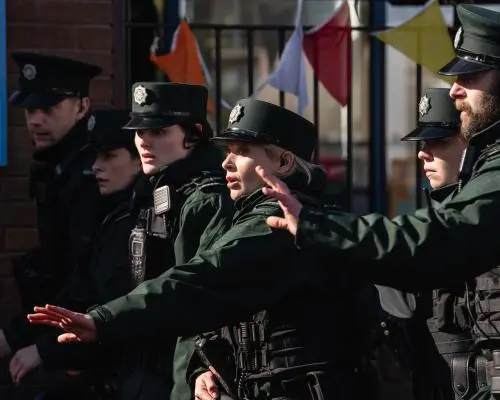
Our fourth visit to the Blackthorn police station places us and the officers in the midst of a racial riot. A center supporting refugees was hosting a festival. It was a positive community contribution, for those willing to see it. Station Chief Stevie, played by Martin McCann, is also an amateur baker. He marveled at the texture of Syrian pastries. This was at an event initially assigned minimal police presence. Minutes later, the entire crew rushed to the scene. They formed a defensive line against an angry mob. The mob demanded that immigrants leave Northern Ireland. Bricks flew through the air. People's lives were in danger.
The police confrontation with neo-fascists is central. To be clear, Blue Lightsoperates in a world where these groups are diametrically opposed. This confrontation allows the production to offer a fresh perspective on its familiar mechanisms. A classic Blue Lightsscene shows idealistic officers. They try to use reason and compassion to de-escalate terrifying situations. However, these tools are often ineffective. The emotions involved are too deeply rooted for negotiation. The confrontation with the racists raises the temperature of this dynamic. As usual, Grace, portrayed by Siân Brooke, takes charge. She is a former social worker. She insists on using her interpersonal skills in scenarios where police are trained for stoicism. She tackles a seemingly impossible problem.
The series introduces one of its most disturbing antagonists yet. This is Katie, a racist influencer played by Tabitha Smyth. The young woman live-streams every rallyon her phone. This illustrates the danger when angry people have a partial claim to truth. She possesses the proud zeal of an auditor. This term is now used on social media. It refers to someone who understands filming interactions with authorities is powerful. It holds them accountable. However, they then abuse this privilege. Grace inevitably tries to appeal directly to Katie. This yields a clear depiction of the central issue. Katie feels her community is impoverished and neglected. Public institutions have abandoned her people. She sees the latest injustice as a failure to stop foreign invaders.
It is difficult to argue against her final claim
It is difficult to argue against her final claim. The first two points are valid. Localized hatred of the police has considerable historical justification. This puts Grace in a difficult position. However, Blue Lightsavoids letting this thread dominate. Much else is happening. It blends production-specific elements with less interesting generic tropes. The Blackthorn station faces closure. Superiors cite insufficient metrics. This creates a tough start for newly promoted Chief Inspector Helen. Joanne Crawford plays her. Helen will always be more of a uniformed officer than a suited manager.
This narrative line could fit any police drama. However, Blue Lightsalso includes its typical setup. A routine traffic stop reveals the driver is a major Northern Ireland criminal. Police become entangled in security service operations. Regular officers should not be privy to these. This aligns with the series' overarching theme. Humble officers struggle to do their jobs. Every task is affected by political maneuvering. Higher levels or social forces beyond their control intervene. Under this pressure, they form intense bonds. These are often romantic. These relationships are frequently doomed.
Season four revisits Gerry's murder from season one. Richard Dormer played Gerry. His colleague and wife Sandra, played by Andi Osho, still seeks justice. Her efforts face whispered warnings and abruptly closed office doors. A mid-season episode brings Dormer back. An extended flashback shows how Gerry and Sandra met. Their standalone story summarizes Blue Lights'approach. It adds a touch of light drama to difficult subjects. A series solely focused on harsh reality might not allow such indulgence. Yet, it is quite beautiful. As Blue Lightstackles highly current issues, it remains sharp.