Growing Rift Over Israel Aid Among Republicans
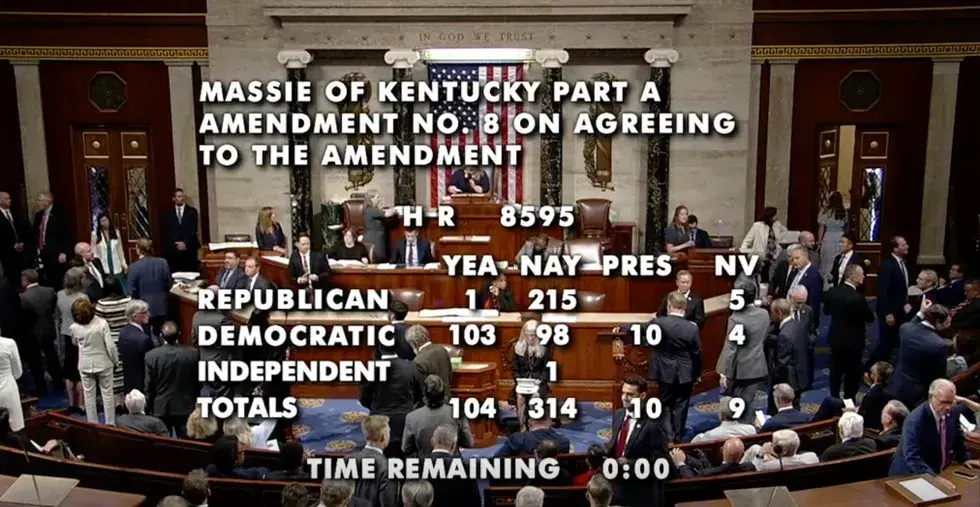
The U. S. House of Representatives voted Wednesday to reject an amendment that would have removed $3.3 billion in aid to Israel from the National Security and State Department appropriations bill. The proposal, introduced by outgoing Rep. Thomas Massie of Kentucky, failed despite a narrow margin, with several Republicans joining Democrats to keep the funding intact. The vote took place on the House floor in Washington, D. C., during the final week of the congressional session.
Latest news
 Swedish Voters Choose New Parliament as Left-Wing Coalition Projects to Win Majority
 Trump Announces End of US Tariff on Irish Whisky
 Frances Stonor Saunders, Author of CIA Cultural Espionage Exposé, Dies at 66
 Israel and Lebanon to Hold Security Talks in Rome This October
The amendment sought to halt a portion of the annual military assistance that the United States provides to Israel, a program that has persisted for decades. Massie argued that the aid should be conditioned on Israel’s compliance with humanitarian standards amid the ongoing Gaza conflict. Republicans largely opposed the measure, citing longstanding strategic ties and the importance of a reliable ally in the Middle East. The close vote highlighted growing dissent within the party over the war’s humanitarian toll.
The narrow defeat exposed a fracture in the traditionally pro‑Israel Republican caucus. A handful of GOP members, including Representatives Jim McGovern and Ro Khanna, voiced concerns that unconditional aid fuels civilian suffering. Massie’s amendment, though expected to fail, attracted unexpected support from these dissenting voices. In a statement, Massie said the United States „cannot fund a war that violates international law,” urging Congress to attach conditions to future assistance. The episode suggests that partisan unity on foreign‑policy issues may be waning as public pressure mounts.
Will Conditional Aid Become a New Congressional Norm?
Analysts wonder whether this episode will set a precedent for attaching human‑rights clauses to foreign aid packages. The House’s decision to keep the $3.3 billion flowing does not preclude future legislative attempts to impose restrictions. Some Democrats, such as Rep. Alexandria Ocasio‑Cortez, have called for a comprehensive review of all aid to Israel, arguing that Congress must leverage its spending power to influence policy abroad. If similar amendments reappear, they could force the administration to negotiate stricter terms with Israeli officials.
The outcome signals a tentative shift in congressional attitudes toward Israel, with implications for U. S. foreign‑policy strategy. While the aid remains in place for now, the debate may intensify as the Gaza humanitarian crisis continues. Future appropriations battles could see more bipartisan coalitions forming around conditional aid, potentially reshaping the diplomatic landscape in the Middle East.
Frequently Asked Questions
What exactly did the amendment propose? The amendment aimed to remove $3.3 billion earmarked for Israel’s military assistance from the 2024 National Security and State Department appropriations bill.
Why did some Republicans support the amendment? A small group of GOP lawmakers expressed concern that unconditional aid may enable actions they view as contrary to U. S. humanitarian values, prompting them to side with Democrats.
How might this vote affect future U. S. aid to Israel? The close vote suggests that future aid packages could face stricter scrutiny, with possible conditions tied to human‑rights compliance or diplomatic negotiations.