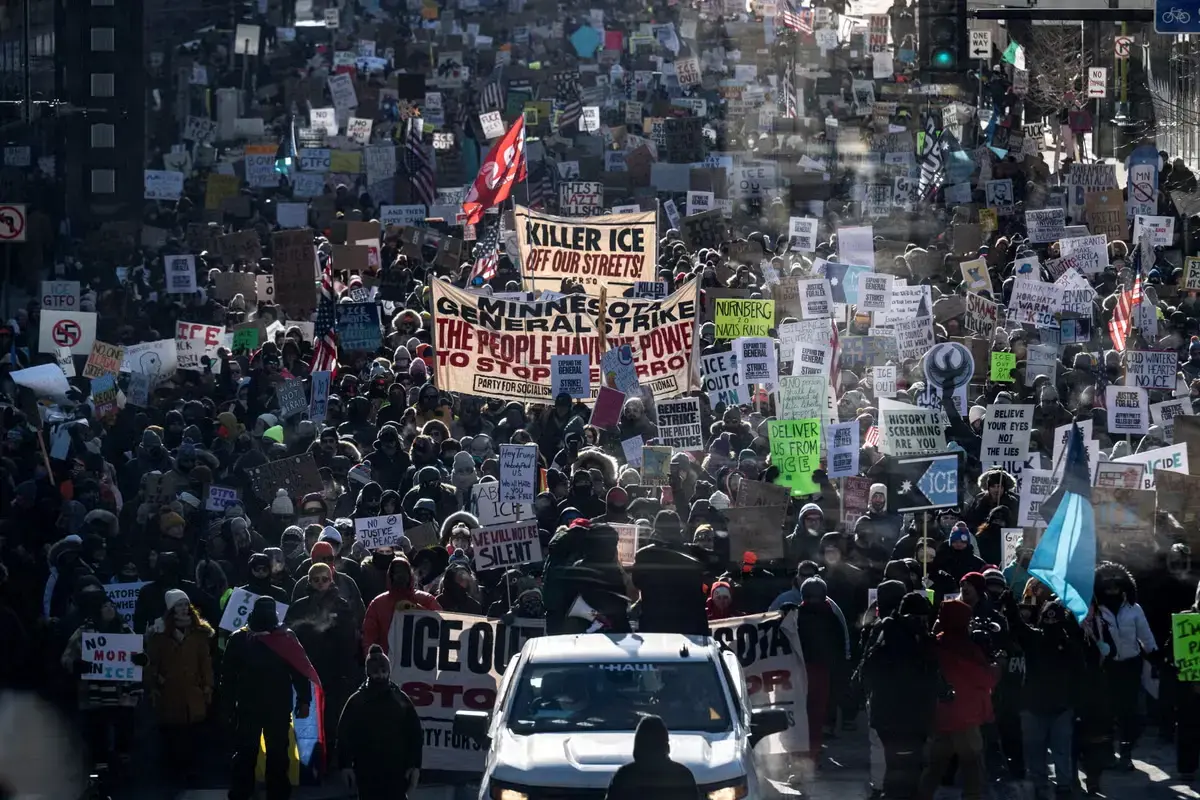
Felony Charges: A Powerful Deterrent?
A US conservative think-tank is pushing to reclassify certain misdemeanors as felonies for protesters, raising concerns among experts. This move could affect thousands of people nationwide. The proposal is part of a broader effort to reshape the country's approach to public demonstrations.
Latest news
 Swedish Voters Choose New Parliament as Left-Wing Coalition Projects to Win Majority
 Trump Announces End of US Tariff on Irish Whisky
 Frances Stonor Saunders, Author of CIA Cultural Espionage Exposé, Dies at 66
 Israel and Lebanon to Hold Security Talks in Rome This October
The think-tank's plan involves upgrading misdemeanors to felony crimes, potentially resulting in longer prison sentences and higher fines. Experts warn that this could have a chillingeffect on free speech and the right to assemble. Critics argue that such measures would disproportionately impact marginalized communities.
Critics say that reclassifying misdemeanors as felonies would give prosecutors too much power, allowing them to target protesters with harsher penalties. A person convicted of a felony may face long-term consequences, including loss of voting rights and difficulty finding employment. This could have a lasting impact on individuals and communities.
Will Protesters Be Deterred or Empowered?
Experts point out that the current system already allows prosecutors to charge protesters with serious crimes. However, they argue that the proposed changes would lower the bar for felony charges, making it easier for authorities to crack down on demonstrations. The think-tank's proposal is seen as part of a larger trend of increasing scrutiny of public protests.
The think-tank's proposal has sparked a heated debate about the limits of free speech and the role of law enforcement in public demonstrations. While some argue that harsher penalties are necessary to maintain order, others see this as a threat to fundamental rights. The outcome of this debate will have significant implications for the future of public protest in the US.
The consequences of this proposal could be far-reaching, potentially altering the landscape of public demonstrations in the US. As the debate continues, it remains to be seen whether the think-tank's proposal will gain traction.
Frequently Asked Questions
What is the think-tank's goal behind this proposal? The think-tank aims to reshape the country's approach to public demonstrations by making it easier to prosecute protesters.
How would reclassifying misdemeanors as felonies affect protesters? Protesters could face longer prison sentences, higher fines, and long-term consequences such as loss of voting rights.
What are the potential consequences of this proposal? The proposal could have a chillingeffect on free speech and the right to assemble, disproportionately impacting marginalized communities.