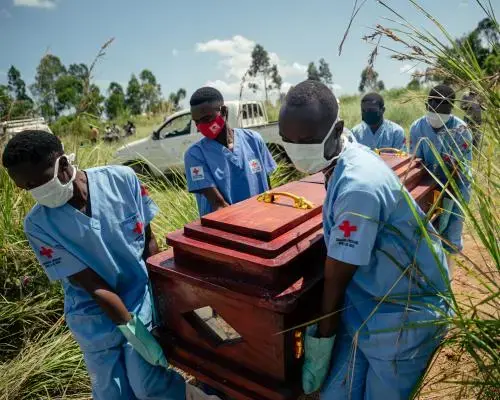
What Makes This Outbreak Different?
The Democratic Republic of the Congo is experiencing a severe Ebola outbreak. This crisis has already claimed over 2,300 lives and is on track to become the deadliest outbreak in history. The outbreak, now the second-worst on record, has seen rapid community transmission, with nearly 4,900 reported cases. Factors such as new virus strains and regional instability complicate containment efforts. Additionally, decisions made in the United States and the United Kingdom have further hindered response strategies.
Latest news
 Swedish Voters Choose New Parliament as Left-Wing Coalition Projects to Win Majority
 Trump Announces End of US Tariff on Irish Whisky
 Frances Stonor Saunders, Author of CIA Cultural Espionage Exposé, Dies at 66
 Israel and Lebanon to Hold Security Talks in Rome This October
The current Ebola strain is spreading more quickly than previous outbreaks. Experts believe that the combination of new viral variants and weakened healthcare systems in the region is exacerbating the situation. Local communities are struggling with misinformation, which hampers efforts to control the virus. The international response has been criticized for being slow and inadequate, despite the alarming rise in cases.
Health authorities are facing immense challenges in deploying resources effectively. The ongoing conflict in the region has also made it difficult for aid workers to reach affected areas. Many communities are wary of outside intervention due to past experiences, leading to mistrust and reluctance to cooperate with health officials.
Can the Outbreak Be Contained?
Containment efforts are further complicated by logistical issues and a lack of funding. Health officials are racing against time to vaccinate at-risk populations, but the resources available are limited. The World Health Organization has called for urgent support, emphasizing the need for a coordinated international response.
As the outbreak continues, the potential for it to spread beyond the region remains a significant concern. Without immediate and effective intervention, the death toll could rise sharply. Experts warn that the situation could escalate if the necessary measures are not implemented swiftly.
The consequences of this outbreak extend beyond health. Economic instability and increased fear among local populations could lead to long-term repercussions. The international community must act decisively to prevent further loss of life and support efforts to stabilize the region.
Frequently Asked Questions
What is the current status of the Ebola outbreak in the DRC? The outbreak is ongoing, with over 4,900 cases reported and more than 2,300 deaths. It is one of the deadliest in history.
What are the main challenges in controlling the outbreak? Key challenges include rapid virus transmission, regional instability, misinformation, and limited resources for effective response.
How can the international community help? The international community can provide financial support, medical supplies, and trained personnel to assist local health authorities in containment efforts.