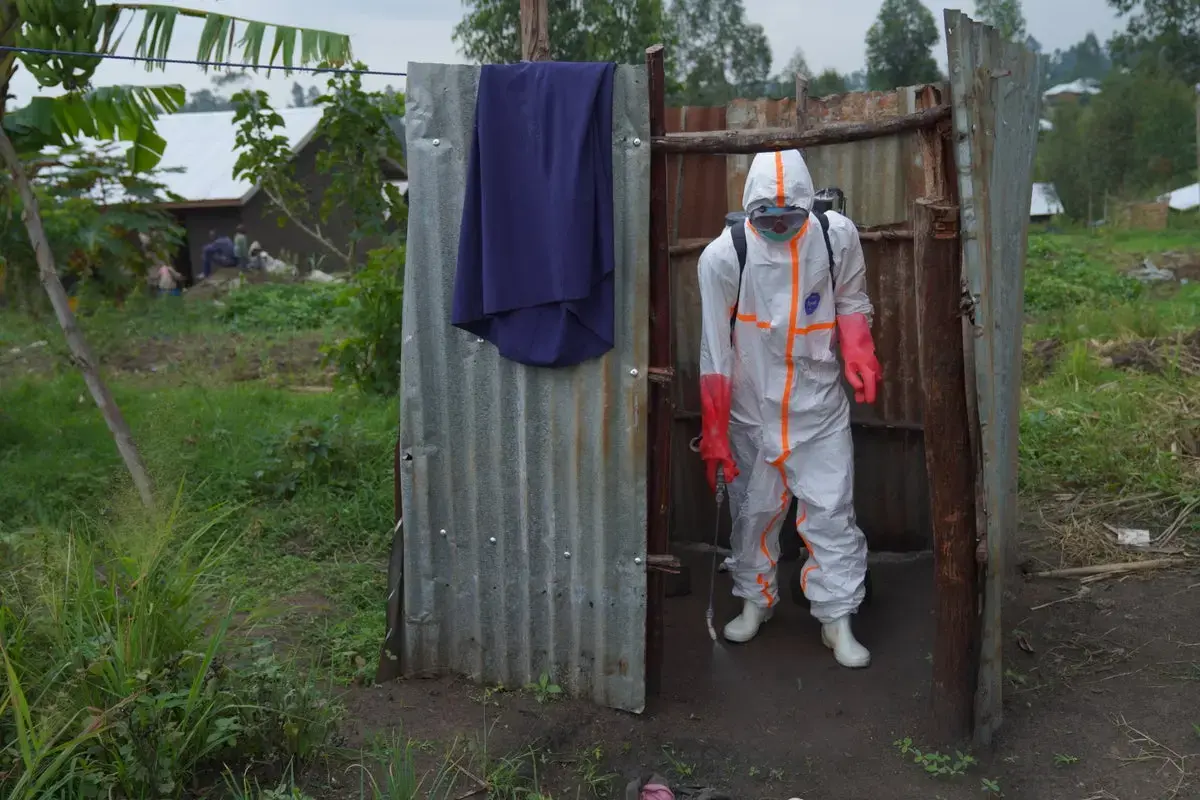
A Growing Humanitarian Crisis
The Democratic Republic of Congo is currently battling the most lethal Ebola epidemic in its history. Government officials confirmed this week that the death toll has climbed to 2,325 victims. This surge marks a grim milestone for the nation as health authorities struggle to contain the rapid spread of the virus.
Latest news
 Swedish Voters Choose New Parliament as Left-Wing Coalition Projects to Win Majority
 Trump Announces End of US Tariff on Irish Whisky
 Frances Stonor Saunders, Author of CIA Cultural Espionage Exposé, Dies at 66
 Israel and Lebanon to Hold Security Talks in Rome This October
The ongoing crisis has overwhelmed local medical infrastructure and challenged international response teams. Efforts to track contacts and isolate infected individuals have been complicated by regional instability and deep-seated community mistrust. Health workers continue to face significant logistical hurdles in reaching remote areas where the disease remains active.
The scale of this outbreak has surpassed all previous records within the country. Medical experts attribute the high mortality rate to delayed treatment and the difficulty of implementing effective vaccination campaigns in conflict-prone zones. Despite the deployment of experimental treatments, the virus continues to claim lives at an alarming rate.
Can Containment Efforts Succeed?
Public health officials are working around the clock to educate local populations about transmission risks. However, the sheer volume of cases has strained existing resources to their breaking point. International aid organizations are now calling for increased funding to bolster clinical support and diagnostic capabilities in the most affected provinces.
Achieving control over the epidemic requires a combination of robust surveillance and community cooperation. The government remains focused on expanding treatment centers to provide better care for those currently battling the infection. Success depends heavily on the ability of responders to navigate the complex social and geographical landscape of the region.
The long-term outlook remains uncertain as the virus persists in densely populated areas. Authorities warn that without sustained global support, the death toll could climb even higher. The focus now shifts toward stabilizing the situation and preventing further transmission across provincial borders.
Frequently Asked Questions
What is the current death toll from the outbreak? The official government data confirms that 2,325 people have died due to the Ebola virus in this specific epidemic.
Why has this outbreak been so difficult to stop? Containment has been hampered by regional instability, logistical challenges in remote areas, and difficulties in building trust within local communities.
What is the primary goal for health responders? Responders are prioritizing the expansion of treatment centers, improving contact tracing, and increasing public awareness to curb the spread of the disease.