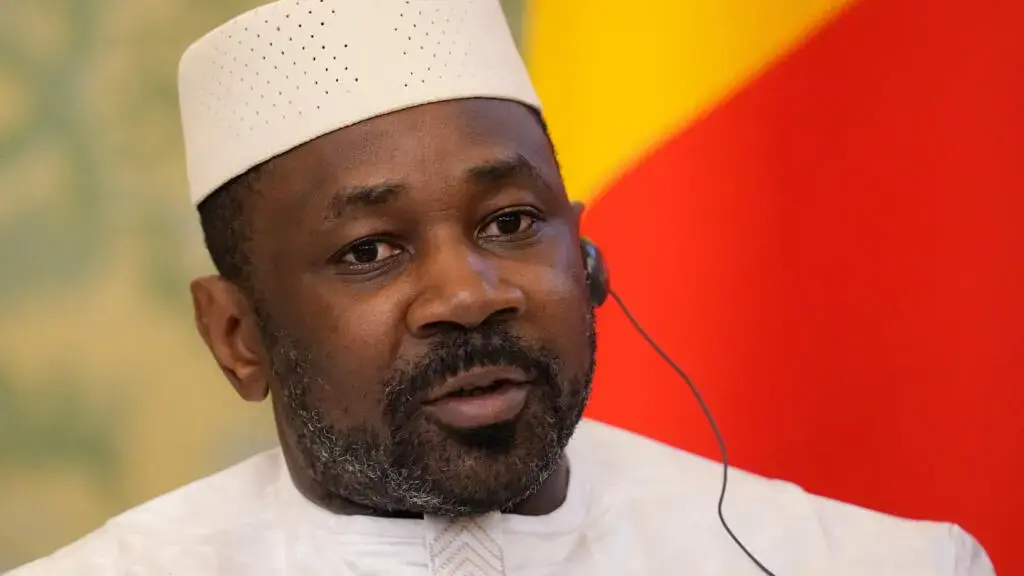
Rising Insecurity Fuels Government Response
Mali’s military leader, Assimi Goita, publicly addressed the nation following weekend attacks. Insurgent groups targeted areas around the capital, Bamako, and in the country’s north. He promised a firm crackdown on those responsible for the escalating violence. This was his first public statement since the assaults.
Latest news
 Swedish Voters Choose New Parliament as Left-Wing Coalition Projects to Win Majority
 Trump Announces End of US Tariff on Irish Whisky
 Frances Stonor Saunders, Author of CIA Cultural Espionage Exposé, Dies at 66
 Israel and Lebanon to Hold Security Talks in Rome This October
The coordinated attacks represent a significant escalation of conflict. Jihadist and separatist groups are increasing their activity across Mali. These groups have long exploited instability in the region. The recent surge in violence raises concerns about the government’s control. Goita stated his forces will „neutralise” the attackers.
Goita’s appearance aimed to reassure citizens and demonstrate resolve. He emphasized the military’s commitment to restoring security. The attacks involved both armed groups and improvised explosive devices. These targeted military installations and civilian areas. The government faces a complex security challenge, battling multiple insurgent factions.
Can Mali Stabilize its Northern Regions?
The northern regions of Mali have been particularly volatile for years. Various armed groups operate there, often competing for control. This instability stems from the 2012 Tuareg rebellion and the subsequent rise of jihadist groups. The government’s ability to effectively govern and provide security in these areas remains limited.
The recent attacks highlight the fragility of the security situation. They also raise questions about the effectiveness of current counterterrorism strategies. Some analysts suggest a need for a more comprehensive approach. This would address the underlying socio-economic factors driving radicalization. Military force alone may not be sufficient to resolve the conflict.
Goita’s promise of a crackdown could lead to increased military operations. This may result in further clashes with insurgent groups. It also carries the risk of civilian casualties and displacement. The situation demands a delicate balance between security measures and protecting the population. International partners are closely monitoring the developments in Mali.
Frequently Asked Questions
The escalating violence threatens to further destabilize the country. It could also have regional consequences, impacting neighboring nations. A prolonged conflict could exacerbate humanitarian crises and hinder development efforts. Restoring stability in Mali requires a sustained and coordinated effort from both the government and the international community.
What groups are responsible for the attacks? Multiple jihadist and separatist groups are active in Mali. These include groups linked to Al-Qaeda and Islamic State, as well as Tuareg separatist movements. They operate in different regions and have varying objectives.
How has the security situation in Mali evolved? Instability began with the 2012 Tuareg rebellion. This created a power vacuum that allowed jihadist groups to flourish. The situation has worsened in recent years, despite international efforts to support the Malian government.