Revolutionizing Onboard Production
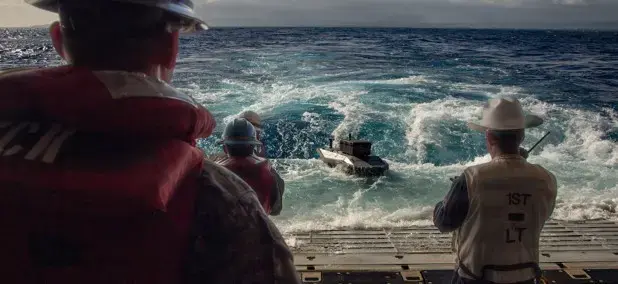
The U. S. Navy is exploring advanced manufacturing and logistics during RIMPAC 2026. This exercise, held on July 7, 2026, involved the USS Essex. The goal is to overcome the challenges of distance in naval operations.
Latest news
 Swedish Voters Choose New Parliament as Left-Wing Coalition Projects to Win Majority
 Trump Announces End of US Tariff on Irish Whisky
 Frances Stonor Saunders, Author of CIA Cultural Espionage Exposé, Dies at 66
 Israel and Lebanon to Hold Security Talks in Rome This October
An autonomous Typhoon surface vessel played a key role. It transported parts to the USS Essex. These parts were then used in a 3D printer aboard the ship.
This initiative aims to transform how naval forces acquire critical components. It introduces a rapid, on-demand manufacturing capability at sea. This system is like Uber for productioncombined with Amazon's speed. The focus is on delivering the highest quality parts quickly. This could significantly reduce reliance on traditional supply chains. It also enhances operational flexibility for naval fleets.
Can Drones and 3D Printers Conquer the Tyranny of Distance?
The RIMPAC exercise is designed to answer this crucial question. By integrating autonomous delivery with additive manufacturing, the Navy hopes to create a more resilient supply system. This could mean faster repairs and custom parts in remote locations. It also lessens the need for large, vulnerable logistics convoys.
This new approach promises to improve readiness and reduce downtime for naval assets. It represents a significant step towards a more agile and self-sufficient future for maritime forces.
Frequently Asked Questions
What was the main goal of this RIMPAC exercise? The main goal was to test how 3D printing and autonomous drones can overcome logistical challenges and distance in naval operations, providing parts quickly at sea.
Which vessels were involved in this test? The USS Essex hosted the 3D printing operation, while an autonomous Typhoon surface vessel delivered the necessary parts to the ship.
What is the potential impact of this technology on naval logistics? This technology could revolutionize naval logistics by enabling on-demand production of parts at sea, reducing reliance on lengthy supply lines, and improving operational readiness.