Exercises Move Into Daily Life
In recent years, the Han Kuang maneuvers have gained strong public backing. Yet, the impact on civilian life is becoming increasingly noticeable. A recent study commissioned by the Institute for National Defense and Security Research (INDSR) highlighted this tension. It found that while popularity is at an all-time high, most citizens claim they do not know the details of the operations being conducted.
Latest news
 IMF Cuts Australia Growth Forecast Amid Rate Hike Warnings
 Nicaraguan Exile Journalist Luis Galeano Detained by U.S. ICE in Florida
 Congress Passes Bill Granting Trump Expanded Sanctions Authority
 AI pioneer Yoshua Bengio warns of imminent crisis
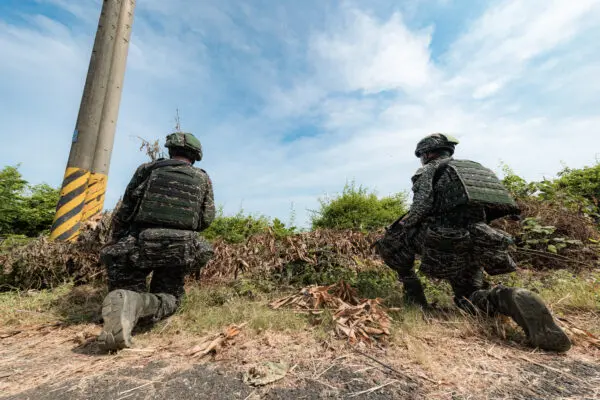
The 2026 edition was impossible to ignore for the general population. This was due to the deep integration of military elements into ordinary urban spaces. To simulate wartime communication breakdowns, mobile internet access was deliberately reduced for thirty minutes. Troops blocked the Guangfu Bridge, a vital artery linking New Taipei City to the capital. They installed metal barriers and barbed wire to practice stopping enemy forces from advancing toward the metro center. Meanwhile, hospitals trained staff to transfer medical services underground. This procedure is essential for maintaining critical infrastructure during conflict. These scenes illustrate how Taiwan’s war preparation now extends beyond traditional military frameworks. It increasingly invades the sphere of daily life.
This transformation reflects a fundamental change in the island’s defense strategy. This year’s maneuvers placed special emphasis on realistic war scenarios. They combined military training with urban resilience exercises. Preparing for potential conflict is no longer solely the responsibility of the armed forces. It has become a complex challenge involving civil infrastructure, local governments, reservists, and ordinary citizens. As society becomes directly involved in defense mechanisms, a fundamental question arises. What do the country’s own residents think about its most important annual military exercise?
A Shift in Defense Strategy
To answer this, INDSR commissioned a national telephone survey immediately after the maneuvers concluded. The research was conducted by the Election Studies Center at National Chengchi University between August 20 and 24. Interviewers spoke with 1,215 adults across Taiwan. Results showed that public satisfaction with the Han Kuang exercises reached the highest level in the survey series’ history. Despite this, most respondents declared they knew relatively little about the specific content of the drills. These data suggest that as Taiwan expands its whole-of-society defense concept, public approval and public understanding must not be considered equivalent.
Satisfaction with the Han Kuang exercises hit 60% this year, an absolute record. Previous data indicated a trend fluctuating around the 50% threshold. In 2021, this indicator stood at 51.9%. It rose to 53.6% in 2022 before dropping sharply to 45.5% in 2023. Recovery occurred in 2025, when the value climbed to 51.3%. There was no comparable survey in 2024. The figure then increased to current levels. Although the long-term model did not show constant growth, the 2026 result is visibly larger than any prior measurement.
Record Satisfaction, Limited Understanding
Another notable aspect is the decline in people who did not offer a clear evaluation. The share of those who chose not to answer or were unaware of the exercises dropped from 36.7% in 2021 to 25.3% in 2026. This is the lowest level ever recorded, though the decrease was not uniform over the years. Among those who answered the satisfaction question this year, approximately three-quarters expressed either a positive or negative opinion. It is important to note that these comparisons require caution. Filtering questions and response flows were not identical across all survey stages. Furthermore, the ability to evaluate the maneuvers does not automatically equate to a deep understanding of them.
When asked to estimate directly how well they understand the Han Kuang maneuvers, the picture changed. Only 2.3% of participants claimed they understood them very well. Another 22.6% declared partial understanding. In contrast, 46.1% said they did not understand them very well. An additional 26.4% admitted they did not understand them at all. Practically speaking, nearly three-quarters of citizens describe their understanding of the maneuvers as limited. These findings do not necessarily contradict the high satisfaction level recorded this year. People can form a general impression of Han Kuang through media coverage, social networks, or everyday activities. They may do so without knowing the technical details of each exercise. Satisfaction measures how people appreciate the maneuvers, but it offers limited information about their understanding of the objectives. As Taiwan places increasing importance on integrated societal defense, the distance between approval and understanding becomes harder to ignore.
Citizens are no longer simple spectators of military performance.