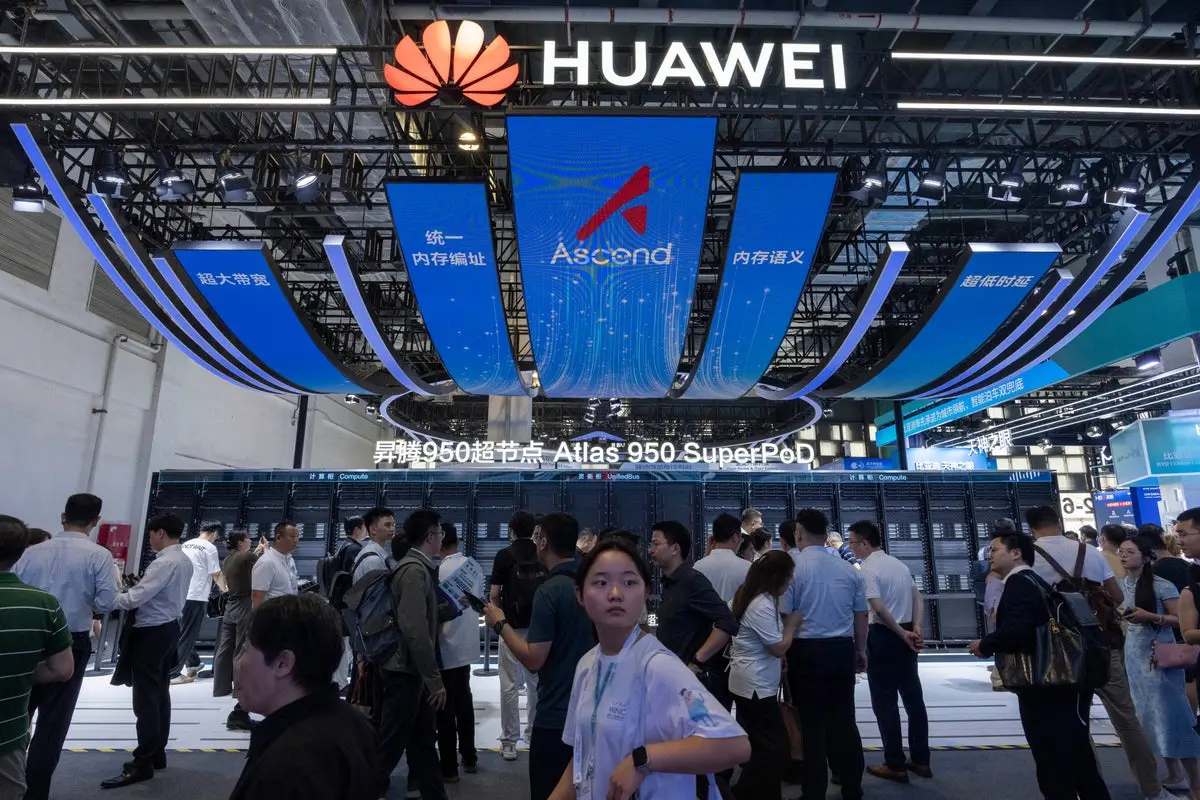
Revolutionizing AI Hardware: What Sets Huawei’s New Chips Apart?
On Thursday, September 17, 2026, Huawei announced a new line of semiconductor technologies aimed at boosting its artificial intelligence capabilities. The Chinese tech giant revealed the chips at its annual technology conference in Shenzhen, targeting both consumer and enterprise markets. The move signals a strategic push to compete with Nvidia’s dominant GPU portfolio.
Latest news
 UN Report Accuses US and Iran of Serious Human Rights Violations
 Canada Eyes EU Associate Membership Under Prime Minister Mark Carney
 Fiji Declares National Emergency Over Rapid HIV Surge
 Israeli Forces Detain Palestinian Journalist in Ramallah Raid
Huawei’s new processors blend advanced 5nm fabrication with integrated neural‑network accelerators. The company claims the chips deliver up to 30% higher throughput for deep‑learning workloads while cutting power consumption by 20%. Analysts suggest the development is part of Huawei’s broader strategy to reduce reliance on foreign technology and secure a foothold in the global AI hardware market.
Unlike Nvidia’s focus on GPU‑centric solutions, Huawei’s designs incorporate a hybrid architecture that merges CPU, GPU, and dedicated AI cores.
This integration allows for faster data routing and reduces latency in training large language models. The company also introduced a proprietary interconnect protocol, reportedly enabling inter‑chip communication speeds up to 50% faster than existing standards.
Huawei’s engineering team highlighted the chips’ scalability, noting that they can be deployed in data‑center racks or embedded in edge devices. The modular design supports dynamic reconfiguration, allowing operators to balance compute and memory resources in real time. Early benchmarks from third‑party labs show the processors outperform Nvidia’s flagship GPUs on image‑recognition tasks with a 15% reduction in energy usage.
Will Huawei Disrupt Nvidia’s Dominance in the AI Market?
Industry observers point out that Huawei’s entry could accelerate the diversification of AI hardware ecosystems.
With the United States tightening export controls on advanced semiconductors, Chinese firms are increasingly investing in domestic R&D to bridge the technology gap.
While Nvidia remains the market leader, Huawei’s aggressive push into AI chip manufacturing could create significant competition. The company’s new products target sectors where Nvidia’s GPUs are currently the standard, including autonomous driving, cloud computing, and high‑performance computing. If the chips gain traction, they may erode Nvidia’s market share in regions with strong domestic supply chains.
However, challenges remain. Nvidia’s extensive software ecosystem, including CUDA and cuDNN libraries, offers developers a mature platform that Huawei’s new hardware must match. Additionally, geopolitical tensions could limit Huawei’s ability to secure essential components, such as advanced lithography equipment, from global suppliers.
Frequently Asked Questions
Looking ahead, the AI hardware race is likely to intensify.
Companies like Google, AMD, and Intel are also expanding their offerings. Huawei’s latest chips represent a bold statement that it intends to be a key player in shaping the next generation of AI infrastructure.
Q1: What is the main advantage of Huawei’s new AI chips? A1: They combine CPU, GPU, and AI cores in a single package, reducing data transfer latency and improving energy efficiency compared to traditional GPU‑only designs.
Q2: How does Huawei plan to compete with Nvidia’s software ecosystem? A2: Huawei is developing its own AI software stack, including optimized compilers and runtime libraries, to complement its hardware and attract developers.
Q3: Will these chips be available globally? A3: Huawei intends to launch the processors in China and select international markets, but export restrictions may limit availability in certain regions.