What role did ice play in shaping deportation logistics
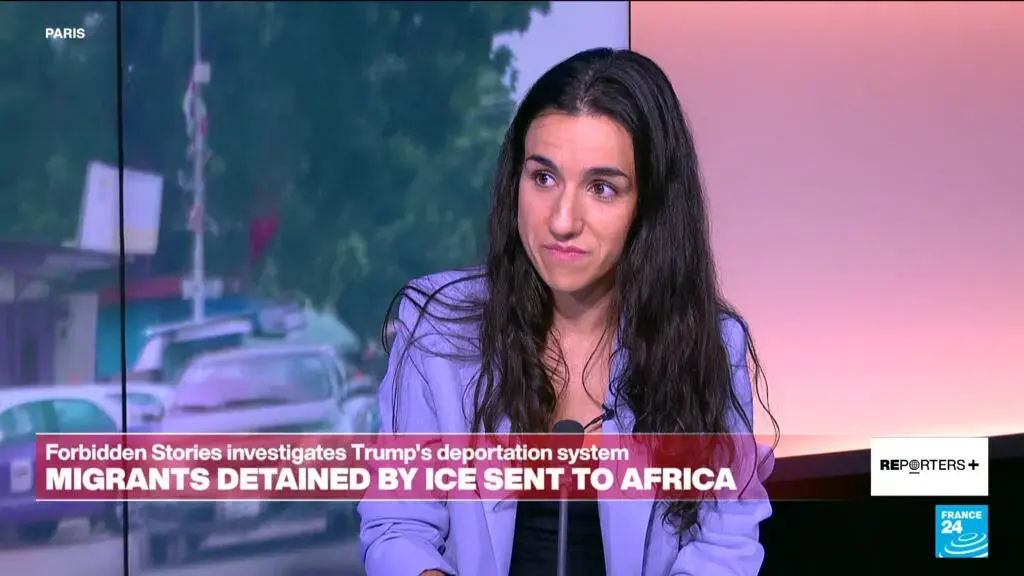
Sofia Alvarez Jurado, an investigative journalist with the Deportation project at Forbidden Stories, presented findings from her research on United States deportation practices during the Trump administration in Paris this September. Her work, featured in the France24 documentary titled The Ice, Trump and Africa,exposes previously undisclosed aspects of how immigration enforcement operated under former President Donald Trump. The presentation took place at a media forum in Paris, drawing attention from international press freedom advocates and migration experts.
Latest news
 Global Diplomacy Prepares for the 2026 UN Leadership Transition
 Donald Trump Proposes Long-Term Security Oversight for Greenland
 Tensions Escalate Between Washington and Tehran During UN General Assembly
 Stock Market Futures Hold Steady Following Strong Monday Rally
The documentary examines how deportation procedures were intensified and systematized during Trump’s presidency, particularly focusing on the expansion of detention facilities and the use of expedited removal processes. Alvarez Jurado’s investigation traces connections between policy decisions made in Washington and their real-world impact on migrants, many of whom were transferred to remote detention centers or deported without adequate legal representation. She highlights how cooperation with certain African nations was leveraged to facilitate removals, often under opaque agreements that raised concerns about due process and human rights.
How did African countries become involved in deportation chains
Alvarez Jurado explains that the term Icein the documentary’s title refers not only to the U. S. Immigration and Customs Enforcement agency but also to the metaphorical coldness of policies that treated migrants as disposable. Her team gathered testimonies from former detainees, legal aid workers, and government officials who described how ICE expanded its operational capacity through contracts with private prison companies. These arrangements allowed for rapid scaling of detention beds, especially along the southern border and in inland facilities. The journalist emphasizes that this infrastructure was built quickly, often bypassing standard oversight mechanisms, which contributed to reports of overcrowding and inadequate medical care.
The investigation reveals that the Trump administration pursued diplomatic agreements with several African governments to accept deportees, even when individuals had little or no connection to those nations. Alvarez Jurado cites examples where migrants from Asia or the Caribbean were sent to countries in West Africa under bilateral arrangements that lacked transparency. She notes that these transfers sometimes occurred without informing the individuals of their destination until shortly before departure, raising legal questions about the legitimacy of such removals. The documentary includes footage of interviews with deportees who described confusion and fear upon arrival in unfamiliar countries with no support networks.
What are the lasting consequences of these policies
Alvarez Jurado warns that the systems and partnerships established during the Trump era have left enduring frameworks that subsequent administrations have struggled to dismantle. She points out that many of the expedited procedures and international agreements remain in place, creating a legacy of accelerated deportations that continue to affect vulnerable populations. Human rights organizations have documented ongoing cases where individuals face prolonged detention or removal to countries where they risk persecution. The journalist stresses that public awareness and legal challenge remain essential to checking the power of enforcement agencies.
What is the Deportation project at Forbidden Stories? The Deportation project is a collaborative investigative initiative led by Forbidden Stories that focuses on uncovering systemic issues in global deportation practices, with Alvarez Jurado contributing research on U. S. policies during the Trump administration.
Frequently Asked Questions
Why is the documentary titled The Ice, Trump and Africa? The title reflects three key elements: ICE as the enforcement agency, Trump as the policymaker behind expanded deportation efforts, and Africa as a region where deportation agreements were quietly negotiated to facilitate removals.
Are the deportation practices discussed still in use today? Yes, many of the mechanisms expanded under Trump, including expedited removal and certain international deportation accords, remain operational and have been used by subsequent administrations, according to legal experts cited in the investigation.