The Pro-EU vs. Pro-Russia Divide
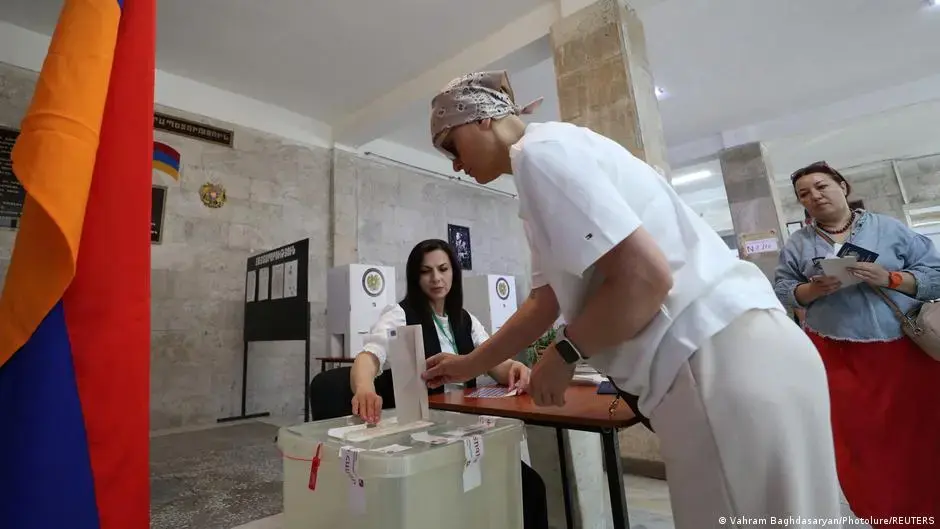
Armenians went to the polls on June 7, 2026, to vote in a highly anticipated election. The country's Prime Minister, Nikol Pashinyan, who has pursued closer ties with the European Union, is facing stiff opposition from pro-Russian parties. The election takes place against the backdrop of ongoing peace efforts with neighboring Azerbaijan.
Latest news
 Swedish Voters Choose New Parliament as Left-Wing Coalition Projects to Win Majority
 Trump Announces End of US Tariff on Irish Whisky
 Frances Stonor Saunders, Author of CIA Cultural Espionage Exposé, Dies at 66
 Israel and Lebanon to Hold Security Talks in Rome This October
The electoral landscape is characterized by a deep-seated divide between Pashinyan's pro-EU stance and the opposition's pro-Russian orientation. This dichotomy reflects broader regional allegiances, with Russia and the EU exerting significant influence over the Caucasus region. Peace efforts with Azerbaijan, a longtime foe, are also a critical issue in the election.
Can Peace Efforts with Azerbaijan Succeed?
Pashinyan's government has sought to strengthen Armenia's relationship with the EU, viewing it as a pathway to economic growth and democratic reform. Conversely, the opposition, which includes several pro-Russian parties, argues that closer ties with Russia are essential for Armenia's security and economic stability. This fundamental divide has significant implications for Armenia's future trajectory.
A key challenge facing the next Armenian government will be navigating peace talks with Azerbaijan. The two countries have a long history of conflict, particularly over the disputed region of Nagorno-Karabakh. Voters will be looking for a government that can effectively balance the need for peace with the imperative of protecting Armenian interests.
Frequently Asked Questions
The election outcome will have far-reaching consequences for Armenia's relations with both Russia and the EU, as well as the prospects for peace with Azerbaijan. A victory for Pashinyan could pave the way for deeper EU integration, while a success for the pro-Russian opposition might signal a shift towards greater Russian influence.
Q: What are the main issues in the Armenian election? A: The election centers on the country's orientation towards either the EU or Russia, and peace efforts with Azerbaijan. Q: Who are the main contenders in the election? A: The primary contenders are Prime Minister Nikol Pashinyan, who supports closer EU ties, and various pro-Russian opposition parties. Q: Why are these elections significant for the region? A: The elections are crucial because they will determine Armenia's future relations with major regional players, Russia and the EU, and its approach to resolving the conflict with Azerbaijan.